Okinawa: A Different Side of Japan
Turquoise water, Ryukyu castles, and a food scene that owes as much to China and Southeast Asia as it does to Tokyo. Okinawa barely feels like mainland Japan, and that's exactly the point.
Why Okinawa Feels Like a Different Country
Most visitors to Japan picture neon-lit Tokyo streets, ancient Kyoto temples, and bullet trains slicing through mountain tunnels. Okinawa has none of that. What it does have: 160 islands scattered across 1,000 km of subtropical ocean, water so clear you can see the coral from the shore, a cuisine built on pork, tofu, and tropical fruit, and a cultural identity shaped by 450 years as an independent kingdom.
Okinawa sits roughly halfway between mainland Japan and Taiwan. The climate is subtropical year-round, with palm trees instead of cherry blossoms, Shisa lion-dog statues instead of torii gates, and sanshin music (a three-stringed instrument closer to the Chinese sanxian than any Japanese instrument) floating out of local bars. If Tokyo is Japan at full intensity, Okinawa is Japan on island time.
It's also one of the few places in Japan where beach holidays genuinely work. The Kerama Islands have some of the clearest water in the world. Miyako Island's Yonaha Maehama is regularly ranked among Asia's best beaches. And Ishigaki, 400 km further south, feels closer to the Philippines than to Honshu.
A Very Brief History of the Ryukyu Kingdom
Understanding why Okinawa feels so different starts with one fact: it wasn't part of Japan for most of its history.
The Ryukyu Kingdom was an independent maritime trading state that unified in 1429 and thrived for 450 years. Sitting on the sea routes between Japan, China, Korea, and Southeast Asia, it became a cosmopolitan trading hub that absorbed influences from all directions. Chinese court rituals mixed with Japanese governance, Southeast Asian spices turned up in local cuisine, and Korean diplomacy shaped royal protocol. The result was a culture that belonged to the region but was entirely its own.
Shuri Castle in Naha was the royal seat for centuries. Its red-lacquered walls, Chinese-influenced stone gates, and Ryukyuan architecture are unlike anything you'll find on the mainland. The original was destroyed in the Battle of Okinawa in 1945 and painstakingly rebuilt, only to burn down again in a devastating fire in 2019. Restoration is ongoing, and visiting the site today is both beautiful and sobering.
Japan formally annexed the Ryukyu Kingdom as Okinawa Prefecture in 1879. The 20th century was especially painful: the Battle of Okinawa in 1945 was one of the bloodiest battles of WWII, killing an estimated one-quarter of the civilian population. After the war, the US administered Okinawa until 1972, and a significant American military presence remains today.
This layered history is everywhere once you start looking. Ryukyu glass, originally made from recycled bottles left by American soldiers, is now a celebrated art form. Karate originated here, blending Chinese martial arts with indigenous fighting traditions. Okinawan music, powered by the sanshin, sounds nothing like mainland Japanese folk songs. And the local cuisine, rich with goya (bitter melon), Spam (a holdover from the American era), purple sweet potatoes, and awamori (a rice spirit distilled rather than brewed), is a world apart from washoku.
Where to Go
Okinawa Prefecture spans a huge stretch of ocean, from the main island about 640 km southwest of Kyushu all the way down to the Yaeyama Islands near Taiwan. The destinations are spread out, so it helps to think of them in groups.
Naha and the Main Island
Most visitors start and end in Naha, Okinawa's capital. The city itself has Shuri Castle, the buzzing Kokusai-dori (International Street) for shopping and nightlife, and Makishi Public Market where locals sell everything from pig's ears to tropical fish. The Yui Rail monorail makes getting around the city easy without a car.
Beyond Naha, the main island stretches north for about 100 km. The big draw up north is the Churaumi Aquarium, one of the world's best, home to whale sharks, manta rays, and a staggering main tank you can sit in front of for an hour. Cape Manzamo, the American Village area (Chatan), and a string of west-coast beaches fill out a solid 3-5 day itinerary on the main island alone. Our 7-Day Okinawa Islands itinerary strings it together with two nights in Naha, two on the Onna coast, and two on Ishigaki.
Kerama Islands
Just 40 km west of Naha, the Kerama Islands are the easiest tropical escape from the main island. Ferries from Naha's Tomari Port take 50–70 minutes, making day trips completely doable.
The water here is famous. Locals call it "Kerama Blue," and it lives up to the name: visibility regularly exceeds 30 metres. Zamami and Tokashiki are the two main islands, both excellent for snorkelling, diving, and sea turtle spotting. Between January and March, humpback whales pass through, and whale-watching boat tours run from both islands.
Miyako Island
Miyako Island is about 300 km southwest of the main island (a 50-minute flight from Naha). It's flatter than the other islands and ringed by some of the most photogenic beaches in Japan. Yonaha Maehama, a 7 km arc of white sand, is the showpiece, but Sunayama Beach with its natural rock arch and Yoshino Coast with its reef snorkelling are equally impressive.
Miyako is also connected to several smaller islands by long, scenic bridges. Driving across the 3.5 km Irabu Bridge with turquoise water on both sides is a highlight in itself.
Ishigaki and the Yaeyama Islands
Ishigaki is the gateway to the remote Yaeyama archipelago, roughly 400 km southwest of Naha and closer to Taipei than to Tokyo. It has its own airport with direct flights from the mainland, so you don't have to route through Naha.
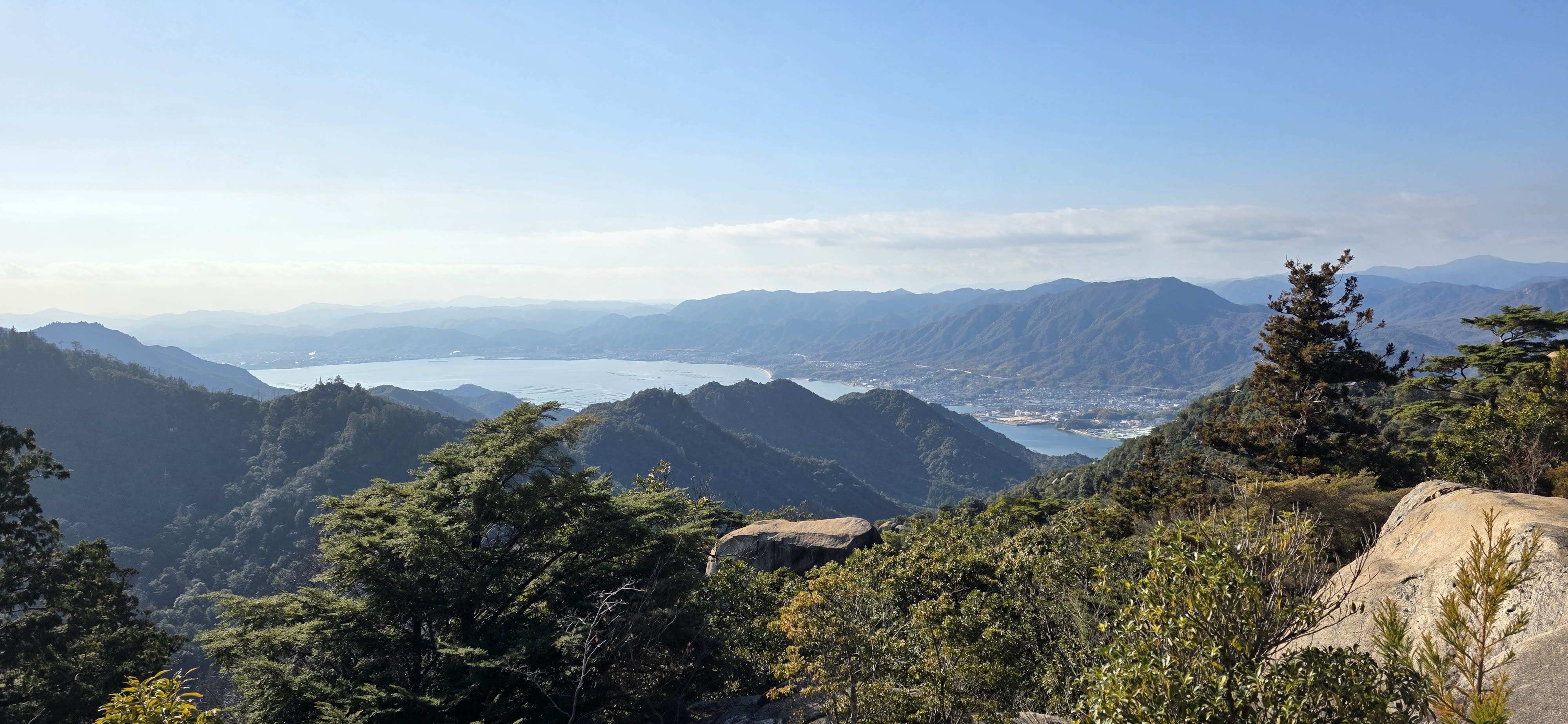
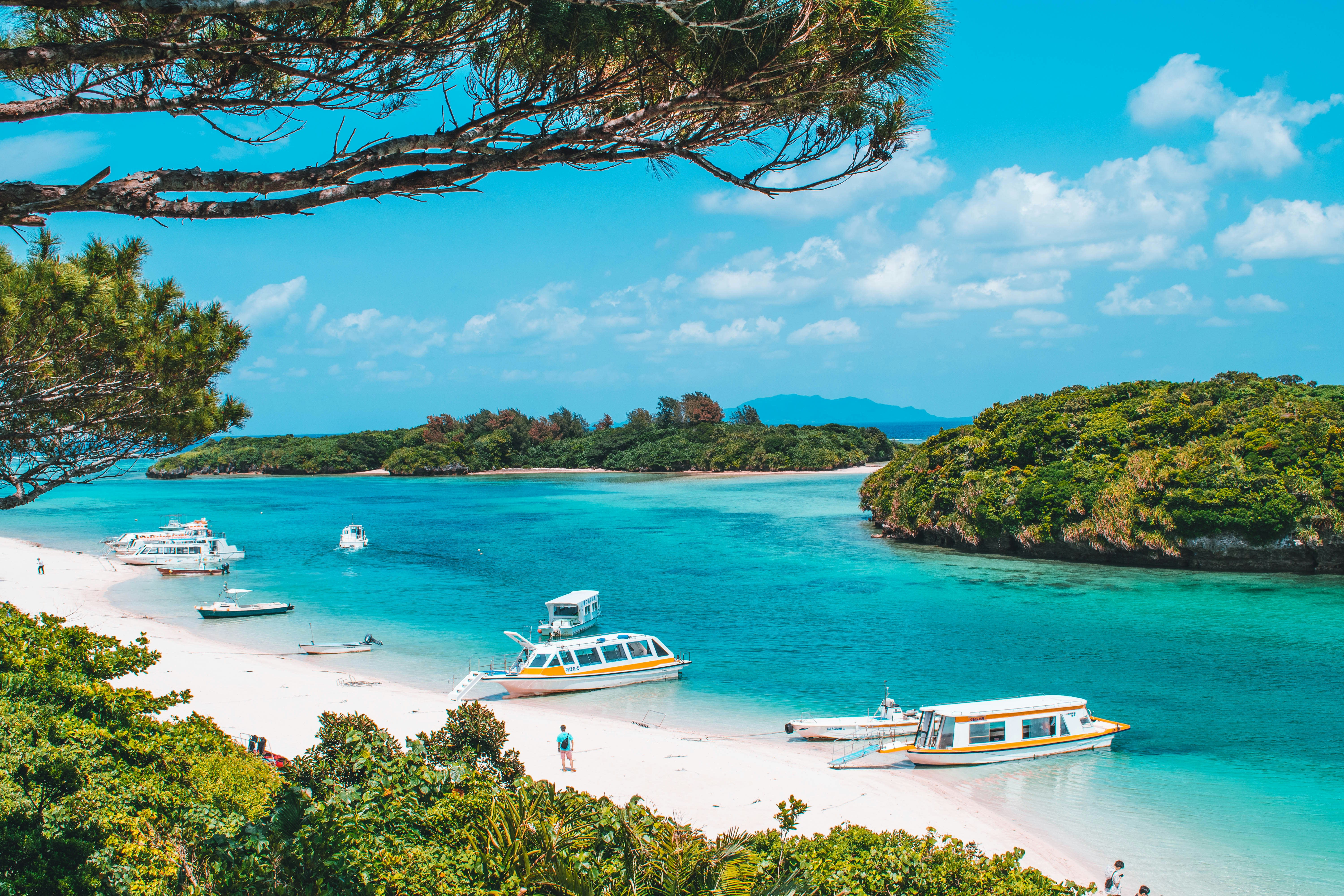
Kabira Bay is the postcard shot: emerald water, small wooded islands, and glass-bottom boats gliding over coral. The island also produces excellent Ishigaki beef, a lesser-known wagyu that rivals Kobe at a fraction of the tourist markup.
From Ishigaki, short ferry rides fan out to neighbouring islands:
- Taketomi Island (10 min by ferry): A tiny coral island where water buffalo carts trundle through lanes of traditional stone houses and bougainvillea. Feels frozen in time.
- Iriomote Island (40 min by ferry): Covered in dense subtropical jungle and mangrove rivers. Often called "Japan's last frontier." Home to the critically endangered Iriomote wildcat, though spotting one is exceptionally rare.
Which Should You Choose?
- First time in Okinawa? Start with Naha and the main island (3–4 days), then add the Kerama Islands for a day trip or overnight.
- Here for the beaches? Miyako Island. The beaches are genuinely world-class and easier to reach than the Yaeyamas.
- Want adventure and variety? Ishigaki plus Iriomote and Taketomi. The Yaeyama Islands feel like a completely different trip from the main island.
- Have 10+ days? Do all of them. Fly into Naha, work your way down to Ishigaki, and fly back to the mainland from there.
Getting to Okinawa
There's no train to Okinawa. No ferry route from the mainland is practical for tourists (it takes 25+ hours from Kagoshima). You're flying, and the good news is that flights are frequent, fast, and surprisingly affordable.
From Mainland Japan
| From | To | Flight time | Approx. one-way price |
|---|---|---|---|
| Tokyo (Haneda/Narita) | Naha | ~2.5–3 hrs | ¥6,000–¥25,000 |
| Osaka (Kansai) | Naha | ~2 hrs | ¥5,000–¥20,000 |
| Fukuoka | Naha | ~1.5 hrs | ¥5,000–¥18,000 |
| Nagoya (Chubu) | Naha | ~2.5 hrs | ¥6,000–¥22,000 |
Budget carriers like Peach, Jetstar Japan, and Skymark regularly offer fares under ¥10,000 if you book a few weeks ahead. JAL and ANA cost more but include luggage and seat selection. Flights from Tokyo run dozens of times per day; even Fukuoka has 10+ daily departures.
You can also fly directly from major mainland cities to Ishigaki and Miyako without connecting through Naha. ANA and JTA operate direct routes from Tokyo (Haneda) and Osaka (Kansai) to both islands.
From Other Countries
Naha Airport has a growing international terminal with direct flights from several nearby cities. If you're already in East or Southeast Asia, Okinawa can make a great standalone trip or a side trip added onto a mainland Japan itinerary.
| From | Flight time | Airlines |
|---|---|---|
| Seoul (Incheon) | ~2–2.5 hrs | Korean Air, Jin Air, Jeju Air, T'way Air, Eastar Jet |
| Busan | ~1.5 hrs | Jin Air, Jeju Air |
| Taipei (Taoyuan) | ~1.5 hrs | EVA Air, Peach, Tigerair Taiwan, JTA (from Feb 2026) |
| Hong Kong | ~2.5 hrs | HK Express, Peach |
| Shanghai | ~2 hrs | Spring Airlines |
| Bangkok / Singapore | ~4–5 hrs | Seasonal/charter services |
South Korea is the biggest source of international visitors to Okinawa. Seoul to Naha is just over two hours, with multiple budget carriers offering round trips for under $200. Okinawa is a popular short-break destination for Korean travellers, so you'll find Korean menus and signage at many tourist spots.
The Taiwan connection is especially interesting given the historical ties. Naha is closer to Taipei (630 km) than to Tokyo (1,550 km), and a new JTA daily service launched in February 2026 joins existing EVA Air and Peach routes. Flight time is about 1.5 hours, making a Taipei-to-Okinawa side trip very easy.
Getting Between Islands
| Route | How | Time | Cost |
|---|---|---|---|
| Naha → Ishigaki | Flight (ANA, JTA, Solaseed) | ~1 hr | ¥8,000–¥20,000 |
| Naha → Miyako | Flight (ANA, JTA) | ~50 min | ¥7,000–¥18,000 |
| Naha → Kerama (Zamami) | High-speed ferry | ~50 min | ~¥3,200 |
| Naha → Kerama (Tokashiki) | High-speed ferry | ~35 min | ~¥2,500 |
| Ishigaki → Taketomi | Ferry | ~10 min | ~¥730 |
| Ishigaki → Iriomote | Ferry | ~40 min | ~¥2,100 |
Inter-island flights run 10–14 times per day between Naha and Ishigaki, so connections are easy. The Kerama ferries from Naha's Tomari Port are frequent enough for comfortable day trips. The Yaeyama island-hopping ferries from Ishigaki run roughly every 30 minutes to Taketomi and every hour to Iriomote.
When to Visit
Okinawa has a subtropical climate, so it's warm year-round. But some months are significantly better than others.
- Best months: late March to May, and October to November. Warm enough to swim (water temperatures hit 24–28°C), low typhoon risk, and manageable crowds. Late March also brings cherry blossoms, which bloom about a month earlier in Okinawa than on the mainland.
- Peak season: July to August. School holidays bring Japanese domestic tourists in huge numbers. Prices rise 30–50%, popular beaches get crowded, and typhoon risk is at its highest.
- Rainy season: May to mid-June. Expect heavy rain, especially in June (about 315 mm). The upside: crowds are thin and prices are low. The rainy season usually clears by late June, and the rest of summer is mostly sunny between typhoons.
- Winter: December to February. Temperatures hover around 16–20°C, too cool for most swimming but still pleasant for sightseeing. Humpback whales pass through the Kerama strait from January to March. Hotel prices are at their lowest.
Practical Tips
- Your Suica/PASMO won't work here. Okinawa uses a separate IC card system called OKICA. You can buy one at monorail stations or FamilyMart and use it on the Yui Rail and local buses. Alternatively, just pay cash or use contactless credit cards where accepted.
- Rent a car outside Naha. The main island has very limited public transport beyond the monorail. Buses exist but are slow and infrequent. A rental car (around ¥7,500/day for a compact) unlocks everything north of Naha, including the Churaumi Aquarium, the beaches, and the quieter northern villages. You'll need an International Driving Permit.
- Okinawan food is worth seeking out. Don't default to mainland Japanese restaurants. Try goya champuru (bitter melon stir-fry), Okinawa soba (thick wheat noodles in pork broth, not buckwheat), taco rice (exactly what it sounds like, and surprisingly good), rafute (slow-braised pork belly), and purple sweet potato tarts. Makishi Public Market in Naha is the best introduction.
- Learn one word: mensore. It means "welcome" in the Okinawan language (Uchinaaguchi) and you'll see it everywhere. A few other useful terms: nifee deebiru (thank you) and haisai/haitai (hello, for men/women).
- Sun protection is serious. The UV index in Okinawa is significantly higher than on the mainland, especially from April to September. Bring reef-safe sunscreen (some beaches require it), a rash guard for snorkelling, and a hat.
- Cash is still useful. Major hotels and chain stores take cards, but many smaller restaurants, market stalls, and beach shacks are cash-only. 7-Eleven and FamilyMart ATMs accept foreign cards.
- US military bases are part of the landscape. About 70% of US military facilities in Japan are concentrated in Okinawa, and you'll see bases, particularly in the central part of the main island. American Village in Chatan grew up around the base culture and is now a shopping and dining district. It's part of Okinawa's complex modern identity.
7-Day Okinawa Islands
A subtropical escape that barely feels like the rest of Japan: two nights in Naha for Shuri Castle and Ryukyu food, two on Onna's west coast for Blue Cave snorkeling and the whale sharks of Churaumi, then a short flight south to Ishigaki for Kabira Bay and a day trip to the water-buffalo carts of Taketomi. Beaches, reefs, and a culture all its own, taken at island pace.