Japan in October 2026: Weather, Festivals and Mountain Color
Warm days, three big festivals and mountain color, but also Tokyo's wettest month. October 2026 weather, foliage, festival dates and sell-out nights.
October is one of the best months to be in Japan if you want warm days and plenty to do. Tokyo runs 15 to 22°C, the mountain trails and alpine routes are in their last good weeks, and three of the country's great festivals fall between October 7 and 22. There are two catches. October is Tokyo's wettest month, with typhoons still possible in the first half, and it is not red-maples-over-temple-roofs season: that waits until late November.
In October the color lives high and north: Hokkaido's gorges, Nikko's upper lakes, the Japanese Alps. Kyoto and Tokyo stay green. The month is also busier than its reputation. 3.90 million foreign visitors arrived in October 2025, within 13,000 of April, the busiest month of the year, and many Kyoto hotels are already full for the night before the Jidai Matsuri. If you know all that going in, October is hard to beat. If you do not, you will spend the trip wondering where autumn went.
Japan's Weather in October: Warm Days, Wet First Half
Tokyo averages 15 to 22°C across the month, Kyoto 14 to 23°C and Osaka 16 to 24°C. The month cools as it goes: Tokyo's highs average 24°C over the first ten days and 20°C over the last eleven, so early October still feels like the tail of summer and by Halloween you want a jacket after sunset. The sticky air is gone, which changes the whole experience of the country: you can walk twenty thousand steps without arriving anywhere soaked.
This is also kinmokusei season, when the sweet osmanthus blooms in every residential street and half of Japan walks around sniffing the air. It came early in 2026: Weathernews found the east at peak scent by September 25, three weeks ahead of last year, while Kyoto and Osaka were still waiting on theirs into early October.
The honest asterisk is rain. Tokyo's October averages 235 mm, more than any other month and well over double November's 96 mm, with rain on about 10 days. It is front-loaded: the first ten days alone average 103 mm, more than the whole of November, while the last eleven average 61 mm and get more sunshine. Kyoto is drier, at 143 mm for the month. Typhoon risk roughly halves from September: in an average October, 0.9 typhoons pass within 300 km of the main islands (1.9 in September) and 0.3 make landfall (1.0 in September). If your dates flex, the second half of the month is the safer bet, and pack for a wet day either way.
Days shrink fast. Tokyo's sunset slides from 5:26 PM on October 1 to 4:47 PM on October 31. That is the month's quiet trade-off: you get warmth November never offers, and you lose evening light week by week.
The two ends of the country run on their own calendars. Sapporo averages 8 to 16°C; its first frost normally comes around October 25 and its first snowflakes around October 28. Hokkaido in October is jacket weather and worth it. Naha holds 24 to 28°C, still beach weather, but Okinawa sees more October typhoon approaches than the main islands (1.1 on average), so buy the flexible fare.
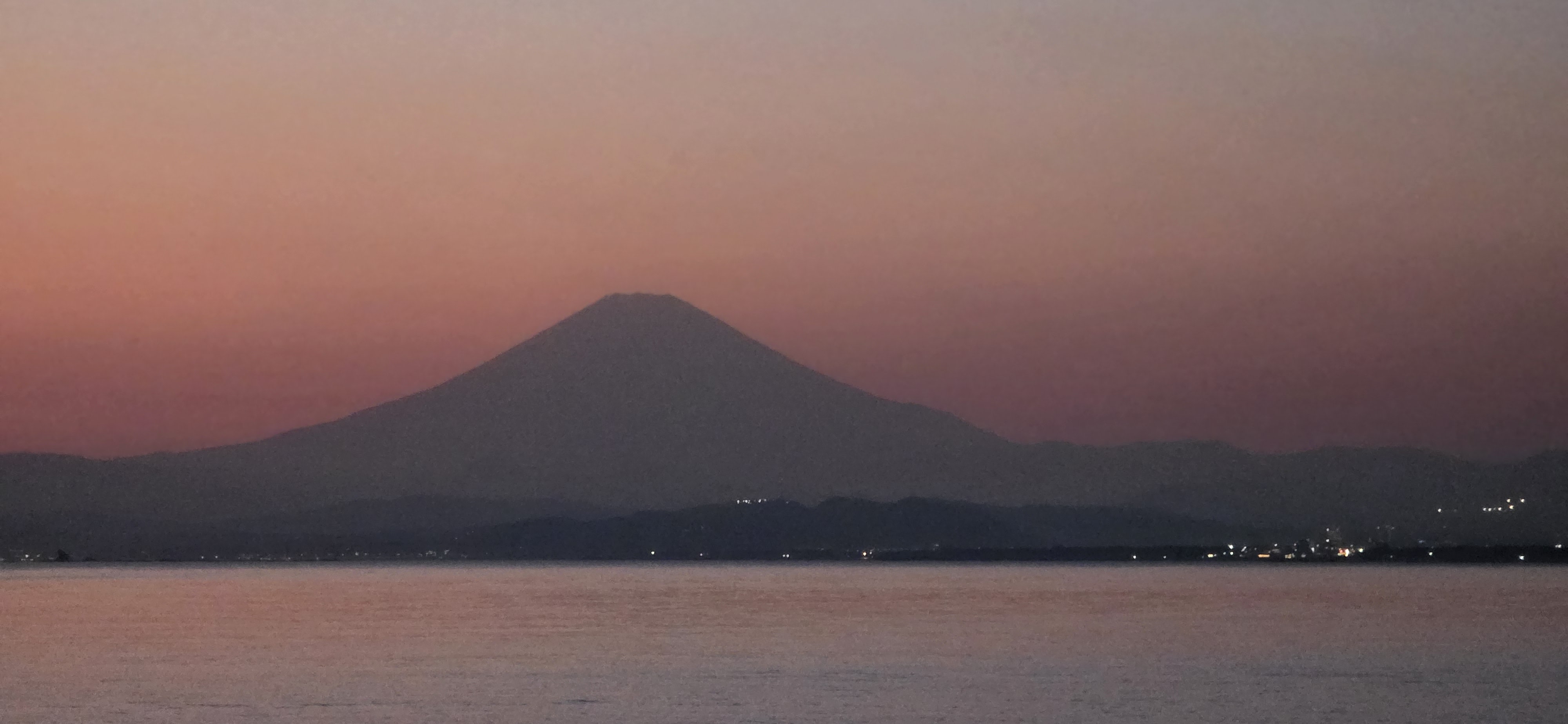
And Mount Fuji gets its hat back, eventually. Seen from Kofu, the first snowcap arrives on October 2 in an average year, but the last two were late: October 23 in 2025, and November 7 in 2024, the latest since records began in 1894. As of September 29, this year's had not yet been declared.
Autumn Leaves in October: Go High or Go North
Koyo runs north to south and summit to valley, and in October it has only made it partway down. These are the Japan Weather Association's usual peak windows for the places that turn this month, with the cities for contrast:
| Where | Usual peak |
|---|---|
| Sounkyo Gorge, Daisetsuzan (Hokkaido) | Early to mid Oct |
| Jozankei, near Sapporo | Early to mid Oct |
| Hachimantai (Iwate) | Early to mid Oct |
| Oku-Nikko: Ryuzu Falls, Lake Yunoko | Late Sep to mid Oct |
| Oku-Nikko: Irohazaka, Kegon Falls | Early to late Oct |
| Kamikochi (Northern Alps) | Early Oct to early Nov |
| Lake Chuzenji (Nikko) | Mid Oct to early Nov |
| Naruko Gorge, Oirase Gorge (Tohoku) | Mid Oct to early Nov |
| Shirakawa-go | Mid Oct to mid Nov |
| Tokyo and Kyoto | Mid Nov to early Dec |
The 2026 read: the Japan Meteorological Corporation's second forecast (October 1) calls the season close to normal: maples on schedule in every region, with ginkgo normal to late in the north and east. Hokkaido's mountains ran slightly ahead of that: Daisetsuzan peaked in mid-September, and Weathernews reported Sounkyo Onsen town at its best on October 1. So in Hokkaido, go early in the month; everywhere else, the usual windows hold. Our 2026 foliage forecast tracker picks up each forecast round (the next is due in early November) and flips each spot as the color reports come in, so check it the week you travel rather than trusting any date written here.
The famous city foliage is not an October event. The tracker's 2026 call puts Tokyo's ginkgo around November 26 and its maples around November 28, and Kyoto's temple gardens in the last week of November into early December. In October both cities are green with the first hints of yellow. What October offers instead is mountain color under warm skies. Different postcard, better hiking weather. If temple maples are the whole point of your trip, read the Japan in November guide instead, or push your dates back a month.
Nikko is the classic October foliage trip from Tokyo, about two hours from Asakusa on the Tobu line, and the key is altitude. Skip the still-green shrine area for the day (it peaks in November) and head up to Oku-Nikko: Kegon Falls and the Irohazaka road turn through October, the Senjogahara marsh boardwalk goes from gold grass to yellow larch, and Lake Chuzenji peaks from mid-month. One warning that saves a day: Irohazaka's two one-way roads have 48 hairpin bends between them, and Nikko's own tourism site says the usual 20-minute climb often takes two to three hours in foliage traffic, and has taken six on holiday weekends. Go midweek and take the first bus up, or sleep at the lake: a Lake Chuzenji room puts you on the mountain before the day-trippers.
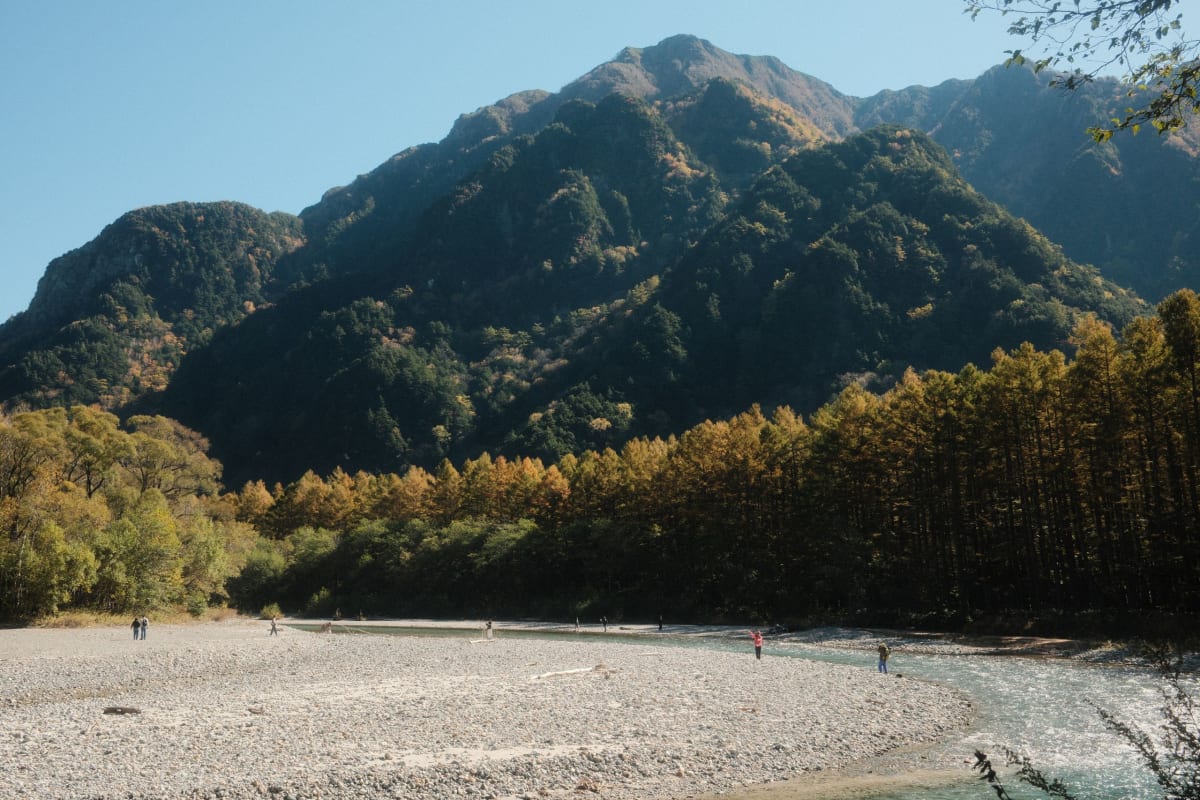
Kamikochi in the Northern Alps is our pick for the most beautiful October day in Japan. The color starts on the Hotaka peaks and runs quickly downhill, the larches along the valley floor turn gold, and the Azusa River runs unreasonably blue through the middle of it. The usual window is early October to early November, and the tracker's normal-to-late read points at the second half of October this year. Private cars are banned all year (buses run from Shin-Shimashima station on the Matsumoto side and Hirayu on the Takayama side), the valley's own site lists the October foliage season among its most crowded times, and the road closes for winter on November 15. The riverside path upstream from Taisho Pond is flat enough for sneakers.
Hokkaido is for early-month travelers. Daisetsuzan's alpine slopes peak in September, and Sounkyo Gorge below them usually holds its color into mid-October, though this year's arrived early. The easy alternative is Jozankei, the hot-spring gorge about an hour from central Sapporo, which usually peaks in early to mid October. Sapporo's own parks and ginkgo avenues are forecast late this year, around November 6 to 7.
The Best Hiking Weeks of the Year
October is prime hiking season: cool air, the summer storms mostly past, and the high country open until it shuts for winter. Three routes suit it perfectly:
- The Nakasendo, Magome to Tsumago. The post-town walk through the Kiso Valley is about 9 km and three hours over the 790 m Magome Pass, according to the Magome tourist association. Roughly halfway sits the Ichikokutochi teahouse, a mid-Edo building where walkers can sit down for tea, and in autumn the forest is finally cool enough to walk at midday.
- Kumano Kodo. The pilgrimage trails through the Kii mountains are too humid in summer, and October is the sweet spot. The hot-spring villages along the route earn their keep once the evenings cool: at Yunomine, Tsuboyu is a small stone-lined bath in a cabin by the creek, one of the only World Heritage-listed hot springs you can actually sit in. It is private, first come first served, 30 minutes for one or two people.
- The Tateyama Kurobe Alpine Route. The 37 km route through the Northern Alps climbs almost 2,000 meters by cable car, bus and ropeway, and in October the color moves down it: Murodo at the top peaks from mid-September into early October, the ropeway section in early to mid October, Bijodaira near the bottom in mid October to early November. The route runs until November 30 in 2026. Web tickets reserve a boarding time, and same-day tickets are still sold when the advance ones run out.
The one mountain you cannot hike is the big one: Mount Fuji's 2026 climbing season ended on September 10, the trails are closed to the summit, and the official site calls off-season climbing extremely dangerous, with the huts and first-aid stations shut. October Fuji is for viewing, not climbing; the Mt Fuji climbing season tracker follows next summer's dates and the first snowcap. Nearby Hakone has the region's one genuinely great October-specific sight: the Sengokuhara pampas grass, a whole hillside of susuki that turns a backlit gold from September into November, with a path straight through the middle.
October 2026 Festivals and Events, Date by Date
October's big festivals crowd into its first three weeks, and Halloween closes the month. The 2026 dates are below; each festival's times, tickets and next year's dates are on our autumn festivals calendar.
| Dates | Event |
|---|---|
| Oct 7–9 (Wed–Fri) | Nagasaki Kunchi |
| Oct 9–10 (Fri–Sat) | Takayama Autumn Festival |
| Oct 10–12 (Sat–Mon) | Sports Day long weekend |
| Oct 17–18 (Sat–Sun) | Kawagoe Festival, near Tokyo |
| Oct 22 (Thu) | Jidai Matsuri and Kurama Fire Festival, Kyoto |
| Oct 30–Nov 1 (Fri–Sun) | Ikebukuro Halloween Cosplay Fes, Tokyo |
| To Nov 8 | Halloween Horror Nights, Universal Studios Japan |

Takayama Autumn Festival, October 9 and 10. The Hachiman Matsuri fills Takayama's preserved old town with gilded yatai floats, a tradition that goes back to about 1718 and is on UNESCO's intangible heritage list. In 2026 ten come out, because the Gyojin-tai is under repair. On both days they line up on the approach to Sakurayama Hachimangu from 9 AM, and the Hotei-tai's karakuri puppets perform twice a day (noon and 2 PM on the 9th, 11 AM and 1 PM on the 10th). The best part is the evening of the 9th, when the floats parade through the old town by lantern light from 6 PM to about 9:30 PM. There are no viewing stands, and rain scales events back or cancels them, never postpones them. The festival's own Q&A says central hotels are full more than six months ahead, so the workaround is Gero Onsen, 43 minutes away by limited express: its last local train leaves Takayama at 9:50 PM on the 9th, after the lanterns finish.
Nagasaki Kunchi, October 7 to 9. Nagasaki's Suwa Shrine festival has run since 1634, and its dances borrow freely from the port's centuries of Chinese and European trade. The city's 58 performing neighborhoods are split into seven groups, so each one gets its turn only once every seven years. The 2026 lineup includes Chikugo-machi's dragon dance, Uwa-machi's Kokkodesho (a drum float the bearers throw into the air and catch one-handed) and Motofuna-machi's Chinese trading ship. Paid seats at all four venues (Suwa Shrine, the Otabisho, Yasaka Shrine and Chuo Park) went on sale between June and August, but you can see plenty for free: after their set performances the troupes spend the days touring central Nagasaki, doing short routines outside homes and businesses, and the organizers publish the route map. When a float leaves the stage, join the crowd shouting "mottekoi", the Kunchi encore.
Jidai Matsuri, Kyoto, October 22. About 2,000 people in costume walk more than a thousand years of Kyoto history in reverse, from the Meiji Restoration back to the 790s, in a procession about 2 km long. It leaves the Imperial Palace at noon and is all in at Heian Shrine by about 4 PM; paid seats are sold through Ticket Pia, and rain postpones it a day (a wet October 23 cancels it). It is a slow, stately spectacle: less thrilling than Gion Matsuri, far easier to see well. Then, the same evening, the Kurama Fire Festival lights up the mountain village of Kurama north of the city.

At 6 PM the houses of Kurama light their bonfires, and torches carried first by children and then by young men converge on the stone steps below Kurama-dera's gate, beneath Yuki Shrine, with the festival running past midnight. It is spectacular and genuinely crowded: one small village and one small railway (the Eizan line, 31 minutes from Demachiyanagi on a normal day), with the road closed to cars from 3 PM and every parking lot shut. Go early, expect to shuffle, and treat the two events as a full Kyoto day.
Kawagoe Festival, October 17 and 18. The easiest big float festival from Tokyo, in the old warehouse town of Kawagoe, 26 minutes from Ikebukuro on the Tobu Tojo line (¥490), so it fits a Tokyo stay without a hotel change.
Halloween, and what happened to it. For years the unofficial main event of late October was the street party around Shibuya Crossing. That era is over. Since October 2024, drinking in the streets and parks around Shibuya Station has been banned every night of the year from 6 PM to 5 AM, and the mayor has told the world plainly that Shibuya is not a Halloween venue. Costumed crowds still turn up, and the 31st is a Saturday this year. The better versions are elsewhere: Universal Studios Japan's Halloween Horror Nights (its 15th year, running to November 8), Disney Halloween at Tokyo Disney Resort (to October 31), and the Ikebukuro Halloween Cosplay Fes (October 30 to November 1), which is what Shibuya's street party wished it was: organized, photogenic, and welcome. Its Friday-night session at Sunshine City is 18 and over.
The food calendar deserves its own paragraph, because October is quietly one of the best eating months of the year. Shinmai, the new-harvest rice, arrives and is treated with the reverence other countries give new wine. Chestnuts are everywhere: kuri gohan (chestnut rice) on set menus, and Mont Blanc in every patisserie window. Grilled sanma (Pacific saury) is the classic autumn izakaya order, persimmons pile up at the fruit stands, and matsutake mushrooms appear on kaiseki menus at prices that will make you laugh out loud.
October Crowds, Hotel Prices and the Nights That Sell Out
October is not a quiet month. Its 3.90 million foreign visitors in 2025 were well ahead of November (3.52 million) and September (3.27 million), and 2026 is tracking only slightly below last year (down 2.7% through August). Hotels price it accordingly. When we checked APA's own booking site on September 29 for two adults, a Kyoto Station APA room for Wednesday, October 14 cost ¥21,000 to ¥22,000: about three times the same rooms in January, and close to late November's ¥23,000 to ¥25,000. Tokyo's mid-October weeknights ran 20 to 60% above January (the Where to Stay in Tokyo guide has the area-by-area numbers). Don't count on October being the cheap alternative to November.
Four pinch points are worth booking around:
- Sports Day weekend, October 10 to 12. The holiday falls on the second Monday of October, the 12th this year, which makes a three-day weekend, and its Saturday is also the Takayama festival's second day. Domestic travelers head for exactly the places you want: Nikko, Hakone, Kamikochi, the Alps. Sit those days out in a big city, or go the week after.
- Kyoto around the Jidai Matsuri. For Wednesday, October 21, five of the seven Kyoto APA hotels we checked had no rooms at all and the other two wanted ¥28,800 and ¥30,800; APA Kyoto Ekimae was full for the 22nd too. For November 25, by comparison, all seven still had rooms when the Where to Stay in Kyoto guide checked on the same day. Book Kyoto now, on a refundable rate, or sleep in Osaka, under 30 minutes away by train.
- Festival towns. Takayama's central hotels fill more than six months out, by the organizers' own count, so look at Gero; for Nagasaki, book the moment your Kunchi dates are firm.
- Tokyo weekends. Halloween itself did not price above the Saturday before it: APA Shibuya Dogenzakaue wanted ¥45,400 for October 31 and ¥49,400 for October 24, and APA Shibuya Ekimae was already full for both. Book any October weekend in Tokyo early.
Midweek dates away from those four are where October is easiest, especially in the mountains, where Nikko's worst traffic is a weekend and holiday problem.
What to Pack for Japan in October
- Layers built around a t-shirt base. Early-October afternoons average 24°C in Tokyo, and for a sunny day at the Takayama festival the organizers suggest a t-shirt and a hat, then a warmer layer once it cools after 5 PM.
- A proper warm layer if you are going high. In October 2022, Kamikochi averaged 13°C highs and 4°C lows by the valley's own figures, and the top of the Alpine Route is colder still. A hat and gloves weigh nothing.
- A folding umbrella, and actually carry it in the first half of the month. October is Tokyo's wettest month, with rain on about one day in three.
- Broken-in walking shoes with real tread. This is the month you will walk the most, and post-town trails and temple steps get slick after rain.
- Swimwear if Okinawa is on the route: Naha still averages 28°C highs.
October vs September vs November
Pick September if thin crowds beat everything and you can gamble on the weather. September 2025 had the second-fewest foreign arrivals of the year. The trade: it is the peak typhoon month for the main islands (1.9 approaches on average), and the first half still feels like summer, with Tokyo highs near 30°C. The Japan in September guide covers it.
Pick November if the postcard is the point. Peak maples in Kyoto and Tokyo, 96 mm of rain in Tokyo against October's 235, no typhoon approaches to the main islands in the 30-year averages, and fewer foreign visitors than October. The trade: the warmth is gone (Tokyo 9 to 17°C) and Kyoto costs as much as it does in October. The Japan in November guide covers the timing week by week, and works as the sequel to this one if your dates straddle the two months.
Pick October if you want the country working at its best and can live with some rain: warm days, open trails, three great festivals, mountain color, and crowds you can still outmaneuver with a midweek plan. It is the month for people who want to do things in Japan rather than queue for one famous view of it. Our Best Time to Visit Japan guide, which breaks down all twelve months, puts November and cherry blossom season first, with October and May as the runners-up.
A Two-Week October Route
The classic golden route suits this month. Our Classic 2-Week Japan itinerary (Tokyo, Hakone, Kyoto, Nara, Osaka, Hiroshima) is the base, with October adjustments:
- Traveling October 1 to 14: watch the typhoon forecast for the first ten days and hold one flexible day. If your dates touch the 9th and 10th, the Takayama festival is worth bending the route for: run Tokyo first, then take the Shinkansen to Nagoya and the Hida limited express up to Takayama (about 2 hours 40 minutes) before continuing to Kyoto. Sleep nearby rather than day-tripping, because the last Hida back to Nagoya leaves at 8:51 PM on the 9th, before the lantern parade ends. In Kyoto, skip the still-green maple temples in favor of Higashiyama street-wandering and the Fushimi sake district, which do not care what color the leaves are.
- Traveling October 15 to 31: add a midweek Nikko day trip from Tokyo, going straight up to Oku-Nikko for the color, and give Hakone a full day for the ropeway and the Sengokuhara pampas grass. If you can trade the Hiroshima leg for two nights in the Alps, base in Matsumoto for Kamikochi's golden larches, our pick for the single best thing happening in Japan in late October. Timing your Kyoto stay across the 22nd adds the Jidai Matsuri and the Kurama Fire Festival in one day, but only if you already have a room.
Open the template in the trip planner, shift the dates to your half of the month, and point the mountain days wherever the foliage tracker says the color has reached. If you can move the whole trip to mid or late November, our 10-Day Autumn Foliage itinerary is timed for Kyoto's peak instead.
Frequently Asked Questions
Is October a good month to visit Japan?
Yes, especially for hiking, festivals and long walking days. Tokyo averages 15 to 22°C, the mountain trails and alpine routes are open, and the Nagasaki Kunchi, Takayama and Jidai Matsuri festivals all fall between October 7 and 22. The caveats: it is Tokyo's wettest month (235 mm on average, most of it in the first half), city foliage waits until late November, and it is busy, with 3.90 million foreign visitors in October 2025, almost as many as April.
Can you see autumn leaves in Japan in October?
Yes, if you go high or north. Hokkaido's Sounkyo Gorge and Jozankei usually peak in early to mid October, Oku-Nikko's Irohazaka and Kegon Falls through October, and Kamikochi, Lake Chuzenji, Naruko Gorge and Oirase Gorge from mid October into early November. Tokyo and Kyoto stay mostly green until late November; the 2026 forecast puts Tokyo's ginkgo around November 26.
What festivals are in Japan in October 2026?
Nagasaki Kunchi runs October 7 to 9 (Wednesday to Friday) and the Takayama Autumn Festival October 9 and 10, with its lantern-lit float parade on the evening of the 9th. The Kawagoe Festival near Tokyo is October 17 and 18, and on Thursday October 22 Kyoto has the Jidai Matsuri procession by day and the Kurama Fire Festival at night. For Halloween, go to Universal Studios Japan's Horror Nights (to November 8) or the Ikebukuro Halloween Cosplay Fes (October 30 to November 1) rather than Shibuya, which bans street drinking around the station every night.
Is October still typhoon season in Japan?
Yes, but the risk is about half of September's. In an average October, 0.9 typhoons pass within 300 km of the main islands (1.9 in September) and 0.3 make landfall (1.0 in September), and Okinawa sees slightly more, at 1.1. Tokyo's rain is front-loaded too: the first ten days average 103 mm, the last eleven 61 mm. If you travel early in the month, keep one flexible day and a refundable fare.
How crowded is Japan in October?
Busier than most people expect: October 2025 had 3.90 million foreign arrivals, second only to April and more than November. The worst pinch points in 2026 are the Sports Day long weekend (October 10 to 12), when domestic travelers head for Nikko, Hakone and the Alps, and Kyoto around the Jidai Matsuri on October 22, where five of the seven APA hotels we checked were already full for the 21st in late September. Book those dates early and go midweek where you can.
What is the weather like in Japan in October?
Warm and cooling through the month. Tokyo averages highs of 24°C in the first ten days and 20°C in the last eleven, with lows around 15°C; Kyoto runs 14 to 23°C and Osaka 16 to 24°C. Sapporo is 8 to 16°C with its first snow normally around October 28, while Naha stays at 24 to 28°C. Pack layers, a folding umbrella for the first half of the month, and a warm layer for the mountains.
Classic 2-Week Japan
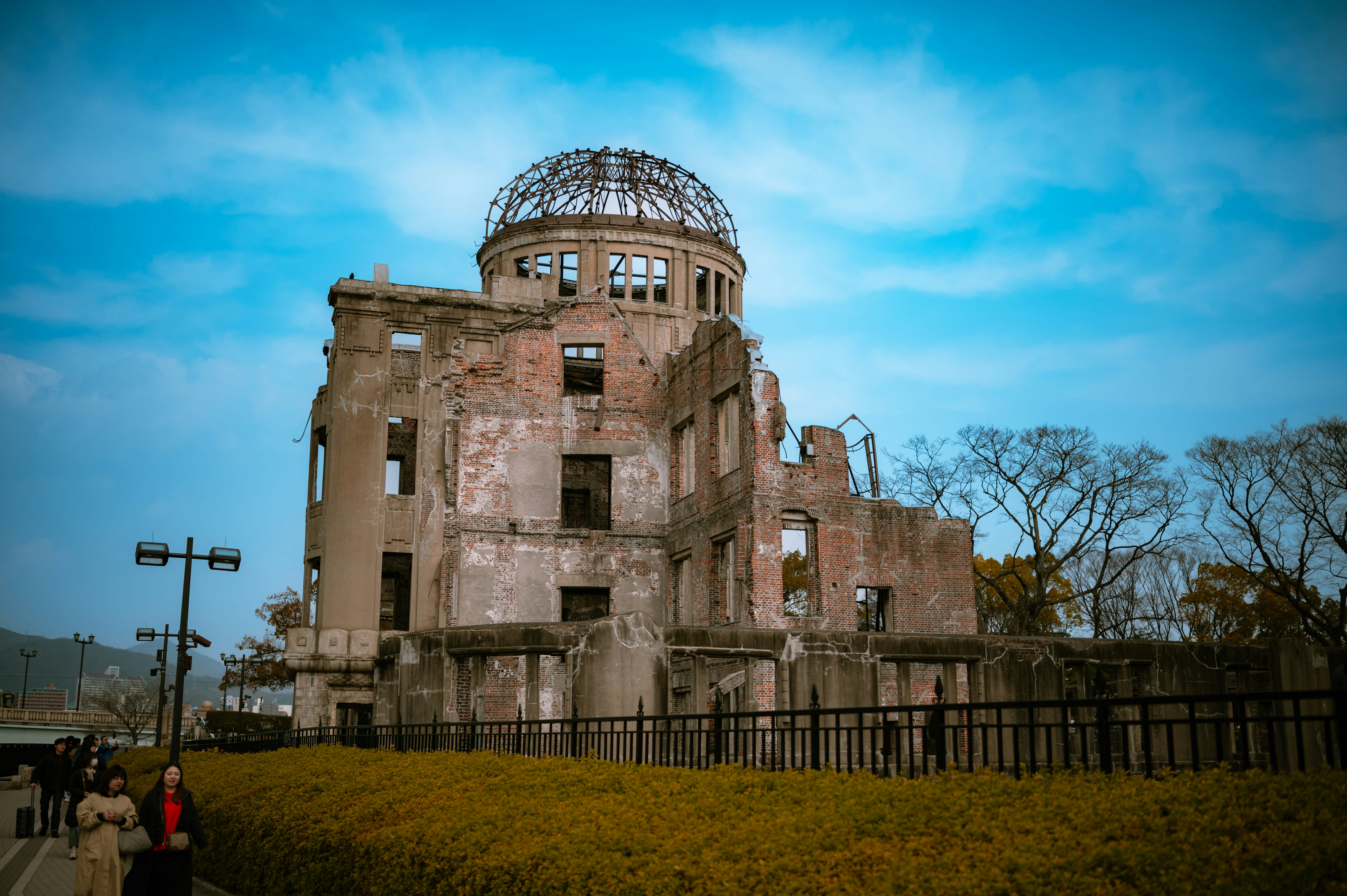
The classic first-timer route in 14 days: Tokyo, a ryokan night in Hakone, Kyoto with a day in Nara, Osaka, and Hiroshima with Miyajima, linked by the Shinkansen.