About Higashiyama
If you only have one day in Kyoto, spend it in Higashiyama. This narrow strip along the city's eastern hills packs more of historic Japan into a single walk than anywhere else in the country: preserved stone-paved lanes under a strict 1976 preservation ordinance, wooden machiya townhouses converted into tea shops and pottery studios, and some of the most visited temples on the planet, all against a backdrop of forested mountains.
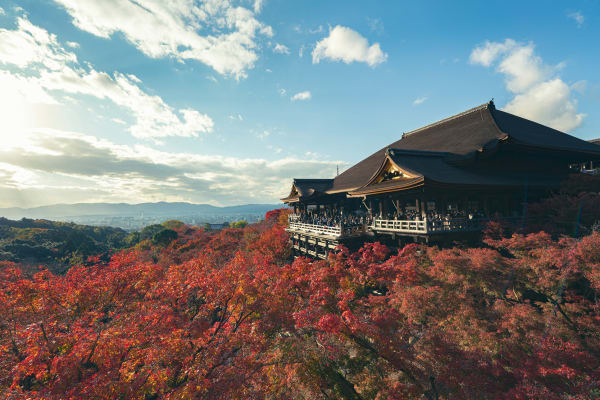
The anchor is Kiyomizu-dera, the grand hilltop temple whose wooden stage juts 13 meters out over the treetops on 139 zelkova pillars, assembled without a single nail. Founded in 778 and rebuilt to its current form in 1633, it is one of Japan's oldest surviving wooden structures. Below the stage, the Otowa Waterfall offers three streams, each said to grant a different wish. From there, the lanes of Sannenzaka and Ninenzaka wind downhill through a perfectly maintained Edo-period streetscape: no neon, no vending machines, just tile roofs and lattice windows. At the bottom sits Yasaka Shrine, headquarters of Gion Matsuri, which connects seamlessly into the Gion district to the west.
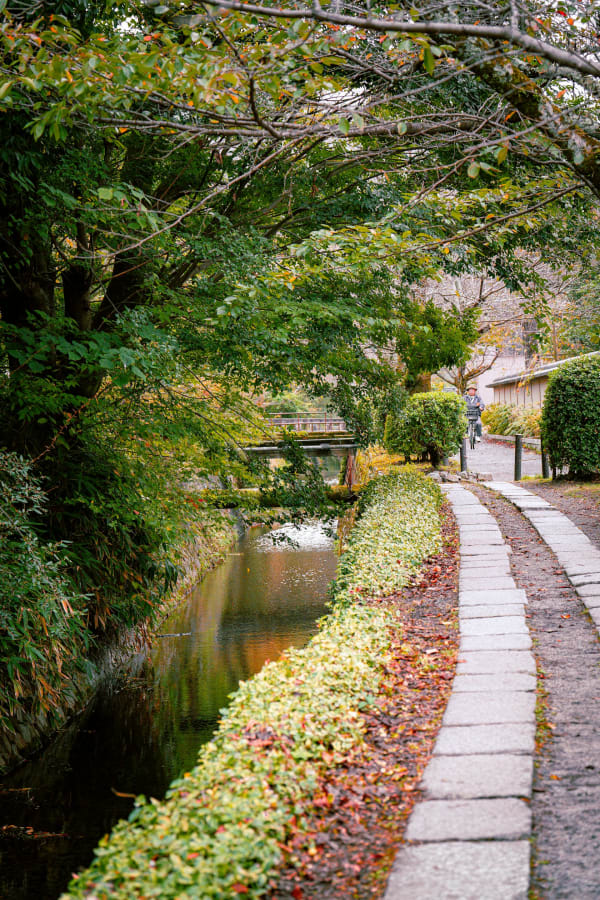
Heading north, the Philosopher's Path follows a 2-kilometer tree-lined canal past smaller temples including Nanzen-ji, whose grounds contain an 1890 brick aqueduct that still carries water from Lake Biwa into the city. The path is named after philosopher Nishida Kitaro, who walked it daily. At the northern end, Ginkaku-ji (the Silver Pavilion) anchors the route. Budget a full day to cover the whole Higashiyama spine, or split it into a southern half and a northern half over two early mornings to avoid the worst of the crowds.
Don't Miss
Kiyomizu-dera Before 8 AM
The temple opens at 6 AM and the first two hours are genuinely different from what you find by mid-morning. The 13-meter wooden stage, supported by 139 zelkova pillars without a single nail, faces east over the treetops toward the city. Below the main hall, the Otowa Waterfall splits into three streams, each associated with a different wish: longevity, love, or success. Drink from one only. Admission ¥500.
Walk Sannenzaka and Ninenzaka
These two stone-paved streets descend from Kiyomizu-dera toward Yasaka Shrine through a preservation zone with no modern signage, no vending machines, and strict rules on façade alterations. The walk is free and takes about 30 minutes at a leisurely pace through pottery shops, matcha cafes, and lacquerware vendors. Arrive before 9 AM when the shops are still shuttered and the light is slanted and golden. The name 'Sannenzaka' means three-year slope: local legend holds that a fall brings three years of bad luck.
Philosopher's Path and Nanzen-ji
The 2-kilometer canal-side path named after philosopher Nishida Kitaro runs from Ginkaku-ji at the north end down to the Nanzen-ji area. About 500 cherry trees line the route. At the southern end, Nanzen-ji's grounds contain the Biwa-ko Sosui, a working brick aqueduct built in 1890 that still carries Lake Biwa water into Kyoto. Entry to the grounds and aqueduct viewing is free; the Sanmon gate costs ¥600 and offers panoramic views across the city.
A Day in Higashiyama
From the hilltop temple to the Philosopher's Path
Kiyomizu-dera at Opening
Arrive at the temple shortly after its 6 AM opening. The wooden stage faces east and catches the morning light directly. By 7:30 AM you can explore the Otowa Waterfall below and the subsidiary shrines on the grounds without fighting for space. The admission area is ¥500; the surrounding approach paths and lower gate area are free.
💡 Tip
- • Admission ¥500; temple opens 6 AM
- • Otowa Waterfall: drink from one stream only
- • Wear shoes you can slip off easily — some inner halls require removing footwear
Sannenzaka and Ninenzaka
Walk downhill from Kiyomizu-dera through the two preserved stone-paved streets. Before 9 AM the shops are still closed and the streets are quiet enough to photograph without crowds filling the frame. The walk from the Kiyomizu main gate to Yasaka Shrine takes about 30 to 40 minutes at a browsing pace.
💡 Tip
- • Streets run downhill toward Yasaka Shrine
- • Shops open around 9 AM if you want to buy
- • Matcha soft-serve is sold at several stalls along the way
Yasaka Shrine and Maruyama Park
Yasaka Shrine sits at the western edge of the Higashiyama hills and is open 24 hours. The vermillion main gate faces Shijo-dori and the Gion district. Behind the shrine, Maruyama Park is free and pleasant in any season; in spring the famous weeping cherry tree at its center is surrounded by vendors and picnickers from mid-morning.
💡 Tip
- • Free and open 24/7
- • Maruyama Park: free admission any season
- • Early morning in spring: the weeping cherry before the lunch crowds arrive
Kodaiji Temple
Five minutes' walk northeast of Yasaka Shrine, Kodaiji is among the quietest of Higashiyama's major temples at this hour. Founded in 1605 by Nene, widow of Toyotomi Hideyoshi, it contains a bamboo grove, a mirrored pond garden, and two tea houses attributed to the legendary designer Sen no Rikyu. Admission ¥600.
💡 Tip
- • Admission ¥600
- • Opens 9 AM
- • Special illumination events held in spring and autumn evenings for an extra ¥600
Lunch Near Nanzen-ji
Head north toward Nanzen-ji for lunch options closer to the afternoon's Philosopher's Path walk. Junsei, a traditional yudofu (tofu hot pot) restaurant near Nanzen-ji's south gate, has been serving the Kyoto specialty in a garden setting for decades. Set menus run ¥3,500–¥5,500. Alternatively, the Omen udon restaurant near Ginkaku-ji serves simpler meals at lower prices.
💡 Tip
- • Junsei: yudofu sets ¥3,500–¥5,500, garden seating, lunch from 11 AM
- • Omen Ginkakuji: udon ¥1,200–¥2,000, more casual option
- • Reservations helpful for Junsei at weekends
Nanzen-ji and the Aqueduct
Nanzen-ji's grounds are free to walk through, and the brick Biwa-ko Sosui aqueduct running through them is the architectural surprise most visitors don't expect at a Zen temple. Completed in 1890, it still carries Lake Biwa water into Kyoto. Walk up to and across the aqueduct level; the garden below is visible through the arches. If you have time, climb the Sanmon gate (¥600) for panoramic city views.
💡 Tip
- • Grounds and aqueduct viewing free
- • Sanmon gate ¥600, city panorama from top
- • Hojo garden ¥600 separately
Philosopher's Path to Ginkaku-ji
Walk the full 2-kilometer Philosopher's Path north from the Nanzen-ji area to Ginkaku-ji (Silver Pavilion). The canal-side path is lined with about 500 cherry trees, spectacular in late March to early April. At the northern end, Ginkaku-ji (¥500) has a distinctive cone-shaped sand garden and a hillside walk with views back over the canal toward the mountains.
💡 Tip
- • Philosopher's Path: free, always open
- • Ginkaku-ji admission ¥500; opens 8:30 AM
- • Walk path south-to-north to finish at Ginkaku-ji without backtracking
Top Attractions
Kiyomizu-dera
Founded in 778 and rebuilt in 1633, Kiyomizu-dera is perched on the eastern hills with its 13-meter wooden stage jutting over the hillside canopy on 139 zelkova pillars, assembled without a single nail. The approach through Sannenzaka and Ninenzaka is itself a major attraction. Below the main hall, the Otowa Waterfall offers three streams, each associated with a wish: longevity, love, or success. Drink from one only.

Sannenzaka and Ninenzaka
Two stone-paved streets descending from Kiyomizu-dera toward Yasaka Shrine, designated a historic preservation district in 1976. The ordinance prohibits modern signage, vending machines, and façade alterations, maintaining an Edo-period street character. Lined with traditional shops selling pottery, lacquerware, and Kyoto sweets. Most photogenic before 9 AM when the shops are still shuttered.

Yasaka Shrine
One of Kyoto's most important shrines, open 24 hours with free admission to the outer grounds. Yasaka is the headquarters of Gion Matsuri, which runs the entire month of July and draws millions of visitors. The main vermillion gate faces west toward the Gion district. Connected directly to Maruyama Park on the east side.
Philosopher's Path
A 2-kilometer canal-side path lined with roughly 500 cherry trees, running from Ginkaku-ji at the north to the Nanzen-ji area at the south. Named after Nishida Kitaro (1870–1945), founder of the Kyoto School of philosophy, who walked this path daily while teaching at Kyoto University. The southern end connects to Nanzen-ji; the northern end to Ginkaku-ji (Silver Pavilion, ¥500).

Kodaiji Temple
Founded in 1605 by Nene (Kodai-in), widow of Toyotomi Hideyoshi, as a memorial temple for her husband. The grounds include a bamboo grove, a mirrored pond garden reflecting the surrounding hillside, and two tea houses attributed to master tea designer Sen no Rikyu. Less crowded than Kiyomizu-dera. Special illuminations held on spring and autumn evenings.

Nanzen-ji
A large Zen temple complex at the southern end of the Philosopher's Path, established in 1291 on the site of Emperor Kameyama's retired villa. The grounds are free to enter and contain the Biwa-ko Sosui, a brick aqueduct completed in 1890 that still carries Lake Biwa water into Kyoto. The Sanmon great gate (¥600, built 1628) offers panoramic views from the top; the Hojo rock garden (¥600) is a classic of Zen garden design.
Highlights of Higashiyama
- ✓Kiyomizu-dera's wooden stage juts 13 meters above the hillside on 139 zelkova pillars assembled without nails. Founded 778 CE, rebuilt 1633. Admission ¥500. Best before 8 AM.
- ✓Sannenzaka and Ninenzaka are under a 1976 preservation ordinance: no modern signage, no vending machines, just tile roofs and lattice windows. Local legend says falling on Sannenzaka brings three years of bad luck.
- ✓Yasaka Shrine is open 24/7 and free. It is the headquarters of Gion Matsuri, one of Japan's three great festivals, which fills the surrounding streets for the entire month of July.
- ✓Maruyama Park sits just east of Yasaka Shrine. A single famous weeping cherry tree is the centerpiece during blossom season. Free year-round; best before 9 AM in spring when crowds are lighter.
- ✓The Philosopher's Path is a 2-kilometer canal-side walk named after Nishida Kitaro, founder of the Kyoto School of philosophy. About 500 cherry trees line the route from Ginkaku-ji south to Nanzen-ji.
- ✓Nanzen-ji's Zen temple grounds contain the Biwa-ko Sosui, an 1890 brick aqueduct that still carries water from Lake Biwa to Kyoto. Free to enter the grounds and view the aqueduct; Sanmon gate ¥600 with panoramic city views from the top.
Related Articles
Japan in October: Weather, Festivals and Where the Color Starts
Warm days, dry air, and the first mountain color. Weather by region, the 2026 foliage forecast, the big festivals, and October's booking traps.
Where to Stay in Kyoto: Best Areas & Ryokan (2026)
Downtown, Kyoto Station, or a Gion ryokan? A straight answer on Kyoto's best areas to stay, with verified hotel and ryokan picks for every budget.
Other Kyoto Districts
Shibuya
Shibuya Crossing, where 3,000 pedestrians cross simultaneously, and the neon-lit backstreets of Tokyo's youth culture engine
Shinjuku
Free 45th-floor views, 200+ bars crammed into Golden Gai's six alleys, and 1,173 cherry trees in Shinjuku Gyoen
Harajuku
Takeshita-dori, Meiji Shrine's forest, and Cat Street: three completely different worlds within a 15-minute walk
Asakusa
Tokyo's Edo holdout: Senso-ji temple, 89-shop Nakamise-dori, and backstreets that refused to modernize
Ginza
The Wako clock tower at 4-chome, kabuki from ¥1,000 at Kabuki-za, and the deepest department store food halls in Japan
Ueno
World-class museums, a sprawling park, and one of Tokyo's best street markets
Akihabara
Tokyo's electric playground: anime, electronics, and otaku culture at full volume
Ikebukuro
Budget base on the Yamanote Line: rooftop aquarium, a nine-floor anime store, and Tokyo's densest ramen street
Roppongi
World-class art by day, Tokyo's most international nightlife by night
Odaiba
Tokyo's waterfront playground: digital art, a 20m Gundam, and Rainbow Bridge views across the bay
Tsukiji
Tokyo's kitchen: where the world's freshest seafood meets century-old market culture
Shimokitazawa
Tokyo's indie heart: narrow streets, vintage shops, live-music bars, and ¥900 curry
Chiyoda
Imperial Palace gardens, Edo Castle ruins, and 5km of Tokyo's most scenic moat-side running
Nihonbashi
Tokyo's original centre: Edo-era merchants, Michelin-star restaurants, and Tokyo Station's hidden food halls converge
Yanesen
Old Tokyo preserved: temple lanes, cat-spotting, and ¥200 street snacks in a neighbourhood that skipped the 20th century
Ebisu & Daikanyama
Tokyo's upscale-casual quarter: craft cocktails, curated bookshops, and the kind of dinner you'll remember for years
Nakano
The collector's Akihabara: Nakano Broadway's labyrinthine floors of rare figures, vintage manga, and otaku treasures at better prices
Ryogoku
Sumo heartland: where 300kg wrestlers train, chanko-nabe simmers, and Edo history fills Japan's best museum
Koenji
Tokyo's punk-rock thrift shop: vintage clothing capital, live music dives, and the wildest summer festival you've never heard of
Kichijoji
Tokyo's most liveable neighbourhood: Inokashira Park, the Ghibli Museum, and the kind of Sunday afternoon you'll wish you had at home
Gion
~80 invitation-only ochaya teahouses, Gion Matsuri since 869 CE, and a daily window at 5:30 PM when Kyoto's geiko and maiko take to the streets
Arashiyama
Arrive before 7 AM: Kyoto's bamboo grove, a UNESCO temple garden designed around a mountain, and 120 wild macaques on a hillside above the river
Fushimi
10,000 vermillion gates on a forested mountain, and Kyoto's oldest sake district below
Kinkaku-ji Area
Three UNESCO World Heritage temples within walking distance, anchored by a gold-leaf pavilion reflected in a mirror pond
Downtown Kyoto
Kyoto's living room: Nishiki Market, Pontocho alley, and the Kamo River at sunset
Dotonbori
Osaka's neon-lit entertainment heart where food, fun, and flashy signs collide
Shinsekai
Step back in time to retro Osaka - kushikatsu, Tsutenkaku Tower, and the lucky Billiken
Umeda
Northern Osaka's bustling business and shopping hub where modern meets underground
Tennoji
Where ancient temples meet modern skyscrapers: Osaka's perfect blend of old and new
Namba
Osaka's central crossroads: Shinsaibashi shopping, Hozenji Yokocho charm, and trains to everywhere
Amerikamura
Osaka's youth-culture playground: vintage shops, street art, and Triangle Park people-watching
Hakata
Ramen birthplace, a 1,260-year-old shrine, and a festival race that starts at 4:59 AM in the dark
Tenjin
Fukuoka's commercial center: 590 meters of underground shopping, Kyushu's finest depachika, and bar alleys that fill from 6 PM
Nakasu
A 500-meter island that runs on a different clock: quiet by day, yatai stalls and neon after 6 PM
Ready to Experience Higashiyama?
Add a stay in Higashiyama to your trip — we'll suggest activities and help you find hotels in the area.