About Asakusa
Asakusa is the closest Tokyo gets to feeling like old Japan. While the rest of the city rebuilt itself in glass and steel, this district kept its low-rise skyline, its traditional restaurants, and its narrow shopping streets. The centrepiece is Senso-ji, Tokyo's oldest Buddhist temple, founded in 645 AD. You approach it through Kaminarimon (the Thunder Gate), named for the 700kg red lantern hanging at its centre, and then along Nakamise-dori, a 250-metre shopping street that has been selling sembei (rice crackers), ningyo-yaki (small cakes), and traditional crafts for centuries. It is touristy, but it is also genuinely historic, and the temple complex is beautiful, especially early in the morning or lit up at night.
Beyond the temple, Asakusa rewards wandering. The backstreets west of Senso-ji are lined with small tempura restaurants, traditional craft shops, and old-school kissaten (coffee houses) that have largely disappeared from the rest of Tokyo. Hoppy Street, a short walk from the temple, is a row of open-air izakayas where locals drink cheap hoppy beer and eat beef stew from lunchtime onwards. Komakata Dozeu, near Kaminarimon, has been serving loach hot pot since 1801. Daikokuya Tempura has had queues outside since 1887. This is not a manufactured old-Tokyo experience: the restaurants are real.
Most visitors spend a morning here, combining Senso-ji with a look around Nakamise-dori and a riverside walk along the Sumida. Tokyo Skytree is one Metro stop or a 15-minute walk away, making the pair a natural half-day. Asakusa is also worth returning to in the evening: the temple illuminates from sunset to 11 PM, the crowds thin after dinner, and the five-story pagoda against the night sky is one of Tokyo's best free photographs. Ueno is a 15-minute walk north, good for combining with a museum visit or the Ameyoko market.
Don't Miss
Senso-ji Before 8 AM
The temple grounds are open 24 hours, but the difference between arriving at 7 AM and 11 AM is the difference between tranquility and a shoulder-to-shoulder crowd. Come before 8 AM: the main hall opens at 6 AM, morning incense smoke drifts across the forecourt, and monks conduct early prayers in the main hall. The pagoda and gate photographs that everyone wants are impossible to take without strangers in frame after 10 AM. The temple also illuminates from sunset to 11 PM: a return visit in the evening costs nothing and looks entirely different.
Nakamise-dori Shopping Street
The 250-meter pedestrian street connecting Kaminarimon to the temple has been in operation since the Edo period. Shops open at 9–10 AM and close around 7 PM. Try fresh senbei (rice crackers grilled in front of you at several stalls) or ningyo-yaki, small cakes shaped as thunder gods and filled with red bean paste, sold warm for about ¥150–200 each. Browse the west side lane (Shin-Nakamise-dori) for a less-tourist-heavy version of the same experience. Most shops are cash only.
Free Observation Deck
The Asakusa Culture Tourist Information Center, designed by Kengo Kuma and opened in 2012, has a free observation deck on the 8th floor directly across from Kaminarimon. The view looks straight down the Nakamise-dori corridor to Senso-ji's main hall and pagoda. It is one of the only elevated viewpoints over the area, and it is completely free. Open until 8 PM, which makes it useful for afternoon and sunset visits. English-speaking staff and free maps are available on the ground floor.
A Full Day in Asakusa
From dawn temple prayers to riverside evening views
Senso-ji at Dawn
Arrive before the crowds to see the temple as it should be seen. By 7 AM there are morning worshippers but almost no tourists. Walk through Kaminarimon, along Nakamise-dori (shops still closed, but the empty lantern-lit street is worth seeing), and into the main forecourt. Watch incense smoke drift across the forecourt, observe morning prayers at the main hall, and explore the five-story pagoda grounds at your own pace.
💡 Tip
- • Main hall opens at 6 AM (6:30 AM Oct–Mar)
- • Arrive by 7–7:30 AM to beat tour groups
- • Grounds are always free; main hall is free to enter
Nakamise-dori as Shops Open
Return to Nakamise-dori once shops begin opening around 9–10 AM. This is the best window to browse without the afternoon crush. Try fresh senbei from vendors who grill them in front of you, or pick up ningyo-yaki near Kaminarimon. These small cakes filled with red bean paste are the definitive Nakamise snack.
💡 Tip
- • Most shops open 9–10 AM, close around 7 PM
- • Bring cash: most stalls are cash only
- • Ningyo-yaki is best eaten warm, immediately after purchase
Backstreets and Asakusa Shrine
Turn off Nakamise-dori into the side streets around the temple. The west side has small tempura restaurants, craft workshops, and old kissaten coffee houses. Asakusa Shrine, immediately adjacent to Senso-ji's main hall, is Shinto rather than Buddhist and is significantly quieter than the main complex.
💡 Tip
- • Asakusa Shrine is free and almost never crowded outside festival season
- • Shin-Nakamise-dori (west lane) is more local-feeling than the main street
Free Viewpoint at the Tourist Info Center
Stop at the Asakusa Culture Tourist Information Center, directly across from Kaminarimon, for the free 8th-floor observation deck. The view looks straight down the Nakamise-dori corridor to Senso-ji's main hall. Morning light on the temple complex is worth seeing from above before heading to lunch.
💡 Tip
- • 8th floor, completely free; opens at 9 AM
- • English staff and free area maps on the ground floor
Lunch at a Genuine Old Asakusa Restaurant
Two genuinely historic options within a short walk of each other. Daikokuya (since 1887) does tendon: large tempura over rice with a dark Asakusa-style sauce, around ¥2,000. The queue moves fast. Komakata Dozeu (since 1801) is a 5-minute walk south: loach fish hot pot in a traditional tatami floor-seating room. Unusual by modern standards, completely authentic.
💡 Tip
- • Daikokuya queue: usually under 20 minutes on weekdays
- • Komakata Dozeu: remove shoes at entrance, communal low tables
- • Daikokuya ¥1,800–3,500; Komakata Dozeu ¥2,000–4,500
Hoppy Street
Hoppy Street is a short alley lined with open-air izakayas a few minutes west of the temple. Named after Hoppy, a low-alcohol beer alternative popular in postwar Asakusa, the street has been lively from noon onwards for decades. Order nikomi (slow-cooked beef offal stew) and a hoppy at one of the outdoor tables.
💡 Tip
- • Hoppy and nikomi stew from around ¥500–700 per item
- • Kappabashi-dori (kitchen supply street) is a 10-minute walk west if you want a detour
Sumida River and Skytree Views
Walk east to the Sumida River promenade, about 10 minutes from Senso-ji. The riverbank path near Azuma Bridge offers the classic view: Asakusa's traditional rooftops framing Tokyo Skytree directly across the water. Skytree is one Tobu Line stop away (3 minutes, ¥150) or a 15-minute walk across the bridge.
💡 Tip
- • Asakusa to Tokyo Skytree: Tobu Skytree Line, 1 stop, ¥150
- • River cruise to Hama-rikyu: ~40 minutes, ¥1,000 (Tokyo Cruise, no advance reservation needed)
Top Attractions
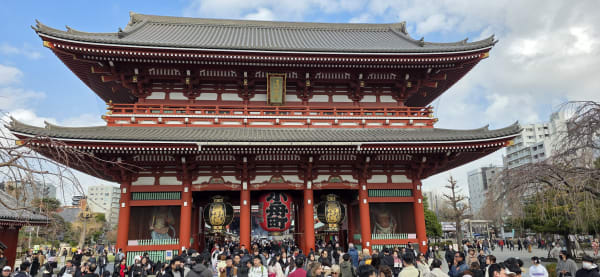
Senso-ji Temple
Tokyo's oldest Buddhist temple, founded in 645 AD, and the most visited spiritual site in Japan with around 30 million annual visitors. The main hall houses a hidden golden image of Kannon (Goddess of Mercy) that is never displayed publicly. The complex includes the five-story pagoda, Asakusa Shrine (Shinto, adjacent), multiple sub-shrines, and a large forecourt with an incense burner where visitors wave smoke towards themselves for good health. Free to enter at any time. Arrive before 8 AM or after 6 PM to avoid the midday crush.

Kaminarimon (Thunder Gate)
The outer gate of Senso-ji and Tokyo's most photographed landmark. The 700kg red lantern hanging at its centre was last replaced in 2013 and was originally donated in 1960 by Panasonic founder Konosuke Matsushita after the previous one burned in 1865. Fujin (wind god) and Raijin (thunder god) statues flank the entrance. The underside of the lantern features a carved dragon that most visitors miss entirely.

Nakamise-dori Shopping Street
The 250-meter pedestrian street connecting Kaminarimon to Senso-ji has 89 shops and has operated in some form since the Edo period. The current layout was established after the 1945 firebombing. Shops sell senbei (rice crackers), ningyo-yaki (bean-paste cakes shaped as thunder gods), fans, yukata fabric, and lucky charms. The west side lane (Shin-Nakamise-dori) runs parallel and has a more local character.

Asakusa Culture Tourist Information Center
A 2012 building by Kengo Kuma that stacks traditional sloped-roof profiles to create a modern layered structure directly across from Kaminarimon. The 8th floor has a free observation deck facing Senso-ji, one of the only elevated viewpoints over the area. Open until 8 PM, making it useful for afternoon and sunset visits. Tourist information and free English maps on the ground floor.

Sumida River and Azuma Bridge
The Sumida River forms Asakusa's eastern boundary. The 1931 steel arch Azuma Bridge spans the river at the foot of Kaminarimon-dori, and the riverside promenade offers the classic framing of Asakusa's traditional rooftops against Tokyo Skytree. River cruises to Hama-rikyu Gardens and Odaiba depart from Asakusa Pier, a 2-minute walk from the bridge.
Highlights of Asakusa
- ✓Senso-ji: Tokyo's oldest temple (founded 645 AD), free entry, grounds open 24/7, main hall from 6 AM
- ✓Kaminarimon Gate: 700kg red lantern, one of Tokyo's most photographed landmarks
- ✓Nakamise-dori: 250 meters, 89 shops, selling senbei and crafts for centuries
- ✓Hoppy Street: open-air izakayas from lunchtime, beer and nikomi beef stew from ¥500
- ✓Komakata Dozeu: loach hot pot restaurant operating continuously since 1801
- ✓Asakusa Culture Tourist Information Center: free observation deck with Senso-ji and Skytree views, open until 8 PM
- ✓Sumida River promenade: waterfront walk with Tokyo Skytree views, river cruises to Odaiba
Related Articles
Where to Stay in Tokyo: Best Areas From ¥10,000 a Night (2026)
Stay in Shinjuku for a first visit, near Tokyo Station for day trips, Asakusa or Ueno on a budget. Real 2026 prices and 31 verified hotel picks.
Japan in January: New Year, Powder Snow and Empty Temples
Three days of New Year crowds and closures, then the cheapest, quietest month of the entire year: peak powder, the clearest Fuji views, sumo in Tokyo, and onsen at their best.
Japan in February: Snow Festivals, First Blossoms and Empty Temples
The Sapporo Snow Festival, peak powder, plum blossoms from mid month, and the cheapest quiet weeks of the travel year. What February actually delivers, region by region.
Other Tokyo Districts
Shibuya
Shibuya Crossing, where 3,000 pedestrians cross simultaneously, and the neon-lit backstreets of Tokyo's youth culture engine
Shinjuku
Free 45th-floor views, 200+ bars crammed into Golden Gai's six alleys, and 1,173 cherry trees in Shinjuku Gyoen
Harajuku
Takeshita-dori, Meiji Shrine's forest, and Cat Street: three completely different worlds within a 15-minute walk
Ginza
The Wako clock tower at 4-chome, kabuki from ¥1,000 at Kabuki-za, and the deepest department store food halls in Japan
Ueno
World-class museums, a sprawling park, and one of Tokyo's best street markets
Akihabara
Tokyo's electric playground: anime, electronics, and otaku culture at full volume
Ikebukuro
Budget base on the Yamanote Line: rooftop aquarium, a nine-floor anime store, and Tokyo's densest ramen street
Roppongi
World-class art by day, Tokyo's most international nightlife by night
Odaiba
Tokyo's waterfront playground: digital art, a 20m Gundam, and Rainbow Bridge views across the bay
Tsukiji
Tokyo's kitchen: where the world's freshest seafood meets century-old market culture
Shimokitazawa
Tokyo's indie heart: narrow streets, vintage shops, live-music bars, and ¥900 curry
Chiyoda
Imperial Palace gardens, Edo Castle ruins, and 5km of Tokyo's most scenic moat-side running
Nihonbashi
Tokyo's original centre: Edo-era merchants, Michelin-star restaurants, and Tokyo Station's hidden food halls converge
Yanesen
Old Tokyo preserved: temple lanes, cat-spotting, and ¥200 street snacks in a neighbourhood that skipped the 20th century
Ebisu & Daikanyama
Tokyo's upscale-casual quarter: craft cocktails, curated bookshops, and the kind of dinner you'll remember for years
Nakano
The collector's Akihabara: Nakano Broadway's labyrinthine floors of rare figures, vintage manga, and otaku treasures at better prices
Ryogoku
Sumo heartland: where 300kg wrestlers train, chanko-nabe simmers, and Edo history fills Japan's best museum
Koenji
Tokyo's punk-rock thrift shop: vintage clothing capital, live music dives, and the wildest summer festival you've never heard of
Kichijoji
Tokyo's most liveable neighbourhood: Inokashira Park, the Ghibli Museum, and the kind of Sunday afternoon you'll wish you had at home
Gion
~80 invitation-only ochaya teahouses, Gion Matsuri since 869 CE, and a daily window at 5:30 PM when Kyoto's geiko and maiko take to the streets
Arashiyama
Arrive before 7 AM: Kyoto's bamboo grove, a UNESCO temple garden designed around a mountain, and 120 wild macaques on a hillside above the river
Higashiyama
Kiyomizu-dera's 13-meter wooden stage, stone lanes under a 1976 preservation order, and 50-plus temples along a 2-kilometer eastern hillside: arrive before 8 AM
Fushimi
10,000 vermillion gates on a forested mountain, and Kyoto's oldest sake district below
Kinkaku-ji Area
Three UNESCO World Heritage temples within walking distance, anchored by a gold-leaf pavilion reflected in a mirror pond
Downtown Kyoto
Kyoto's living room: Nishiki Market, Pontocho alley, and the Kamo River at sunset
Dotonbori
Osaka's neon-lit entertainment heart where food, fun, and flashy signs collide
Shinsekai
Step back in time to retro Osaka - kushikatsu, Tsutenkaku Tower, and the lucky Billiken
Umeda
Northern Osaka's bustling business and shopping hub where modern meets underground
Tennoji
Where ancient temples meet modern skyscrapers: Osaka's perfect blend of old and new
Namba
Osaka's central crossroads: Shinsaibashi shopping, Hozenji Yokocho charm, and trains to everywhere
Amerikamura
Osaka's youth-culture playground: vintage shops, street art, and Triangle Park people-watching
Hakata
Ramen birthplace, a 1,260-year-old shrine, and a festival race that starts at 4:59 AM in the dark
Tenjin
Fukuoka's commercial center: 590 meters of underground shopping, Kyushu's finest depachika, and bar alleys that fill from 6 PM
Nakasu
A 500-meter island that runs on a different clock: quiet by day, yatai stalls and neon after 6 PM
Ready to Experience Asakusa?
Add a stay in Asakusa to your trip — we'll suggest activities and help you find hotels in the area.