About Hakata
Hakata exists because of a medieval rivalry. When two competing towns sat on opposite banks of the Naka River, the samurai class built their castle town on the west (the Fukuoka side) while merchants built theirs on the east (the Hakata side). When the city unified in 1889 the name Fukuoka won, but Hakata's identity never dissolved. The ward still carries its own name, the train station is called Hakata, and the local dialect, textiles, dolls, and ramen style are all called "Hakata." This is a neighborhood with 1,000 years of stubbornness behind it.
Three things define a visit. Kushida Shrine, founded in 757 AD and home to the Hakata Gion Yamakasa festival, is the spiritual engine of the neighborhood. The Oiyama finale race on July 15 begins at precisely 4:59 AM: teams of men carry floats weighing over a tonne through the dark streets in under 30 minutes. Outside festival season the shrine is peaceful and free, and the massive decorative floats are on permanent display inside. Second: tonkotsu ramen. Hakata is where the style was invented, and the shops closest to the source are not Ippudo or Ichiran (both fine) but the no-name counter joints in narrow alleys where the broth has simmered since morning and the noodles are ordered thin and firm. Third: Shoufukuji Temple, founded in 1195 by monk Eisai, is the oldest Zen temple in Japan and almost no tourist visits it.
Hakata Station is one of Japan's busiest rail hubs, which makes this the easiest neighborhood in Kyushu to reach and the best base for day trips. Fukuoka Airport is five minutes away by subway. Tenjin, Fukuoka's main shopping district, is two subway stops west or a 20-minute walk. Dazaifu Tenmangu, one of Kyushu's major shrines, is 25 minutes by connecting train. If you are spending more than two nights in Fukuoka, base yourself here.
Don't Miss
Kushida Shrine and the Yamakasa Floats
Even outside festival season the shrine displays the full-scale Kazariyama floats year-round inside the float hall. These are the ornamental versions of the racing floats, standing 10 to 14 meters tall and covered in figures from Japanese mythology. The shrine is free, peaceful in the mornings, and a 10-minute walk from Hakata Station. If you visit in early July, the Oiyama race on the 15th begins at 4:59 AM: worth setting an alarm for.
Tonkotsu Ramen at a Counter Shop
Ippudo and Ichiran are both good, but the defining Hakata ramen experience is at a shop with 8 to 10 seats, a handwritten menu, and broth that has been simmering since 6 AM. Hakata Issou fits this exactly: the tonkotsu is intensely milky, the noodles thin and firm, and a bowl costs around ¥900. Cash only. Expect a short wait at lunch. Order firm noodles (katame) and ask for a kaedama refill when you finish.
Shoufukuji Temple
Japan's oldest Zen temple and one of the least-visited major historic sites in Fukuoka. Monk Eisai founded it in 1195 after returning from China with Chan Buddhist teachings and tea seeds. The grounds are quiet, the stone paths are thick with moss, and you will almost certainly have the place to yourself. A 15-minute walk north of Hakata Station. Closed Mondays.
One Day in Hakata
Ancient shrine, the original tonkotsu, and a temple almost no one visits
Kushida Shrine
Start before the tour groups arrive. The main hall is calm in the morning, the Kazariyama floats are on display inside the float hall at no charge, and the grounds take about 40 minutes at a relaxed pace. Check the ema boards and collect a goshuin stamp if you keep a collection.
💡 Tip
- • Free entry
- • Float hall opens at 9 AM
- • Morning light is good for photos of the main gate
Shoufukuji Temple
A 10-minute walk north from Kushida Shrine. Japan's oldest Zen temple is almost always quiet: the moss is thick on the stone paths, the architecture is understated, and there is nothing to buy or queue for. Founded in 1195 by Eisai, who also introduced tea cultivation to Japan. Spend 30 minutes in the main courtyard.
💡 Tip
- • Free entry
- • Closed Mondays
- • No crowds even during peak tourist season
Hakata Machiya Folk Museum
A preserved 1910 merchant townhouse covering Hakata's history as a trading port and centre of textile craft. The Hakata-ori weaving demonstration runs twice daily. Admission is ¥200, which is embarrassingly cheap for what you get.
💡 Tip
- • ¥200 entry
- • Weaving demo at 10 AM and 2 PM
- • Good Hakata-ori textile souvenirs in the shop
Tonkotsu Ramen Lunch
Walk south to the alleys near Hakata Station for lunch at a counter ramen shop. Order the basic tonkotsu, specify firm noodles (katame), and ask for a kaedama noodle refill (¥100 extra) when you finish the first serving. The whole meal takes about 25 minutes including the queue.
💡 Tip
- • Cash only at most local shops
- • Arrive just before noon to beat the queue
- • Hakata Issou and Shin-Shin are both good options
Canal City Hakata
Designed by Jon Jerde and opened in 1996, Canal City is better than a standard mall: the artificial canal runs through five connected buildings with over 200 shops, a theatre, and a cinema. Ramen Stadium on the 5th floor of the Sun Plaza stage lets you compare eight regional ramen styles side by side. Spend an hour or two depending on your appetite for shopping.
💡 Tip
- • Free to enter
- • Ramen Stadium on 5F is worth a look even if not hungry
- • Canal light show runs every 30 min after dark
Hakata Station Basement and Mentaiko Shopping
The basement floors of Hakata Station (Hakata Eki Chika) concentrate the best food souvenirs in Fukuoka. Mentaiko (spiced pollack roe) shops line the main corridor: Fukuya and Yamaya are the two names to look for. Also good for Hakata ramen kits, Hakata-ori accessories, and Hakata ningyo dolls.
💡 Tip
- • Mentaiko keeps refrigerated for about a week
- • Most shops open until 9 PM
- • Some food counters offer samples
Dinner: Motsunabe or Nakasu Yatai
Two Fukuoka specialties worth your last meal: motsunabe (beef offal hot pot in a rich soy broth, ¥2,500 to ¥3,500 per person at Hakata Motsunabe Iroha) or the yatai food stalls along the Naka River in Nakasu, a 10-minute walk east. Yatai are open-air, seat 6 to 8 people, and serve ramen, yakitori, and oden under lanterns from about 6 PM to midnight.
💡 Tip
- • Yatai are cash only and close by midnight
- • Motsunabe is better for two or more people
- • Nakasu yatai are 10 min walk or 1 subway stop east
Top Attractions
Kushida Shrine
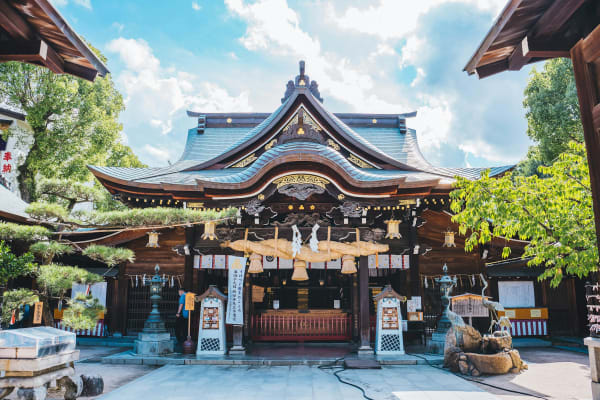
Founded in 757 AD and the spiritual centre of Hakata for over 1,260 years. The shrine hosts Hakata Gion Yamakasa each July, and the enormous decorative Kazariyama floats (10 to 14 meters tall) are displayed in the float hall year-round at no charge. The main grounds are free and calm most mornings. The goshuin stamp here is among the most sought-after in Fukuoka.

Shoufukuji Temple
Japan's oldest Zen temple, founded in 1195 by monk Eisai after he returned from Song-dynasty China with Chan Buddhist teachings and tea seeds. The grounds are quiet, the architecture understated, and visitor numbers are a fraction of what the site deserves. A 15-minute walk north from Kushida Shrine.

Canal City Hakata
A 235,000-square-meter complex designed by American architect Jon Jerde and opened in 1996. The artificial canal cuts through five interconnected buildings containing over 200 shops, a theatre, cinema, and multiple restaurant floors. Ramen Stadium on the 5th floor of the Sun Plaza stage brings together eight ramen styles from across Japan. The canal light show runs every 30 minutes after dark.

Hakata Machiya Folk Museum
A preserved 1910 merchant townhouse converted into a museum covering Hakata's history as a merchant quarter and centre of traditional crafts. Exhibits cover Hakata-ori silk weaving, Hakata ningyo dolls, and the neighborhood's evolution from medieval trading port to modern city. Demonstrations of Hakata-ori weaving run twice daily.
Highlights of Hakata
- ✓Kushida Shrine (757 AD) displays the actual 14-meter Yamakasa floats year-round at no charge
- ✓Shoufukuji Temple, founded 1195 by monk Eisai, is Japan's oldest Zen temple and sees almost no tourists
- ✓Hakata Issou serves tonkotsu broth so thick it coats the bowl: single counter, cash only, typically ¥900
- ✓Hakata Gion Yamakasa: teams sprint at 4:59 AM on July 15 carrying floats weighing over a tonne
- ✓Hakata Station connects to Tokyo in 5 hours by Shinkansen and to Fukuoka Airport in 5 minutes by subway
- ✓Hakata Machiya Folk Museum (¥200) covers merchant history inside a preserved 1910 townhouse
Related Articles
Kyushu: Japan's Volcanic South (2026 Guide)
Smoking calderas, the best hot springs in Japan, and a food scene Tokyo quietly envies. Why Kyushu deserves a week, and how to plan it.
Eating in Japan: A First-Timer's Restaurant Guide
How Japanese restaurants actually work, what to eat beyond sushi, and how to navigate dietary restrictions. The practical food guide nobody gives you.
Other Fukuoka Districts
Shibuya
Shibuya Crossing, where 3,000 pedestrians cross simultaneously, and the neon-lit backstreets of Tokyo's youth culture engine
Shinjuku
Free 45th-floor views, 200+ bars crammed into Golden Gai's six alleys, and 1,173 cherry trees in Shinjuku Gyoen
Harajuku
Takeshita-dori, Meiji Shrine's forest, and Cat Street: three completely different worlds within a 15-minute walk
Asakusa
Tokyo's Edo holdout: Senso-ji temple, 89-shop Nakamise-dori, and backstreets that refused to modernize
Ginza
The Wako clock tower at 4-chome, kabuki from ¥1,000 at Kabuki-za, and the deepest department store food halls in Japan
Ueno
World-class museums, a sprawling park, and one of Tokyo's best street markets
Akihabara
Tokyo's electric playground: anime, electronics, and otaku culture at full volume
Ikebukuro
Budget base on the Yamanote Line: rooftop aquarium, a nine-floor anime store, and Tokyo's densest ramen street
Roppongi
World-class art by day, Tokyo's most international nightlife by night
Odaiba
Tokyo's waterfront playground: digital art, a 20m Gundam, and Rainbow Bridge views across the bay
Tsukiji
Tokyo's kitchen: where the world's freshest seafood meets century-old market culture
Shimokitazawa
Tokyo's indie heart: narrow streets, vintage shops, live-music bars, and ¥900 curry
Chiyoda
Imperial Palace gardens, Edo Castle ruins, and 5km of Tokyo's most scenic moat-side running
Nihonbashi
Tokyo's original centre: Edo-era merchants, Michelin-star restaurants, and Tokyo Station's hidden food halls converge
Yanesen
Old Tokyo preserved: temple lanes, cat-spotting, and ¥200 street snacks in a neighbourhood that skipped the 20th century
Ebisu & Daikanyama
Tokyo's upscale-casual quarter: craft cocktails, curated bookshops, and the kind of dinner you'll remember for years
Nakano
The collector's Akihabara: Nakano Broadway's labyrinthine floors of rare figures, vintage manga, and otaku treasures at better prices
Ryogoku
Sumo heartland: where 300kg wrestlers train, chanko-nabe simmers, and Edo history fills Japan's best museum
Koenji
Tokyo's punk-rock thrift shop: vintage clothing capital, live music dives, and the wildest summer festival you've never heard of
Kichijoji
Tokyo's most liveable neighbourhood: Inokashira Park, the Ghibli Museum, and the kind of Sunday afternoon you'll wish you had at home
Gion
~80 invitation-only ochaya teahouses, Gion Matsuri since 869 CE, and a daily window at 5:30 PM when Kyoto's geiko and maiko take to the streets
Arashiyama
Arrive before 7 AM: Kyoto's bamboo grove, a UNESCO temple garden designed around a mountain, and 120 wild macaques on a hillside above the river
Higashiyama
Kiyomizu-dera's 13-meter wooden stage, stone lanes under a 1976 preservation order, and 50-plus temples along a 2-kilometer eastern hillside: arrive before 8 AM
Fushimi
10,000 vermillion gates on a forested mountain, and Kyoto's oldest sake district below
Kinkaku-ji Area
Three UNESCO World Heritage temples within walking distance, anchored by a gold-leaf pavilion reflected in a mirror pond
Downtown Kyoto
Kyoto's living room: Nishiki Market, Pontocho alley, and the Kamo River at sunset
Dotonbori
Osaka's neon-lit entertainment heart where food, fun, and flashy signs collide
Shinsekai
Step back in time to retro Osaka - kushikatsu, Tsutenkaku Tower, and the lucky Billiken
Umeda
Northern Osaka's bustling business and shopping hub where modern meets underground
Tennoji
Where ancient temples meet modern skyscrapers: Osaka's perfect blend of old and new
Namba
Osaka's central crossroads: Shinsaibashi shopping, Hozenji Yokocho charm, and trains to everywhere
Amerikamura
Osaka's youth-culture playground: vintage shops, street art, and Triangle Park people-watching
Tenjin
Fukuoka's commercial center: 590 meters of underground shopping, Kyushu's finest depachika, and bar alleys that fill from 6 PM
Nakasu
A 500-meter island that runs on a different clock: quiet by day, yatai stalls and neon after 6 PM
Ready to Experience Hakata?
Add a stay in Hakata to your trip — we'll suggest activities and help you find hotels in the area.