About Shibuya
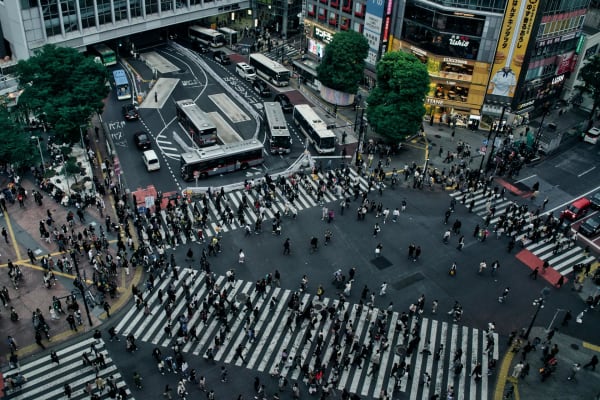
Most people know Shibuya from one image: the scramble crossing, where up to 3,000 people pour across the intersection every time the lights change. It is a genuine spectacle, especially at rush hour or after dark when the neon kicks in, but Shibuya is a lot more than that single crossing.
This is Tokyo's youth-culture engine. The trends that end up in Harajuku and Ginza often start here, in the backstreet boutiques and basement clubs around Center Gai and Udagawacho. The district has been reinventing itself since the 1970s and the latest chapter is a big one: the Shibuya Scramble Square skyscraper (2019) and its rooftop Shibuya Sky observation deck have given the area a genuine skyline landmark, and the station itself, long a confusing maze, is still being rebuilt.
For visitors, Shibuya works well as a half-day on its own or as a natural pair with neighbouring Harajuku (a 10-minute walk). The main sights, the crossing, the Hachiko statue, Shibuya Sky, can be covered in two to three hours, but if you add shopping, eating, and evening drinks in the tiny bars of Nonbei Yokocho, you can easily spend a full day and night here without running out of things to do.
Don't Miss
Shibuya Crossing at Rush Hour
Stand at the world's most photographed pedestrian crossing and wait for the lights to change. Peak volume happens around 6–8 PM on weekdays; Friday evenings are particularly spectacular. For the elevated view, the Starbucks on the 2nd floor of the Q-Front Tsutaya building (facing the crossing) has window seats that fill up fast. Alternatively, Mag's Park on the rooftop of Magnet by Shibuya 109 offers a free aerial perspective and is less crowded than the Starbucks.
Shibuya Sky at Sunset
The open-air rooftop at 230m on Shibuya Scramble Square has no glass barriers between you and the city. Arrive 45–60 minutes before sunset to see both the daylight panorama and the moment the lights come on across central Tokyo. On clear winter days, Mount Fuji rises to the west. Book online for ¥1,800 (walk-in is ¥2,000; the online booking also reserves a time slot and avoids the queue). Last entry 9:20 PM.
Nonbei Yokocho After Dark
Nonbei Yokocho ('Drunkard's Alley'), a narrow lane a 5-minute walk from the crossing, holds about 50 tiny bars with 8–12 seats each. Most open around 6 PM. Arrive before 8 PM on weekdays to get a counter seat. Most places serve simple yakitori, beer, and whisky highballs; menus are usually Japanese only. A few bars near the alley entrance have English-speaking staff. For clubs, WOMB in Maruyamacho (Friday and Saturday from 10 PM) is Shibuya's most established venue; cover ¥2,000–3,000.
A Full Day in Shibuya
The crossing from street and sky, shopping, and evening drinks
Hachiko Statue and Crossing from Street Level
Start at Hachiko Square outside the Hachiko Exit. The bronze statue is usually surrounded by people taking photos; morning is the calmest time. Then walk to the crossing and experience it from street level: stand at one corner and wait for the signal, then cross with the crowd. Walk across 2–3 times in different directions to feel the scale.
💡 Tip
- • Hachiko Exit is signposted throughout the station
- • Cross with the crowd rather than against it: you won't be fighting anyone
- • Best photographed in the evening, but morning gives you more space
Starbucks Tsutaya: The Window Seat
The 2nd floor Starbucks inside Q-Front Tsutaya faces the crossing directly and is the most photographed observation point for the scramble. The window seats on the left fill up fast. Arrive early, order, and wait: the crossing is below you and the view is genuinely spectacular.
💡 Tip
- • Window seats face the crossing: claim one immediately on arrival
- • Mag's Park on Magnet by Shibuya 109 rooftop is free and offers a similar (slightly different angle) view
Shibuya 109 and Center Gai
The cylindrical fashion building at the edge of the crossing has been setting Japanese youth fashion trends since 1979. Nine floors of brands, many exclusive to 109. Center Gai, the pedestrian street leading north from the crossing, is packed with shops, arcades, and fast food. Combined, they represent the commercial energy that makes Shibuya what it is.
💡 Tip
- • Shibuya 109: free entry, 10 AM–9 PM
- • Center Gai is pedestrian only: good for walking without traffic
- • Miyashita Park is 5 min walk north from here for a break
Lunch at Uobei Shibuya Dogenzaka
One of Tokyo's most entertaining lunches: sushi ordered on a touchscreen arrives via a high-speed mini conveyor belt. The menu is extensive and the pace is fast. A full lunch with 6–8 pieces costs around ¥1,200–1,800. The novelty makes queuing (usually 10–20 minutes) worth it.
💡 Tip
- • Arrive slightly before noon to minimize the queue
- • Touchscreen menus have an English option
- • Budget ¥1,200–2,000 per person
Miyashita Park
The 330-meter elevated rooftop park above three floors of shops reopened in 2020. The rooftop has a skate park, climbing wall, small green spaces, and several food and drink stands. A pleasant change of pace after the shopping streets below. Views from the elevated walkway look over Shibuya's northern end.
💡 Tip
- • Rooftop access is free; open 8 AM–11 PM
- • Ground floor has a branch of Shake Shack and other casual food options
- • Sequence MIYASHITA PARK hostel is built into the complex if you need to check in
Shibuya Sky at Sunset
Head to the Shibuya Sky observation deck in Shibuya Scramble Square. Book tickets online (¥1,800) or pay ¥2,000 at the door. Arrive 45 minutes before sunset to see both the day panorama and the lights coming on at dusk. The crossing is visible directly below. On clear winter days, Mount Fuji appears to the west.
💡 Tip
- • Book online at shibuyasky.jp for ¥1,800 (saves ¥200 and reserves a time slot)
- • Last entry 9:20 PM; closes 10:30 PM
- • Bring a light layer: open-air and can be windy year-round
Nonbei Yokocho: Evening Drinks
The narrow alley a 5-minute walk from the crossing holds about 50 tiny bars packed shoulder to shoulder. Arrive by 7 PM to get a seat; later arrivals often wait outside. Most places serve simple yakitori, whisky highballs, and beer at ¥500–800 per item. The atmosphere is genuine rather than theatrical and a marked contrast to the scale of the main Shibuya streets.
💡 Tip
- • Follow the lane that runs parallel to the train tracks from Shibuya Station; signs point the way
- • Cash recommended; most bars do not take cards
- • A few bars near the entrance have some English; deeper in the alley is Japanese-only
Top Attractions
Shibuya Crossing (Shibuya Scramble)
The world's most photographed pedestrian crossing, where all traffic signals turn red simultaneously and pedestrians pour across from every direction. At peak times (6–8 PM weekday evenings) up to 3,000 people cross each cycle. Equally impressive from street level (walk across it) and from above (Shibuya Sky, Mag's Park, Starbucks 2F Tsutaya). The crossing became a symbol of Tokyo through appearances in Lost in Translation, The Fast and the Furious: Tokyo Drift, and countless other productions.

Hachiko Statue
The bronze statue of Hachiko, the Akita dog who waited at Shibuya Station for his deceased owner every day from 1923 to 1935. Erected in 1934, a year before Hachiko's death. The statue is Tokyo's most famous meeting point and the exit most visitors use to arrive in Shibuya. The story has inspired Japanese school readers, films (including a 2009 American version with Richard Gere), and remains one of the most quietly moving sights in central Tokyo.
Shibuya Sky
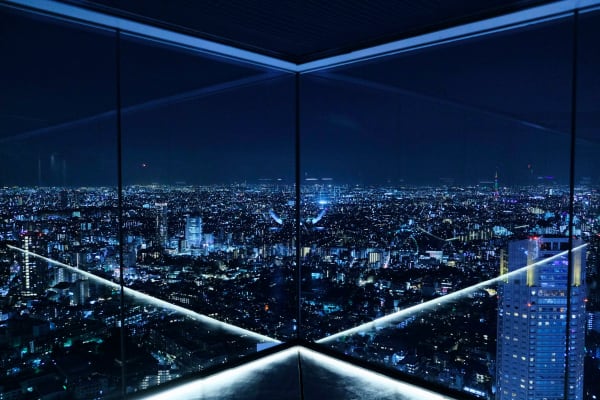
Open-air observation deck on the 46th floor of Shibuya Scramble Square (230m), with no glass barriers between visitors and the city. The 360° view looks directly down on Shibuya Crossing, across to Tokyo Tower and Tokyo Skytree, and west to Mount Fuji on clear days. Widely considered one of Tokyo's best observation decks for the combination of height, openness, and the direct view of the crossing below.

Shibuya 109
The cylindrical building at the corner of the crossing has been the defining address of Tokyo youth fashion since 1979. Nine floors hold 100+ brands, most focused on women's street fashion in styles that range from gyaru to streetwear. A significant proportion of the shops are exclusives not available elsewhere. The building itself is a Tokyo landmark: its placement at the crossing corner means it appears in almost every photograph of the intersection.

Miyashita Park
A 2020 redevelopment that converted the old elevated Miyashita Park into a mixed-use complex: three underground floors of shops and restaurants (Rayard) topped by a 330-meter rooftop park with skate ramp, climbing wall, and food stalls. The rooftop is free, open late (until 11 PM), and provides a green, quieter space in the middle of Shibuya's commercial core.
Highlights of Shibuya
- ✓Shibuya Crossing: up to 3,000 pedestrians cross simultaneously; best viewed from Shibuya Sky above or the Starbucks Tsutaya 2F window
- ✓Hachiko: the loyal Akita who waited at the station daily 1923–1935; his bronze statue outside the Hachiko Exit is Tokyo's most used meeting point
- ✓Shibuya Sky: open-air observation deck at 230m, no glass barriers; ¥2,000 walk-in, ¥1,800 online; Mount Fuji visible on clear winter days
- ✓Shibuya 109: cylindrical fashion building since 1979 with 100+ Japanese street fashion brands across 9 floors; free entry
- ✓Nonbei Yokocho: narrow alley of ~50 tiny bars with 8–12 seats each, yakitori smoke, and a tradition stretching to the postwar era
- ✓Miyashita Park: 330-meter elevated rooftop park above 3 floors of shops, reopened 2020; free access, open 8 AM–11 PM
Related Articles
Japan in October: Weather, Festivals and Where the Color Starts
Warm days, dry air, and the first mountain color. Weather by region, the 2026 foliage forecast, the big festivals, and October's booking traps.
Where to Stay in Tokyo: Best Areas From ¥10,000 a Night (2026)
Stay in Shinjuku for a first visit, near Tokyo Station for day trips, Asakusa or Ueno on a budget. Real 2026 prices and 31 verified hotel picks.
Tokyo vs Osaka: Which Should You Visit? (2026)
For a first trip the answer is Tokyo, but it's usually the wrong question. An honest comparison of Japan's two big cities, and how to do both.
Other Tokyo Districts
Shinjuku
Free 45th-floor views, 200+ bars crammed into Golden Gai's six alleys, and 1,173 cherry trees in Shinjuku Gyoen
Harajuku
Takeshita-dori, Meiji Shrine's forest, and Cat Street: three completely different worlds within a 15-minute walk
Asakusa
Tokyo's Edo holdout: Senso-ji temple, 89-shop Nakamise-dori, and backstreets that refused to modernize
Ginza
The Wako clock tower at 4-chome, kabuki from ¥1,000 at Kabuki-za, and the deepest department store food halls in Japan
Ueno
World-class museums, a sprawling park, and one of Tokyo's best street markets
Akihabara
Tokyo's electric playground: anime, electronics, and otaku culture at full volume
Ikebukuro
Budget base on the Yamanote Line: rooftop aquarium, a nine-floor anime store, and Tokyo's densest ramen street
Roppongi
World-class art by day, Tokyo's most international nightlife by night
Odaiba
Tokyo's waterfront playground: digital art, a 20m Gundam, and Rainbow Bridge views across the bay
Tsukiji
Tokyo's kitchen: where the world's freshest seafood meets century-old market culture
Shimokitazawa
Tokyo's indie heart: narrow streets, vintage shops, live-music bars, and ¥900 curry
Chiyoda
Imperial Palace gardens, Edo Castle ruins, and 5km of Tokyo's most scenic moat-side running
Nihonbashi
Tokyo's original centre: Edo-era merchants, Michelin-star restaurants, and Tokyo Station's hidden food halls converge
Yanesen
Old Tokyo preserved: temple lanes, cat-spotting, and ¥200 street snacks in a neighbourhood that skipped the 20th century
Ebisu & Daikanyama
Tokyo's upscale-casual quarter: craft cocktails, curated bookshops, and the kind of dinner you'll remember for years
Nakano
The collector's Akihabara: Nakano Broadway's labyrinthine floors of rare figures, vintage manga, and otaku treasures at better prices
Ryogoku
Sumo heartland: where 300kg wrestlers train, chanko-nabe simmers, and Edo history fills Japan's best museum
Koenji
Tokyo's punk-rock thrift shop: vintage clothing capital, live music dives, and the wildest summer festival you've never heard of
Kichijoji
Tokyo's most liveable neighbourhood: Inokashira Park, the Ghibli Museum, and the kind of Sunday afternoon you'll wish you had at home
Gion
~80 invitation-only ochaya teahouses, Gion Matsuri since 869 CE, and a daily window at 5:30 PM when Kyoto's geiko and maiko take to the streets
Arashiyama
Arrive before 7 AM: Kyoto's bamboo grove, a UNESCO temple garden designed around a mountain, and 120 wild macaques on a hillside above the river
Higashiyama
Kiyomizu-dera's 13-meter wooden stage, stone lanes under a 1976 preservation order, and 50-plus temples along a 2-kilometer eastern hillside: arrive before 8 AM
Fushimi
10,000 vermillion gates on a forested mountain, and Kyoto's oldest sake district below
Kinkaku-ji Area
Three UNESCO World Heritage temples within walking distance, anchored by a gold-leaf pavilion reflected in a mirror pond
Downtown Kyoto
Kyoto's living room: Nishiki Market, Pontocho alley, and the Kamo River at sunset
Dotonbori
Osaka's neon-lit entertainment heart where food, fun, and flashy signs collide
Shinsekai
Step back in time to retro Osaka - kushikatsu, Tsutenkaku Tower, and the lucky Billiken
Umeda
Northern Osaka's bustling business and shopping hub where modern meets underground
Tennoji
Where ancient temples meet modern skyscrapers: Osaka's perfect blend of old and new
Namba
Osaka's central crossroads: Shinsaibashi shopping, Hozenji Yokocho charm, and trains to everywhere
Amerikamura
Osaka's youth-culture playground: vintage shops, street art, and Triangle Park people-watching
Hakata
Ramen birthplace, a 1,260-year-old shrine, and a festival race that starts at 4:59 AM in the dark
Tenjin
Fukuoka's commercial center: 590 meters of underground shopping, Kyushu's finest depachika, and bar alleys that fill from 6 PM
Nakasu
A 500-meter island that runs on a different clock: quiet by day, yatai stalls and neon after 6 PM
Ready to Experience Shibuya?
Add a stay in Shibuya to your trip — we'll suggest activities and help you find hotels in the area.