About Kinkaku-ji Area
Northern Kyoto is temple country. The area around Kinkaku-ji holds three UNESCO World Heritage Sites within easy walking distance, set not in a tourist corridor but in quiet residential streets where the compounds themselves feel like interruptions in an ordinary neighbourhood. Unlike Higashiyama's preserved merchant lanes packed with souvenir shops, this part of Kyoto is spread out and unhurried. Crowds are real at Kinkaku-ji and thin noticeably once you move on.
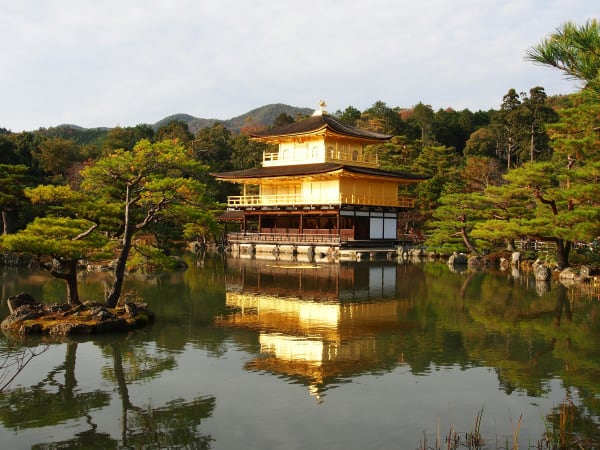
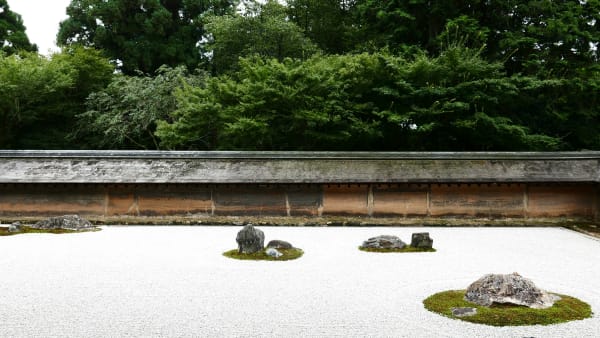
Kinkaku-ji is the draw and it earns the visit. The gold-leaf pavilion reflected in the surrounding mirror pond is genuinely striking in person, and the gardens are well maintained despite the numbers moving through. The visit is short (a managed one-way circuit, under an hour) so pair it immediately with Ryoan-ji, a 20-minute walk south. Ryoan-ji's rock garden has been provoking quiet arguments since the 15th century: 15 stones in raked white gravel arranged so that no matter where you sit in the viewing corridor, you can only see 14 of them. After Kinkaku-ji's gold and movement, Ryoan-ji's rectangle of gravel and stone feels like a deliberate reset. Ninna-ji, a former imperial palace turned temple, is a further 15-minute walk west and worth adding if you're here during late March cherry blossom season. Daitoku-ji, a working Rinzai Zen monastery with 24 sub-temples northeast of Kinkaku-ji, rewards visitors who want less-visited gardens; Koto-in and Daisen-in are typically open. Kitano Tenmangu Shrine belongs on the itinerary if you're visiting on the 25th of the month for the Tenjin-san flea market (1,000-plus stalls, free entry) or in February for the plum orchard.
Half a day covers Kinkaku-ji and Ryoan-ji with time for a third stop. A full day works if you add Daitoku-ji and Kitano Tenmangu. City Bus #205 from Kyoto Station runs to the Kinkaku-ji-michi stop in about 30 minutes (¥230). Arashiyama is 20 minutes west by Randen tram from Omuro-Ninnaji Station, making a combination circuit feasible if you start Kinkaku-ji early and move on in the afternoon.
Don't Miss
Kinkaku-ji Before 9:30 AM
The Golden Pavilion is most manageable in the first 30 minutes after opening at 9 AM. Admission is ¥500 and the route is a one-way circuit, so you cannot linger or re-enter. The gold-leaf exterior covers the top two floors and is reflected in the surrounding pond, which is the main photograph. The stroll through the gardens after the pavilion takes another 10–15 minutes. Expect tour groups from 10 AM onward. Come early, move through efficiently, and head directly to Ryoan-ji while the morning is still quiet.
Ryoan-ji Zen Rock Garden
Sit in the wooden viewing corridor and try to count all 15 stones in the white gravel. You cannot see all of them at once from any single angle: this is not an accident, and the arrangement has been debated for five centuries without resolution. Budget at least 20–30 minutes here. The stone garden is the centrepiece, but the surrounding moss garden and Kyoyochi Pond are also worth a slow walk. Admission ¥500. Opens at 8:00 AM from March through November, giving you a quiet hour before most visitors arrive.
Tenjin-san Flea Market
On the 25th of every month, over 1,000 stalls spread across the Kitano Tenmangu Shrine grounds from dawn until dusk. The market sells antiques, ceramics, textiles, vintage kimonos, plants, food, and tools. Entry to the market is free. It runs rain or shine. Arrive before 9 AM for first pick of antiques; from late morning it is more of a leisurely browse. The 25th of December is the year's biggest edition. January 25 and February 25 coincide with plum blossom season, making those two the best combination visits.
Northern Kyoto Temple Morning
Golden Pavilion, zen rock garden, and the shrine flea market
Kinkaku-ji (Golden Pavilion)
Arrive at opening for the lightest crowds. Buy your ¥500 ticket at the gate and follow the one-way viewing circuit around the mirror pond. The gold-leaf pavilion and its reflection are the main event; the garden path continues around the pond and through a secondary shrine area before exiting at the souvenir zone. The full circuit takes 30–40 minutes.
💡 Tip
- • ¥500 admission, ticket includes a decorative receipt worth keeping
- • One-way route, no re-entry once you exit
- • The pond reflection is clearest on calm, cloud-free mornings
- • Tour groups peak from 10 AM; move on before then if possible
Walk to Ryoan-ji
A 20-minute walk south through quiet residential streets leads from Kinkaku-ji to Ryoan-ji. The route passes local houses, small shops, and a stretch of road along the Kinugasa neighbourhood. Straightforward with signposting at most junctions.
💡 Tip
- • Well signposted throughout
- • Flat walk on footpaths
- • Bus #59 covers this if you prefer not to walk
Ryoan-ji Zen Rock Garden
Pay ¥500 admission and head directly to the hojo (abbot's quarters) veranda overlooking the rock garden. Sit, count the stones, and notice that no matter where you position yourself along the corridor, one stone is always hidden by another. The garden is small, roughly 25 by 10 metres, and the effect is most concentrated when you slow down. After the garden, walk the grounds: Kyoyochi Pond and the surrounding moss-covered garden extend the visit pleasantly.
💡 Tip
- • Opens at 8:00 AM March–November; 8:30 AM December–February
- • ¥500 admission
- • The hojo veranda has wooden benches; sit rather than stand for better viewing angles
- • The pond garden behind the main hall is quieter and worth 15 minutes
Bus to Kitano Tenmangu
City Bus #59 runs from near Ryoan-ji toward Kitano Tenmangu. The journey takes about 15 minutes. Alternatively, it is a 25-minute walk east and south through the Kinugasa neighbourhood.
💡 Tip
- • Bus #59 from Ryoanji-mae stop
- • IC cards accepted
- • Day pass (¥700) covers all city buses if you are making multiple stops
Kitano Tenmangu Shrine
Dedicated to Sugawara no Michizane, the god of learning, Kitano Tenmangu has been a destination for students before exams for over a thousand years. The main hall is National Treasure-designated, and the grounds are large and calm. On the 25th of each month, the Tenjin-san flea market takes over the grounds entirely. In February, the plum orchard (¥500 entry) holds roughly 2,000 trees.
💡 Tip
- • Main grounds free to enter
- • Plum orchard ¥500, open early February to mid-March
- • Tenjin-san market on the 25th: arrive by 9 AM for antiques
- • Ema (wooden wishing plaques) here often feature academic themes; an interesting cultural contrast to the main temples
Lunch in the Nishijin Area
The Nishijin neighbourhood, a 15-minute walk southeast of Kitano Tenmangu, has several long-established restaurants and cafes. Izusen at Daitoku-ji serves shojin ryori (Buddhist vegetarian cuisine) for a more elaborate sit-down lunch, or head to Sarasa Nishijin, a cafe inside a converted sento bathhouse with a striking mosaic tile interior.
💡 Tip
- • Izusen at Daitoku-ji: budget ¥3,000–5,000 for the shojin ryori set
- • Sarasa Nishijin is more casual, ¥1,000–2,000
- • Both can be reached by bus from Kitano Tenmangu if you prefer not to walk
Top Attractions
Kinkaku-ji (Golden Pavilion)
A three-storey pavilion covered in gold leaf on the top two floors, built as a retirement villa for shogun Ashikaga Yoshimitsu in 1397 and converted to a Zen temple after his death. The structure you see is a 1955 reconstruction: the original was burned by a novice monk in 1950 (Yukio Mishima wrote a novel inspired by the incident). Roughly 20 kg of gold leaf covers the exterior. The visit follows a one-way circuit around the mirror pond, under an hour, with no re-entry. The reflection in the pond is the centrepiece; arrive in the first 30 minutes after 9 AM opening for the clearest views and lightest crowds.
Ryoan-ji Temple
Home to Japan's most debated zen rock garden. Fifteen stones are arranged in five clusters on white raked gravel so that from any point along the viewing corridor, one stone is always hidden by another. The garden was attributed to the late 15th century; its creator and intended meaning remain unknown. Admission ¥500. Sits better in the itinerary after Kinkaku-ji, when the contrast between the two experiences is sharpest. The surrounding moss garden and Kyoyochi Pond are also worth slow exploration. Opens at 8:00 AM from March through November.

Daitoku-ji Temple Complex
A working Rinzai Zen monastery founded in 1319 with 24 sub-temples spread across a large compound. Most of the grounds are accessible freely; individual sub-temples charge ¥400–600 to enter. Typically 4–6 are open to visitors at any given time. Koto-in is famous for its autumn maple corridor. Daisen-in has an elaborate dry garden attributed to the early 16th century. Izusen, within the Daiji-in sub-temple, serves shojin ryori (Buddhist vegetarian cuisine) and is one of Kyoto's best-known temple restaurants. The compound is quiet, large, and rewards unhurried visitors who want to move between gardens without crowds.

Kitano Tenmangu Shrine
Founded in 947 CE and dedicated to Sugawara no Michizane, the god of learning, Kitano Tenmangu is where Kyoto students come before examinations to pray and tie ema plaques. The main hall is a National Treasure. The shrine is best known for two regular attractions: the Tenjin-san flea market on the 25th of each month (1,000-plus stalls, free entry) and the plum orchard in February to mid-March (approximately 2,000 trees, ¥500 to enter). Outside these events, the grounds are free, calm, and a pleasant contrast to the managed circuits of the nearby temples.

Ninna-ji Temple
A UNESCO World Heritage Site founded in 888 CE as an imperial palace before becoming a temple. The five-storey pagoda and main hall are National Treasures. Ninna-ji is best known for its Omuro cherry trees, a short-trunked late-blooming variety that flowers in early to mid-April, typically one to two weeks after central Kyoto's peak. Around 200 trees line the inner path. The late bloom makes it a reliable cherry blossom stop when other venues have already faded. Admission ¥800 includes the palace buildings and garden.
Highlights of Kinkaku-ji Area
- ✓Three UNESCO World Heritage Sites within walking distance: Kinkaku-ji, Ryoan-ji, and Ninna-ji
- ✓Kinkaku-ji: top two floors covered in approximately 20 kg of gold leaf, reflected in a mirror pond. Rebuilt in 1955 after fire.
- ✓Ryoan-ji rock garden: 15 stones in white gravel, only 14 visible from any single viewpoint in the viewing corridor
- ✓Daitoku-ji: 24 sub-temples on a working Rinzai Zen monastery; typically 4–6 open to the public, each with a distinct garden
- ✓Kitano Tenmangu: Tenjin-san flea market on the 25th of every month, 1,000-plus stalls; plum orchard open February to mid-March
- ✓Residential northern Kyoto setting: quieter than Higashiyama, with the temples rising out of ordinary neighbourhood streets
Related Articles
Other Kyoto Districts
Shibuya
Shibuya Crossing, where 3,000 pedestrians cross simultaneously, and the neon-lit backstreets of Tokyo's youth culture engine
Shinjuku
Free 45th-floor views, 200+ bars crammed into Golden Gai's six alleys, and 1,173 cherry trees in Shinjuku Gyoen
Harajuku
Takeshita-dori, Meiji Shrine's forest, and Cat Street: three completely different worlds within a 15-minute walk
Asakusa
Tokyo's Edo holdout: Senso-ji temple, 89-shop Nakamise-dori, and backstreets that refused to modernize
Ginza
The Wako clock tower at 4-chome, kabuki from ¥1,000 at Kabuki-za, and the deepest department store food halls in Japan
Ueno
World-class museums, a sprawling park, and one of Tokyo's best street markets
Akihabara
Tokyo's electric playground: anime, electronics, and otaku culture at full volume
Ikebukuro
Budget base on the Yamanote Line: rooftop aquarium, a nine-floor anime store, and Tokyo's densest ramen street
Roppongi
World-class art by day, Tokyo's most international nightlife by night
Odaiba
Tokyo's waterfront playground: digital art, a 20m Gundam, and Rainbow Bridge views across the bay
Tsukiji
Tokyo's kitchen: where the world's freshest seafood meets century-old market culture
Shimokitazawa
Tokyo's indie heart: narrow streets, vintage shops, live-music bars, and ¥900 curry
Chiyoda
Imperial Palace gardens, Edo Castle ruins, and 5km of Tokyo's most scenic moat-side running
Nihonbashi
Tokyo's original centre: Edo-era merchants, Michelin-star restaurants, and Tokyo Station's hidden food halls converge
Yanesen
Old Tokyo preserved: temple lanes, cat-spotting, and ¥200 street snacks in a neighbourhood that skipped the 20th century
Ebisu & Daikanyama
Tokyo's upscale-casual quarter: craft cocktails, curated bookshops, and the kind of dinner you'll remember for years
Nakano
The collector's Akihabara: Nakano Broadway's labyrinthine floors of rare figures, vintage manga, and otaku treasures at better prices
Ryogoku
Sumo heartland: where 300kg wrestlers train, chanko-nabe simmers, and Edo history fills Japan's best museum
Koenji
Tokyo's punk-rock thrift shop: vintage clothing capital, live music dives, and the wildest summer festival you've never heard of
Kichijoji
Tokyo's most liveable neighbourhood: Inokashira Park, the Ghibli Museum, and the kind of Sunday afternoon you'll wish you had at home
Gion
~80 invitation-only ochaya teahouses, Gion Matsuri since 869 CE, and a daily window at 5:30 PM when Kyoto's geiko and maiko take to the streets
Arashiyama
Arrive before 7 AM: Kyoto's bamboo grove, a UNESCO temple garden designed around a mountain, and 120 wild macaques on a hillside above the river
Higashiyama
Kiyomizu-dera's 13-meter wooden stage, stone lanes under a 1976 preservation order, and 50-plus temples along a 2-kilometer eastern hillside: arrive before 8 AM
Fushimi
10,000 vermillion gates on a forested mountain, and Kyoto's oldest sake district below
Downtown Kyoto
Kyoto's living room: Nishiki Market, Pontocho alley, and the Kamo River at sunset
Dotonbori
Osaka's neon-lit entertainment heart where food, fun, and flashy signs collide
Shinsekai
Step back in time to retro Osaka - kushikatsu, Tsutenkaku Tower, and the lucky Billiken
Umeda
Northern Osaka's bustling business and shopping hub where modern meets underground
Tennoji
Where ancient temples meet modern skyscrapers: Osaka's perfect blend of old and new
Namba
Osaka's central crossroads: Shinsaibashi shopping, Hozenji Yokocho charm, and trains to everywhere
Amerikamura
Osaka's youth-culture playground: vintage shops, street art, and Triangle Park people-watching
Hakata
Ramen birthplace, a 1,260-year-old shrine, and a festival race that starts at 4:59 AM in the dark
Tenjin
Fukuoka's commercial center: 590 meters of underground shopping, Kyushu's finest depachika, and bar alleys that fill from 6 PM
Nakasu
A 500-meter island that runs on a different clock: quiet by day, yatai stalls and neon after 6 PM
Ready to Experience Kinkaku-ji Area?
Add a stay in Kinkaku-ji Area to your trip — we'll suggest activities and help you find hotels in the area.