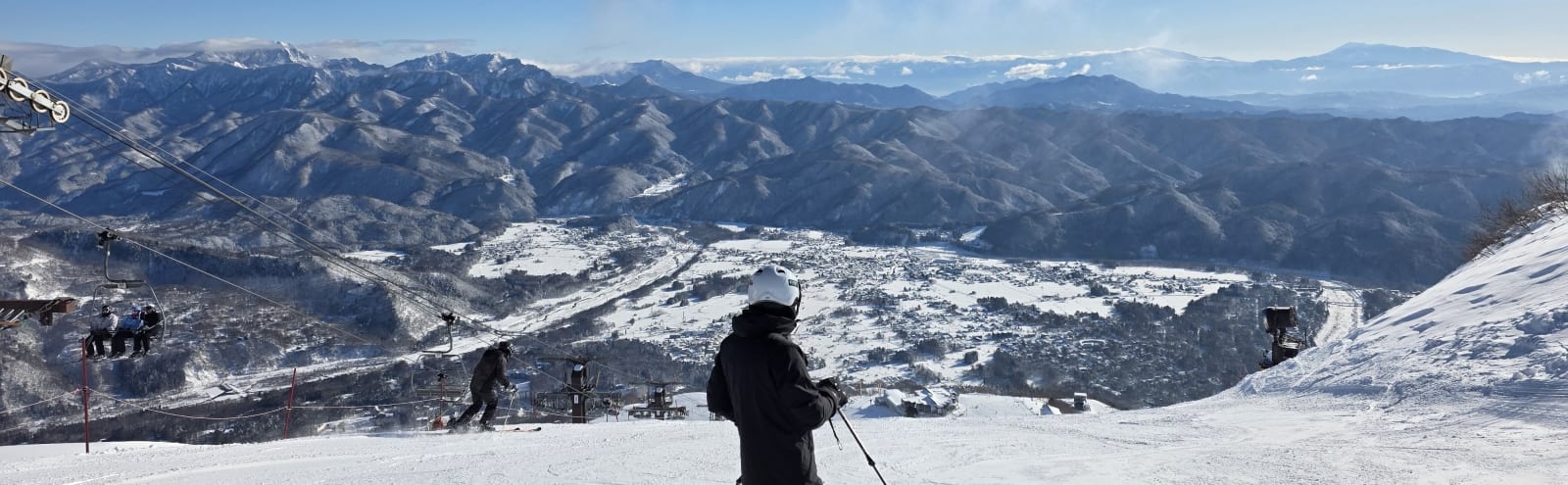
Japan Snow Season 2026-27
When the snow arrives across Japan this winter: the Japan Meteorological Agency's own records of the first snow in every prefecture, the first snowcaps on 44 mountains, the snow depth in the ski villages, and opening dates for 15 ski resorts, each marked partly or fully open.
No snow on the official record yet as of October 1: all 44 mountains on the Japan Meteorological Agency's first-snowcap list are still bare, and the cities are weeks away. Last year the first cap came on Mt Rishiri on October 7 and Sapporo's first snow on October 23. The agency's winter outlook, issued September 18, leans warm, with less snow than normal expected on Honshu's Sea of Japan side. This page syncs with the agency's records and logs each resort's opening date as the resort publishes it.
No Snow Yet, and a Warm Winter in the Outlook (Updated October 1)
As of October 1, none of the 44 mountains the Japan Meteorological Agency watches has its first snowcap, and no city has seen snow. That is within the usual range for the date. Last autumn the first cap came on Mt Rishiri on Oct 7, Asahidake followed on Oct 9 and Mt Fuji on Oct 23; in the cities, Asahikawa had its first snow on Oct 20 and Sapporo on Oct 23.
The official outlook leans warm. The agency's cold season outlook, issued on September 18, expects El Nino to last into winter, a weak winter monsoon, and little cold air over Japan. It gives a 50% chance of below-normal snowfall on the Sea of Japan side from Hokuriku, which includes Niigata's resorts, west to San'in, and calls the Sea of Japan side of Hokkaido and Tohoku "normal or less". Temperatures are forecast above normal from Kanto westward.
What that means for a trip: the higher and further north the resort, the safer the booking, and December is the month most at risk at low elevations. An outlook is a probability for three months, though, and a warm winter can still deliver: last winter was warm across the country, and Hokuriku ended on 99% of its normal snowfall. The warmth showed low down and late in the season: the gauge in Hakuba village never passed 45 cm, and Happo-One and Zao Onsen stopped skiing about two weeks ahead of plan in April.
Thirteen of the 15 resorts tracked here have published a first day. Karuizawa Prince is the earliest, on October 31, on machine-made snow. At Shiga Kogen one area, Kumanoyu, plans November 14, three weeks ahead of the shared lift ticket on December 5. Six resorts give November 28: Niseko, Rusutsu, Kiroro, Furano, Nozawa Onsen and Kagura. Tomamu follows on December 1, Appi Kogen on December 5, Zao Onsen on December 12, and GALA Yuzawa and Akakura Kanko on December 19. Hakuba Happo-One has not named a day, and Yeti, on Mt Fuji, says only late October. Two things to plan around: GALA Yuzawa's South Area is closed all winter, and Kagura runs latest, to May 16. Each resort's details, and how last season's opening went where the resort still says, are in the resort sections below.
How the Snow Season Moves
Snow comes to Japan from the top down and from the north-west. The summits go first: Asahidake in Hokkaido got its first snowcap between September 20 and October 20 in the last ten seasons, and Mt Fuji between September 26 and November 7. The cities follow from mid October: the first snow normally falls on October 19 in Asahikawa and October 28 in Sapporo, reaches Aomori around November 8, Nagano around November 18 and Niigata and Kanazawa around November 23, then Kyoto around December 11 and Fukuoka around December 16. Tokyo, sheltered behind the mountains, usually waits until January 3.
First snow is not snow on the ground. In Sapporo the first flakes normally fall on October 28, the first snow to settle comes around November 12, and the city is only continuously white from December 6 to April 2. Kanazawa gets real snow most winters (64 cm at its deepest last winter), but it comes and goes: like Tokyo, it has no period of continuous snow cover in the agency's statistics. For a trip built around snow, the dates that matter are the ones in the "on the ground" columns below, not the first flakes.
And a valley is not a mountain. Every snow depth on this page comes from one fixed Japan Meteorological Agency gauge, usually low in a town. Last winter the gauge in Hakuba village, at 703 m, peaked at 45 cm and was bare after Feb 23, while the gauge at Nozawa Onsen (576 m) reached 171 cm and Kutchan, below Niseko (176 m), 167 cm. The slopes above hold more, for longer: Happo-One, above that Hakuba gauge, kept skiing until Apr 19. So the resort tables below keep three things apart: how high the lifts go, whether the resort says it is partly or fully open, and what the village gauge reads.
What the Terms Mean
First snow (hatsuyuki) is the first day of the season that snow or sleet falls at a city's official weather station, settled or not. Snow on the ground here means 1 cm or more at that station, and continuous snow cover is the agency's statistic for the stretch when it stays. A first snowcap (hatsukansetsu) is the first time a named mountain turns white. Until last winter observers judged that by eye from the nearest observatory; from this season the agency reads it from its snow-depth analysis, updated hourly, and says the new dates cannot simply be compared with the old records.
When Snow Arrives, City by City
The normal dates are the Japan Meteorological Agency's 1991 to 2020 averages for its station in each city. "This season" fills in from the agency's daily records as the snow arrives.
- AsahikawaNo snow yet
- First snow, normally
- Oct 19
- First on the ground
- Nov 4
- Continuous cover
- Nov 24 – Apr 7
- Last winter
- first snow Oct 20, deepest 83 cm
- This season
- No snow yet
- SapporoNo snow yet
- First snow, normally
- Oct 28
- First on the ground
- Nov 12
- Continuous cover
- Dec 6 – Apr 2
- Last winter
- first snow Oct 23, deepest 112 cm
- This season
- No snow yet
- HakodateNo snow yet
- First snow, normally
- Nov 1
- First on the ground
- Nov 18
- Continuous cover
- Dec 19 – Mar 10
- Last winter
- first snow Oct 28, deepest 38 cm
- This season
- No snow yet
- AomoriNo snow yet
- First snow, normally
- Nov 8
- First on the ground
- Nov 19
- Continuous cover
- Dec 14 – Mar 23
- Last winter
- first snow Nov 11, deepest 183 cm
- This season
- No snow yet
- AkitaNo snow yet
- First snow, normally
- Nov 15
- First on the ground
- Nov 30
- Continuous cover
- Dec 30 – Feb 26
- Last winter
- first snow Nov 18, deepest 33 cm
- This season
- No snow yet
- MoriokaNo snow yet
- First snow, normally
- Nov 9
- First on the ground
- Nov 27
- Continuous cover
- Dec 25 – Mar 3
- Last winter
- first snow Nov 7, deepest 29 cm
- This season
- No snow yet
- SendaiNo snow yet
- First snow, normally
- Nov 17
- First on the ground
- Dec 21
- Continuous cover
- None
- Last winter
- first snow Nov 18, deepest 7 cm
- This season
- No snow yet
- YamagataNo snow yet
- First snow, normally
- Nov 16
- First on the ground
- Dec 3
- Continuous cover
- Dec 26 – Mar 5
- Last winter
- first snow Nov 18, deepest 15 cm
- This season
- No snow yet
- NiigataNo snow yet
- First snow, normally
- Nov 23
- First on the ground
- Dec 15
- Continuous cover
- Jan 9 – Feb 16
- Last winter
- first snow Dec 3, deepest 38 cm
- This season
- No snow yet
- NaganoNo snow yet
- First snow, normally
- Nov 18
- First on the ground
- Dec 10
- Continuous cover
- Jan 2 – Feb 18
- Last winter
- first snow Nov 18, deepest 14 cm
- This season
- No snow yet
- KanazawaNo snow yet
- First snow, normally
- Nov 24
- First on the ground
- Dec 15
- Continuous cover
- None
- Last winter
- first snow Dec 3, deepest 64 cm
- This season
- No snow yet
- TakayamaNo snow yet
- First snow, normally
- Nov 17
- First on the ground
- Dec 8
- Continuous cover
- Dec 31 – Mar 3
- Last winter
- first snow not recorded, deepest 20 cm
- This season
- No snow yet
- TokyoNo snow yet
- First snow, normally
- Jan 3
- First on the ground
- Jan 23
- Continuous cover
- None
- Last winter
- first snow Jan 2, deepest 5 cm
- This season
- No snow yet
- NagoyaNo snow yet
- First snow, normally
- Dec 18
- First on the ground
- Jan 7
- Continuous cover
- None
- Last winter
- first snow Dec 3, deepest 1 cm
- This season
- No snow yet
- KyotoNo snow yet
- First snow, normally
- Dec 11
- First on the ground
- Jan 12
- Continuous cover
- None
- Last winter
- first snow Dec 3, deepest 7 cm
- This season
- No snow yet
- OsakaNo snow yet
- First snow, normally
- Dec 26
- First on the ground
- Jan 29
- Continuous cover
- None
- Last winter
- first snow Jan 25, none settled
- This season
- No snow yet
- HiroshimaNo snow yet
- First snow, normally
- Dec 8
- First on the ground
- Jan 14
- Continuous cover
- None
- Last winter
- first snow Dec 3, deepest 14 cm
- This season
- No snow yet
- FukuokaNo snow yet
- First snow, normally
- Dec 16
- First on the ground
- Jan 19
- Continuous cover
- None
- Last winter
- first snow Dec 25, none settled
- This season
- No snow yet
| City | First snow, normally | First on the ground | Continuous cover | Last winter | This season |
|---|---|---|---|---|---|
| Asahikawa | Oct 19 | Nov 4 | Nov 24 – Apr 7 | First snow Oct 20 deepest 83 cm, Feb 12 | No snow yet |
| Sapporo | Oct 28 | Nov 12 | Dec 6 – Apr 2 | First snow Oct 23 deepest 112 cm, Jan 25 | No snow yet |
| Hakodate | Nov 1 | Nov 18 | Dec 19 – Mar 10 | First snow Oct 28 deepest 38 cm, Jan 20 | No snow yet |
| Aomori | Nov 8 | Nov 19 | Dec 14 – Mar 23 | First snow Nov 11 deepest 183 cm, Feb 1 | No snow yet |
| Akita | Nov 15 | Nov 30 | Dec 30 – Feb 26 | First snow Nov 18 deepest 33 cm, Jan 25 | No snow yet |
| Morioka | Nov 9 | Nov 27 | Dec 25 – Mar 3 | First snow Nov 7 deepest 29 cm, Jan 23 | No snow yet |
| Sendai | Nov 17 | Dec 21 | None | First snow Nov 18 deepest 7 cm, Dec 14 | No snow yet |
| Yamagata | Nov 16 | Dec 3 | Dec 26 – Mar 5 | First snow Nov 18 deepest 15 cm, Jan 25 | No snow yet |
| Niigata | Nov 23 | Dec 15 | Jan 9 – Feb 16 | First snow Dec 3 deepest 38 cm, Jan 24 | No snow yet |
| Nagano | Nov 18 | Dec 10 | Jan 2 – Feb 18 | First snow Nov 18 deepest 14 cm, Jan 12 | No snow yet |
| Kanazawa | Nov 24 | Dec 15 | None | First snow Dec 3 deepest 64 cm, Jan 25 | No snow yet |
| Takayama | Nov 17 | Dec 8 | Dec 31 – Mar 3 | First snow not recorded deepest 20 cm, Jan 12 | No snow yet |
| Tokyo | Jan 3 | Jan 23 | None | First snow Jan 2 deepest 5 cm, Feb 8 | No snow yet |
| Nagoya | Dec 18 | Jan 7 | None | First snow Dec 3 deepest 1 cm, Jan 12 | No snow yet |
| Kyoto | Dec 11 | Jan 12 | None | First snow Dec 3 deepest 7 cm, Feb 8 | No snow yet |
| Osaka | Dec 26 | Jan 29 | None | First snow Jan 25 none settled | No snow yet |
| Hiroshima | Dec 8 | Jan 14 | None | First snow Dec 3 deepest 14 cm, Feb 8 | No snow yet |
| Fukuoka | Dec 16 | Jan 19 | None | First snow Dec 25 none settled | No snow yet |
All 47 prefectures: normal first snow, last winter, and this season
| Station | Prefecture | Normal first snow | Normal first on the ground | Last winter's first snow | This season |
|---|---|---|---|---|---|
| Sapporo | Hokkaido | Oct 28 | Nov 12 | Oct 23 | No snow yet |
| Aomori | Aomori | Nov 8 | Nov 19 | Nov 11 | No snow yet |
| Morioka | Iwate | Nov 9 | Nov 27 | Nov 7 | No snow yet |
| Akita | Akita | Nov 15 | Nov 30 | Nov 18 | No snow yet |
| Yamagata | Yamagata | Nov 16 | Dec 3 | Nov 18 | No snow yet |
| Sendai | Miyagi | Nov 17 | Dec 21 | Nov 18 | No snow yet |
| Nagano | Nagano | Nov 18 | Dec 10 | Nov 18 | No snow yet |
| Fukushima | Fukushima | Nov 19 | Dec 12 | Nov 18 | No snow yet |
| Niigata | Niigata | Nov 23 | Dec 15 | Dec 3 | No snow yet |
| Kanazawa | Ishikawa | Nov 24 | Dec 15 | Dec 3 | No snow yet |
| Toyama | Toyama | Dec 3 | Dec 16 | Dec 3 | No snow yet |
| Fukui | Fukui | Dec 3 | Dec 18 | Dec 3 | No snow yet |
| Tottori | Tottori | Dec 5 | Dec 18 | Dec 3 | No snow yet |
| Matsue | Shimane | Dec 7 | Dec 25 | Dec 3 | No snow yet |
| Hiroshima | Hiroshima | Dec 8 | Jan 14 | Dec 3 | No snow yet |
| Maebashi | Gunma | Dec 9 | Jan 22 | Dec 13 | No snow yet |
| Hikone | Shiga | Dec 10 | Dec 28 | Dec 3 | No snow yet |
| Okayama | Okayama | Dec 10 | Feb 1 | Dec 3 | No snow yet |
| Shimonoseki | Yamaguchi | Dec 10 | Feb 1 | Dec 4 | No snow yet |
| Oita | Oita | Dec 10 | Jan 20 | Dec 26 | No snow yet |
| Kofu | Yamanashi | Dec 11 | Jan 15 | Dec 3 | No snow yet |
| Kyoto | Kyoto | Dec 11 | Jan 12 | Dec 3 | No snow yet |
| Saga | Saga | Dec 11 | Jan 18 | Dec 25 | No snow yet |
| Nagasaki | Nagasaki | Dec 11 | Jan 21 | Dec 25 | No snow yet |
| Gifu | Gifu | Dec 13 | Jan 4 | Dec 3 | No snow yet |
| Kobe | Hyogo | Dec 13 | Jan 23 | Dec 26 | No snow yet |
| Nara | Nara | Dec 13 | Jan 18 | Dec 12 | No snow yet |
| Yokohama | Kanagawa | Dec 15 | Jan 29 | Jan 1 | No snow yet |
| Utsunomiya | Tochigi | Dec 16 | Jan 18 | Dec 4 | No snow yet |
| Fukuoka | Fukuoka | Dec 16 | Jan 19 | Dec 25 | No snow yet |
| Kumamoto | Kumamoto | Dec 16 | Jan 18 | Dec 25 | No snow yet |
| Nagoya | Aichi | Dec 18 | Jan 7 | Dec 3 | No snow yet |
| Wakayama | Wakayama | Dec 18 | Feb 3 | Dec 4 | No snow yet |
| Tokushima | Tokushima | Dec 18 | Jan 21 | Jan 1 | No snow yet |
| Mito | Ibaraki | Dec 19 | Jan 20 | Nov 19 | No snow yet |
| Takamatsu | Kagawa | Dec 19 | Jan 31 | Jan 2 | No snow yet |
| Matsuyama | Ehime | Dec 19 | – | Dec 3 | No snow yet |
| Kumagaya | Saitama | Dec 20 | Jan 20 | Dec 13 | No snow yet |
| Kochi | Kochi | Dec 21 | – | Jan 2 | No snow yet |
| Tsu | Mie | Dec 24 | Jan 22 | Dec 4 | No snow yet |
| Osaka | Osaka | Dec 26 | Jan 29 | Jan 25 | No snow yet |
| Tokyo | Tokyo | Jan 3 | Jan 23 | Jan 2 | No snow yet |
| Choshi | Chiba | Jan 5 | – | Dec 27 | No snow yet |
| Kagoshima | Kagoshima | Jan 5 | Jan 18 | Jan 2 | No snow yet |
| Shizuoka | Shizuoka | Jan 6 | – | Dec 3 | No snow yet |
| Miyazaki | Miyazaki | Jan 13 | – | none | No snow yet |
| Naha | Okinawa | – | – | – | Snow does not fall here |
Source: Japan Meteorological Agency daily records and normals, synced Oct 1. A few unstaffed stations (Takayama among them) record snow depth but not a first-snow date.
Ski Resort Opening Dates 2026-27
Every date below is the resort's own. Some are marked as planned and some are printed without a caveat, but nearly all of them depend on snow. An opening day usually means a few lifts or one machine-made run, so each resort is marked partly open until its own site says the whole mountain, or the run down to the base, is open. The last column is the official snow gauge nearest the resort village, with its elevation. It is not the resort's snow depth: the slopes above it hold much more.
Hokkaido
- Niseko UnitedNot open yetKutchan and Niseko, Hokkaido, 260–1,200 m
- Opening
- Nov 28 (planned, snow permitting)
- Closing
- May 5 (Grand Hirafu, Annupuri); Niseko Village Apr 4, Hanazono Apr 11
- Village gauge
- Kutchan (176 m): No snow yetLast winter: first on the ground Oct 28, last Apr 2, deepest 167 cm
- RusutsuNot open yetRusutsu, Hokkaido, top 994 m
- Opening
- Nov 28 (planned)
- Closing
- Mar 31 (end of the ticket calendar)
- Village gauge
- Kimobetsu (264 m): No snow yetLast winter: first on the ground Oct 28, last Apr 8, deepest 144 cm
- KiroroNot open yetAkaigawa, Hokkaido
- Opening
- Nov 28 (planned)
- Closing
- May 5 (planned)
- Village gauge
- Akaigawa (148 m): No snow yetLast winter: first on the ground Nov 7, last Apr 6, deepest 144 cm
- FuranoNot open yetFurano, Hokkaido, top 1,074 m
- Opening
- Nov 28 (planned)
- Closing
- May 5
- Village gauge
- Furano (174 m): No snow yetLast winter: first on the ground Oct 28, last Mar 23, deepest 67 cm
- TomamuNot open yetShimukappu, Hokkaido, 586–1,171 m
- Opening
- Dec 1
- Closing
- Apr 5
- Village gauge
- Shimukappu (332 m): No snow yetLast winter: first on the ground Nov 10, last Mar 29, deepest 66 cm
| Resort | Opening 2026-27 | Status | Snow at the village gauge |
|---|---|---|---|
| Niseko United Kutchan and Niseko, Hokkaido, 260–1,200 m | Nov 28 (planned, snow permitting) Closing: May 5 (Grand Hirafu, Annupuri); Niseko Village Apr 4, Hanazono Apr 11 | Not open yet | Kutchan (176 m): No snow yet Last winter: first on the ground Oct 28, last Apr 2, deepest 167 cm |
| Rusutsu Rusutsu, Hokkaido, top 994 m | Nov 28 (planned) Closing: Mar 31 (end of the ticket calendar) | Not open yet | Kimobetsu (264 m): No snow yet Last winter: first on the ground Oct 28, last Apr 8, deepest 144 cm |
| Kiroro Akaigawa, Hokkaido | Nov 28 (planned) Closing: May 5 (planned) | Not open yet | Akaigawa (148 m): No snow yet Last winter: first on the ground Nov 7, last Apr 6, deepest 144 cm |
| Furano Furano, Hokkaido, top 1,074 m | Nov 28 (planned) Closing: May 5 | Not open yet | Furano (174 m): No snow yet Last winter: first on the ground Oct 28, last Mar 23, deepest 67 cm |
| Tomamu Shimukappu, Hokkaido, 586–1,171 m | Dec 1 Closing: Apr 5 | Not open yet | Shimukappu (332 m): No snow yet Last winter: first on the ground Nov 10, last Mar 29, deepest 66 cm |
Tohoku
- Zao OnsenNot open yetYamagata City, Yamagata, 780–1,661 m
- Opening
- Dec 12 (opening ceremony; skiing if the snow allows)
- Closing
- May 5 at the latest
- Appi KogenNot open yetHachimantai, Iwate, 620–1,328 m
- Opening
- Dec 5
- Closing
- May 5
- Village gauge
- Iwate-Matsuo (275 m): No snow yetLast winter: first on the ground Nov 18, last Mar 21, deepest 30 cm
| Resort | Opening 2026-27 | Status | Snow at the village gauge |
|---|---|---|---|
| Zao Onsen Yamagata City, Yamagata, 780–1,661 m | Dec 12 (opening ceremony; skiing if the snow allows) Closing: May 5 at the latest | Not open yet | No official gauge nearby |
| Appi Kogen Hachimantai, Iwate, 620–1,328 m | Dec 5 Closing: May 5 | Not open yet | Iwate-Matsuo (275 m): No snow yet Last winter: first on the ground Nov 18, last Mar 21, deepest 30 cm |
Nagano & Niigata
- Hakuba Happo-OneNot open yetHakuba, Nagano, 760–1,831 m
- Opening
- Not announced; opened Dec 6 last season
- Closing
- May 5 (end of the spring ticket season)
- Village gauge
- Hakuba (703 m): No snow yetLast winter: first on the ground Dec 3, last Feb 23, deepest 45 cm
- Nozawa OnsenNot open yetNozawa Onsen, Nagano, 565–1,650 m
- Opening
- Nov 28 (planned; from the season pass dates)
- Closing
- May 5
- Village gauge
- Nozawa Onsen (576 m): No snow yetLast winter: first on the ground Nov 18, last Mar 25, deepest 171 cm
- Shiga KogenNot open yetYamanouchi, Nagano, top 2,307 m
- Opening
- Nov 14 (Kumanoyu area, planned); all-area lift ticket from Dec 5
- Closing
- May 5 (all-area lift ticket); Kumanoyu plans May 9
- Myoko AkakuraNot open yetMyoko, Niigata, top 1,500 m
- Opening
- Dec 19 (Akakura Kanko); Akakura Onsen not announced
- Closing
- May 5 (Akakura Kanko)
- Village gauge
- Sekiyama (350 m): No snow yetLast winter: first on the ground Nov 18, last Mar 19, deepest 188 cm
- KaguraNot open yetYuzawa, Niigata, 625–1,840 m
- Opening
- Nov 28 (Kagura and Mitsumata areas); Tashiro Dec 19
- Closing
- May 16 (Tashiro May 5)
- Village gauge
- Yuzawa (340 m): No snow yetLast winter: first on the ground Nov 18, last Mar 18, deepest 187 cm
- GALA YuzawaNot open yetYuzawa, Niigata, top 1,181 m
- Opening
- Dec 19 (skiing); gondola only from Dec 12
- Closing
- May 5
- Village gauge
- Yuzawa (340 m): No snow yetLast winter: first on the ground Nov 18, last Mar 18, deepest 187 cm
| Resort | Opening 2026-27 | Status | Snow at the village gauge |
|---|---|---|---|
| Hakuba Happo-One Hakuba, Nagano, 760–1,831 m | Not announced; opened Dec 6 last season Closing: May 5 (end of the spring ticket season) | Not open yet | Hakuba (703 m): No snow yet Last winter: first on the ground Dec 3, last Feb 23, deepest 45 cm |
| Nozawa Onsen Nozawa Onsen, Nagano, 565–1,650 m | Nov 28 (planned; from the season pass dates) Closing: May 5 | Not open yet | Nozawa Onsen (576 m): No snow yet Last winter: first on the ground Nov 18, last Mar 25, deepest 171 cm |
| Shiga Kogen Yamanouchi, Nagano, top 2,307 m | Nov 14 (Kumanoyu area, planned); all-area lift ticket from Dec 5 Closing: May 5 (all-area lift ticket); Kumanoyu plans May 9 | Not open yet | No official gauge nearby |
| Myoko Akakura Myoko, Niigata, top 1,500 m | Dec 19 (Akakura Kanko); Akakura Onsen not announced Closing: May 5 (Akakura Kanko) | Not open yet | Sekiyama (350 m): No snow yet Last winter: first on the ground Nov 18, last Mar 19, deepest 188 cm |
| Kagura Yuzawa, Niigata, 625–1,840 m | Nov 28 (Kagura and Mitsumata areas); Tashiro Dec 19 Closing: May 16 (Tashiro May 5) | Not open yet | Yuzawa (340 m): No snow yet Last winter: first on the ground Nov 18, last Mar 18, deepest 187 cm |
| GALA Yuzawa Yuzawa, Niigata, top 1,181 m | Dec 19 (skiing); gondola only from Dec 12 Closing: May 5 | Not open yet | Yuzawa (340 m): No snow yet Last winter: first on the ground Nov 18, last Mar 18, deepest 187 cm |
Near Tokyo
- Karuizawa PrinceNot open yetKaruizawa, Nagano, 941–1,138 m
- Opening
- Oct 31 (machine-made snow)
- Closing
- Mar 31
- Village gauge
- Karuizawa (999 m): No snow yetLast winter: first on the ground Dec 4, last Mar 4, deepest 8 cm
- YetiNot open yetMt Fuji's south side, Shizuoka, 1,300–1,450 m
- Opening
- Late October; day not announced yet
- Closing
- Mar 28 (planned)
| Resort | Opening 2026-27 | Status | Snow at the village gauge |
|---|---|---|---|
| Karuizawa Prince Karuizawa, Nagano, 941–1,138 m | Oct 31 (machine-made snow) Closing: Mar 31 | Not open yet | Karuizawa (999 m): No snow yet Last winter: first on the ground Dec 4, last Mar 4, deepest 8 cm |
| Yeti Mt Fuji's south side, Shizuoka, 1,300–1,450 m | Late October; day not announced yet Closing: Mar 28 (planned) | Not open yet | No official gauge nearby |
Resort by Resort: 2026-27 Opening Dates
Niseko Opening Date 2026-27
All four Niseko United areas (Grand Hirafu, Hanazono, Niseko Village and Annupuri) plan to start on Saturday, November 28, 2026, snow permitting. Treat that as a target: last season's was November 29, and the first lifts ran on December 4 at Grand Hirafu and on December 5 at Niseko Village, which began with three lifts, one 700 m run and a warning about bushes and stones showing through. Niseko United's own guide says lifts start in stages from late November and that early December depends on the year. Grand Hirafu gives its base as 260 m and its top as 1,200 m; the other three areas publish no elevations. Night skiing is planned from December 12 to March 22. The areas close on different days: Niseko Village on April 4, Hanazono on April 11, Grand Hirafu and Annupuri on May 5, 2027. New this winter are the first section of Niseko Village's eight-seat gondola, due in December, and a four-seat chairlift in place of Grand Hirafu's Ace No. 3. Hokkaido travel guide →
Official site: niseko.ne.jp
Rusutsu Opening Date 2026-27
Rusutsu plans to open on Saturday, November 28, 2026, the first day of its early-season lift tickets. Its ticket calendar ends on March 31, 2027, the same day the resort closed last season. The three peaks top out at 715 m (West Mountain), 868 m (East Mountain) and 994 m (Mt Isola); the resort does not publish a base elevation. Openings here come in stages: in 2024 the resort opened on December 2, linked all three mountains on December 8 and had nearly every course running by December 20. The resort is about 90 minutes by car from central Sapporo or New Chitose Airport, and its Sapporo bus, free until now, becomes a paid service from November 28. Sapporo travel guide →
Official site: rusutsu.com
Kiroro Opening Date 2026-27
Kiroro's lift ticket page gives November 28, 2026 as the first day and May 5, 2027 as the last, and marks both as planned. The far end has moved before: last season's final day came on May 3, 2026, three days early, after a run of warm April days made the courses hard to keep safe. Kiroro publishes course lengths (a 3,300 m gondola, a longest run of 4,050 m) but no elevations. There is no station at the resort. Take JR to Otaru or Otaru-Chikko, then the resort bus, which runs from November 28 to April 25, or a taxi (about 40 minutes); a direct bus from Sapporo runs from December 10 to April 11. Otaru travel guide →
Official site: kiroro.co.jp
Furano Ski Resort Opening Date 2026-27
Furano's 2026-27 season is planned to start on Saturday, November 28, 2026, and its lift tickets run to May 5, 2027. Expect a partial start. Last season's schedule (November 29, 2025 to May 6, 2026) opened the Furano Zone first, with a note that only some courses and lifts would run and more would follow with the snow, and brought in the Kitanomine Zone from late December; the resort has not said which zone goes first this year. The top is at 1,074 m and the vertical drop is 839 m. One thing to know before booking: the volcanic alert for Mt Tokachi was raised to level 3 on September 12, 2026, and the resort's notice says the ski area and the Shin Furano Prince Hotel lie outside the restricted zone and are operating as usual. The Lavender bus from Asahikawa Airport takes about 78 minutes. Asahikawa travel guide →
Official site: princehotels.co.jp
Tomamu Opening Date 2026-27
Tomamu's ski area is open from December 1, 2026 to April 5, 2027. The resort does not mark the dates as planned, though its lift timetable carries the standing note that weather can change it without notice. The lifts run from 586 m at the base to 1,171 m at the top, and the resort's own averages show what that gap means: 45 cm of snow on the ground at the base over a season, 140 cm at the top. Last season also ended on April 5, with 618 cm of snowfall counted at the base. The Ice Village is planned for December 20 to March 10. Tomamu has its own JR station, served only by limited expresses with every seat reserved; the resort shuttle meets the trains and takes 5 to 10 minutes to the hotels.
Official site: snowtomamu.jp
Zao Onsen Ski Resort Opening Date 2026-27
Zao Onsen plans its opening day and opening ceremony for Saturday, December 12, 2026, and says whether anyone can ski that day depends on the snow. The season runs to May 5, 2027 at the latest. The caution is earned. Last season was planned to May 6 and ended on April 24, 2026, when the snow melted faster than expected; the Uwanodai slope, lower down, had closed on April 4, and from April 5 the only skiing left was on the Chuo slope, reached by ropeway. Buses from Yamagata Station take about 40 minutes to the onsen town, at 780 m, and the ski area climbs from there to 1,661 m at the Zao Ropeway's Jizo summit station. Yamagata travel guide →
Official site: zaomountainresort.com
Appi Kogen Opening Date 2026-27
Appi Kogen opens its 2026-27 season on Saturday, December 5, 2026, with an opening event, and its spring season is scheduled to May 5, 2027. Opening day is not the whole mountain. Last season Appi pre-opened on December 5 with one lift, the Central Quad, and one slope at the foot of the mountain, on a schedule that said snow and weather could move the dates; the early season then ran four lifts against seven in midwinter. This winter's count will differ: the No. 3 lift is being removed for the new gondola works, and the course layout around it changes. The ski area goes from 620 m at the resort center to 1,328 m on Nishimoriyama, and the gondola summit is at 1,304 m. Last season ended on May 2, 2026, four days ahead of plan, after rain melted the cover. Morioka Station is about an hour away, by bus or by JR to Appi-Kogen Station; this winter's bus timetable is not out yet. Morioka travel guide →
Official site: appi.co.jp
Hakuba Happo-One Opening Date 2026-27
Happo-One has not published an opening day for 2026-27. What it has published is its ticket calendar: the early 'season-in' price starts on December 1, 2026, and spring tickets run to May 5, 2027. Last season it opened on December 6, 2025, and skiing ended on April 19, 2026, more than two weeks ahead of the planned May 6, because the snow melted. Happo-One runs from 760 m at the base to 1,831 m at the top, a spread of more than 1,000 m, which is why the village gauge is a poor guide to the skiing: last winter the official gauge in Hakuba village, at 703 m, never read more than 45 cm. New this winter are five areas, among them gentle tree runs at Sakka, three ungroomed tree zones high on the mountain and a practice slope at Usagidaira; the new gondola is due in December 2027. Hakuba travel guide →
Official site: happo-one.jp
Nozawa Onsen Opening Date 2026-27
Nozawa Onsen's season passes are valid from Saturday, November 28, 2026 to May 5, 2027, and the resort ties that first date to its opening day: if the opening slips, so do pass sales at the counter. Last season's lift timetable started on November 29, 2025, and the resort ran to its planned last day, May 6, 2026, in what its closing notice called a winter with less snow than usual. The lifts run from 565 m in the village to 1,650 m at the top. The official gauge sits at 576 m, level with the base, and reached 171 cm last winter; it cannot say what lay 1,000 m higher. The nearest station is Iiyama on the Hokuriku Shinkansen, where the Nozawa Onsen Liner bus meets the trains. Nagano travel guide →
Official site: nozawaski.com
Shiga Kogen Opening Date 2026-27
Skiing at Shiga Kogen is planned to start on Saturday, November 14, 2026 at Kumanoyu, one of its 18 ski areas, which plans to run to May 9. The all-area lift ticket comes later, from December 5 to May 5, 2027: individual areas open ahead of it on their own tickets. Yokoteyama, whose summit is at 2,307 m, has not posted a date; there the Kaiwa slope opens first, in November, on natural snow topped up by snowmaking. Last season the shared ticket ran from December 6, 2025 to May 6, 2026, and Yokoteyama's Shibutoge side kept going until May 12. From Nagano Station, take the Nagano Dentetsu line to Yudanaka and a bus, or the direct bus from the east exit. Nagano travel guide →
Official site: shigakogen-ski.or.jp
Myoko Akakura Opening Date 2026-27
Akakura Kanko Resort runs from December 19, 2026 to May 5, 2027. Akakura Onsen, the ski area beside it, has not announced a date: it runs on natural snow only, so its first day follows the snowfall. Last season's plans were December 13 for Akakura Onsen and December 19 for Akakura Kanko. Each sells its own tickets (last season's price lists also had a joint day ticket), and Akakura Onsen's early-bird tickets are not valid at Akakura Kanko. Akakura Kanko's top is at 1,500 m, with a 4 km run down from it. This is deep-snow country: the official gauge at Sekiyama, at 350 m in the valley below, reached 188 cm last winter. Myoko-Kogen Station is about 2 hours 30 minutes from Tokyo by the Hokuriku Shinkansen and a change at Nagano.
Official site: akr-ski.com
Kagura Ski Resort Opening Date 2026-27
Kagura's Kagura and Mitsumata areas open on Saturday, November 28, 2026 and stay open until May 16, 2027, the latest closing day on this page. The Tashiro area joins on December 19 (to May 5), and the Dragondola link to Naeba runs from December 26 to March 22. The long season comes from height. The course table runs from 1,840 m down to 625 m at Mitsumata, but the lift to the very top is not due to run until January 1, and the slope the resort says can be skied from the start of the season into spring is the main one, between 1,675 m and 1,323 m. Last season the resort's snow report ran to May 17, 2026. Naeba, next door and under the same operator, runs from December 18 to April 4. Buses leave from the east exit of Echigo-Yuzawa Station. Niigata travel guide →
Official site: princehotels.co.jp
GALA Yuzawa Opening Date 2026-27
GALA Yuzawa starts skiing on Saturday, December 19, 2026 and runs to May 5, 2027. The resort opens a week earlier, on December 12, for sightseeing only: the gondola and one lift run, and it says there will be no skiing that week whatever the snow. The South Area is closed for the whole season, four courses and the ropeway link to Yuzawa Kogen with it, so skiing is in the Central and North areas and the link runs by shuttle bus. GALA is also not high, with its top at 1,181 m: last season skiing ended on April 17, 2026 for lack of snow, and the resort stayed open for sightseeing until May 6. The gondola leaves from GALA Yuzawa Station on the Joetsu Shinkansen, 71 minutes from Tokyo at the fastest. Niigata travel guide →
Official site: gala.co.jp
Karuizawa Prince Hotel Ski Resort Opening Date 2026
Karuizawa Prince Hotel Ski Resort opens on Saturday, October 31, 2026, the earliest fixed date on this page, and closes on March 31, 2027. It can name a day a month before the snow because the snow is made: last autumn its machines started on October 4 for a planned November 1 opening with two courses of about 400 m each, and the aim was all 14 courses by early January. If this year follows that pattern, late October and November mean a short strip of white, enough for a first day back on skis. The courses lie between about 940 m and 1,140 m, and the town's official gauge, at 999 m, never read more than 8 cm last winter: what you ski on here is what the machines lay down. The slopes are a 10-minute walk from the south exit of Karuizawa Station on the Hokuriku Shinkansen.
Official site: princehotels.co.jp
Snow Park Yeti Opening Date 2026
Yeti says it will open in late October 2026 and has not named the day yet. The ski area, at the second station on Mt Fuji's south side in Susono, between 1,300 m and 1,450 m, bills itself as the first in Japan to open each year: Slope A, about 1 km long with a 150 m drop, opens first and stays open all season. The season is planned to run to March 28, 2027; night skiing ends at 22:00, and there is no all-night skiing this winter. Buses run from JR Gotemba Station, and last season's service began on October 24, 2025.
Official site: yeti-resort.com
Snow on the Ground: Ski Villages and Onsen Towns
The Japan Meteorological Agency's snow gauges in the places people travel to for snow, with each gauge's elevation. Last winter's figures show what a season looks like at village level; "now" is the latest daily reading.
| Gauge | Elevation | Now | Last winter: on the ground | Deepest last winter |
|---|---|---|---|---|
| Kutchan (Niseko) | 176 m | No snow | Oct 28 to Apr 2 | 167 cm (Feb 13) |
| Kimobetsu (Rusutsu) | 264 m | No snow | Oct 28 to Apr 8 | 144 cm (Feb 13) |
| Akaigawa (Kiroro) | 148 m | No snow | Nov 7 to Apr 6 | 144 cm (Feb 19) |
| Furano | 174 m | No snow | Oct 28 to Mar 23 | 67 cm (Feb 13) |
| Shimukappu (Tomamu) | 332 m | No snow | Nov 10 to Mar 29 | 66 cm (Feb 13) |
| Sukayu Onsen | 890 m | No snow | Oct 20 to May 16 | 487 cm (Jan 28) |
| Iwate-Matsuo (Appi) | 275 m | No snow | Nov 18 to Mar 21 | 30 cm (Jan 19) |
| Hijiori Onsen | 330 m | No snow | Nov 18 to Apr 14 | 332 cm (Feb 2) |
| Yuzawa | 340 m | No snow | Nov 18 to Mar 18 | 187 cm (Jan 31) |
| Sekiyama (Myoko) | 350 m | No snow | Nov 18 to Mar 19 | 188 cm (Jan 29) |
| Nozawa Onsen | 576 m | No snow | Nov 18 to Mar 25 | 171 cm (Jan 30) |
| Hakuba | 703 m | No snow | Dec 3 to Feb 23 | 45 cm (Jan 25) |
| Kusatsu Onsen | 1,223 m | No snow | Nov 18 to Mar 11 | 60 cm (Feb 9) |
| Karuizawa | 999 m | No snow | Dec 4 to Mar 4 | 8 cm (Mar 4) |
| Oku-Nikko | 1,292 m | No snow | Dec 3 to Mar 12 | 28 cm (Feb 8) |
| Shirakawa-go | 478 m | No snow | Dec 3 to Mar 11 | 129 cm (Jan 25) |
| Lake Kawaguchiko | 860 m | No snow | Feb 7 to Mar 4 | 9 cm (Feb 8) |
"On the ground" runs from the first day to the last day with 1 cm or more; the snow can come and go in between. Readings as of Oct 1.
First Snowcaps: 44 Mountains
No mountain on the Japan Meteorological Agency's list has its first snowcap yet this season. The "last ten seasons" column is the range of the old visual observations, which ended last winter; this season's dates come from the agency's snow-depth analysis and are not directly comparable.
| Mountain | This season | Last season | Last ten seasons |
|---|---|---|---|
| Asahidake · Hokkaido | Not yet | Oct 9 | Sep 20 – Oct 20 |
| Mt Fuji · Yamanashi | Not yet | Oct 23 | Sep 26 – Nov 7 |
| Mt Rishiri · Hokkaido | Not yet | Oct 7 | Sep 20 – Oct 17 |
| Mt Teine · Hokkaido | Not yet | Oct 20 | Oct 5 – Nov 6 |
| Hakkoda · Aomori | Not yet | Oct 21 | Oct 5 – Nov 5 |
| Mt Iwaki · Aomori | Not yet | Oct 23 | Oct 5 – Nov 5 |
| Tateyama · Toyama | Not yet | Oct 29 | Oct 6 – Nov 8 |
| Zao · Miyagi | Not yet | Oct 29 | Oct 18 – Nov 5 |
| Mt Nantai · Tochigi | Not yet | Nov 3 | Oct 18 – Nov 23 |
| Mt Asama · Gunma | Not yet | Nov 4 | Oct 18 – Nov 13 |
| Hakusan · Ishikawa | Not yet | Oct 29 | Oct 8 – Nov 8 |
| Mt Ibuki · Shiga | Not yet | Nov 19 | Nov 4 – Dec 8 |
| Mt Yufu · Oita | Not yet | Nov 19 | Nov 12 – Dec 16 |
| Sakurajima · Kagoshima | Not yet | Jan 2 | Dec 16 – Feb 17 |
All 44 mountains on the agency's list
| Mountain | This season | Last season | Last ten seasons |
|---|---|---|---|
| Asahidake · Hokkaido | Not yet | Oct 9 | Sep 20 – Oct 20 |
| Mt Fuji · Yamanashi | Not yet | Oct 23 | Sep 26 – Nov 7 |
| Mt Rishiri · Hokkaido | Not yet | Oct 7 | Sep 20 – Oct 17 |
| Mt Shari · Hokkaido | Not yet | Oct 11 | Oct 5 – Nov 1 |
| Mt Teine · Hokkaido | Not yet | Oct 20 | Oct 5 – Nov 6 |
| Hakkoda · Aomori | Not yet | Oct 21 | Oct 5 – Nov 5 |
| Mt Iwate · Iwate | Not yet | Oct 21 | Oct 5–28 |
| Mt Meakan · Hokkaido | Not yet | Nov 3 | Oct 4 – Nov 5 |
| Mt Iwaki · Aomori | Not yet | Oct 23 | Oct 5 – Nov 5 |
| Tateyama · Toyama | Not yet | Oct 29 | Oct 6 – Nov 8 |
| Gassan · Yamagata | Not yet | Oct 23 | Oct 5 – Nov 5 |
| Mt Washibetsu · Hokkaido | Not yet | Oct 20 | Oct 20 – Nov 20 |
| Mt Yokotsu · Hokkaido | Not yet | Oct 20 | Oct 17 – Nov 8 |
| Zao · Miyagi | Not yet | Oct 29 | Oct 18 – Nov 5 |
| Azuma · Fukushima | Not yet | Oct 28 | Oct 5 – Nov 10 |
| Peaks east of Nagano · Nagano | Not yet | Oct 29 | Oct 18 – Nov 12 |
| Mt Nantai · Tochigi | Not yet | Nov 3 | Oct 18 – Nov 23 |
| Mt Asama · Gunma | Not yet | Nov 4 | Oct 18 – Nov 13 |
| Kai-Komagatake · Yamanashi | Not yet | Nov 3 | Oct 18 – Nov 21 |
| Hakusan · Ishikawa | Not yet | Oct 29 | Oct 8 – Nov 8 |
| Mt Asahi (Asahi Range) · Yamagata | Not yet | Oct 29 | Oct 21 – Nov 7 |
| Mt Shirasuna · Gunma | Not yet | Nov 4 | Oct 18 – Nov 20 |
| Mt Gando · Yamagata | Not yet | Oct 29 | Oct 18 – Nov 8 |
| Mt Ryuzan · Yamagata | Not yet | Oct 29 | Oct 22 – Nov 15 |
| Mt Sennokura · Gunma | Not yet | Nov 4 | Oct 18 – Nov 20 |
| Mt Hotaka (Gunma) · Gunma | Not yet | Oct 29 | Oct 18 – Nov 20 |
| Mt Taihei · Akita | Not yet | Nov 11 | Oct 23 – Nov 23 |
| Mt Izumigatake · Miyagi | Not yet | Nov 11 | Nov 4 – Dec 2 |
| Ogi-no-sen · Tottori | Not yet | Nov 19 | Nov 10 – Dec 1 |
| Hira Mountains · Shiga | Not yet | Nov 19 | Nov 10 – Dec 10 |
| Mt Akagi · Gunma | Not yet | Nov 19 | Nov 9 – Dec 23 |
| Mt Ibuki · Shiga | Not yet | Nov 19 | Nov 4 – Dec 8 |
| Mt Yufu · Oita | Not yet | Nov 19 | Nov 12 – Dec 16 |
| Mt Jubo · Tottori | Not yet | Nov 19 | Nov 13 – Dec 16 |
| Saragamine · Ehime | Not yet | Dec 26 | Nov 18 – Dec 31 |
| Mt Haruna · Gunma | Not yet | Dec 15 | Nov 21 – Jan 17 |
| Tenzan · Saga | Not yet | Dec 26 | Nov 18 – Jan 15 |
| Mt Gokurakuji · Hiroshima | Not yet | Dec 4 | Nov 18 – Feb 18 |
| Sanuki Range · Kagawa | Not yet | Dec 27 | Nov 18 – Jan 15 |
| Mt Sefuri · Fukuoka | Not yet | Jan 2 | Nov 18 – Jan 2 |
| Sakurajima · Kagoshima | Not yet | Jan 2 | Dec 16 – Feb 17 |
| Mt Kunimi · Kochi | Not yet | Feb 9 | Dec 23 – Mar 21 |
| Mt Wanitsuka · Miyazaki | Not yet | – | Dec 18 – Feb 18 |
| Mt Kinbo · Kumamoto | Not yet | Jan 2 | Dec 18 – Feb 17 |
Source: Japan Meteorological Agency, first snowcap records and current summit snow (Oct 2, 2026, 0:00 Japan time).
The Official Winter Outlook
The Japan Meteorological Agency gives its outlook as three chances: below, near, or above normal. This is its cold season outlook for December to February, issued on September 18. It comes out once a year; the agency's monthly three-month outlook picks up the same months from November 24.
| Winter snowfall | Below / near / above normal | Reading |
|---|---|---|
| Hokkaido and Tohoku, Sea of Japan side | 40% / 40% / 20% | Normal or less |
| Hokuriku (Niigata to Fukui) | 50% / 30% / 20% | Less than normal |
| Northern Kansai and San'in | 50% / 30% / 20% | Less than normal |
| Winter temperature | Below / near / above normal | Reading |
| Hokkaido and Tohoku | 20% / 40% / 40% | Normal or warmer |
| Kanto to Chubu (eastern Japan) | 10% / 30% / 60% | Warmer than normal |
| Kansai to Kyushu (western Japan) | 10% / 30% / 60% | Warmer than normal |
The agency does not forecast snowfall for the Pacific side, and it counts Nagano with Kanto, so Hakuba and Nozawa Onsen are not in the Hokuriku figure even though the same Sea of Japan storms feed them.
How the Last Ten Winters Turned Out
Winter snowfall on the Sea of Japan side as a percentage of normal, from the same agency. The spread is the point: Hokuriku had 200% of its normal snowfall in 2017-18 and 11% two winters later.
| Winter | Hokkaido and Tohoku | Hokuriku | Northern Kansai and San'in |
|---|---|---|---|
| 2025-26 | 96% | 99% | 135% |
| 2024-25 | 104% | 113% | 122% |
| 2023-24 | 77% | 58% | 56% |
| 2022-23 | 100% | 92% | 86% |
| 2021-22 | 114% | 124% | 150% |
| 2020-21 | 105% | 141% | 120% |
| 2019-20 | 54% | 11% | 19% |
| 2018-19 | 86% | 41% | 14% |
| 2017-18 | 117% | 200% | 148% |
| 2016-17 | 85% | 68% | 137% |
Season Updates
- 2026-10-01 (Tracker launch: Japan Meteorological Agency records): The season starts from zero: none of the agency's 44 first-snowcap mountains is capped and none of the stations tracked here has recorded snow. Thirteen of the 15 resorts have published a first day, from Karuizawa Prince on October 31 to GALA Yuzawa and Akakura Kanko on December 19. For comparison, last autumn's first cap was Mt Rishiri on October 7, Mt Fuji's came on October 23, and Asahikawa's first snow fell on October 20, Sapporo's on October 23.
- 2026-09-18 (Japan Meteorological Agency cold season outlook): A warm winter is the likelier outcome, with El Nino expected to continue into it. Snowfall on the Sea of Japan side: a 50% chance of below normal from Hokuriku (Niigata to Fukui) west to San'in, and 'normal or less' for Hokkaido and Tohoku. Temperatures: a 60% chance of above normal from Kanto westward, normal or warmer in the north.
When to Go, and If Your Dates Are Fixed
October and November: snow is for looking at, not skiing on. The summits whiten through October, Hokkaido's cities get their first flakes from mid October, and the few resorts that open this early run one or two lifts. A November ski trip is a gamble anywhere in Japan; our foliage tracker covers what the season is really for.
December: Hokkaido first. Kutchan, below Niseko, is normally under continuous snow from November 21, and Sapporo from December 6. On Honshu the village gauges at Nozawa Onsen and Yuzawa first had snow on Nov 18 last winter, Hakuba's on Dec 3, and base areas often stay thin until late in the month. For Christmas and New Year, book high or book north. Our December guide has the rest of the month.
January and February: the reliable heart of the season. Last winter most village gauges read deepest between late January and mid February: 167 cm at Kutchan on Feb 13, 171 cm at Nozawa Onsen on Jan 30, 187 cm at Yuzawa on Jan 31. This is also when the snow festivals run; the winter festivals tracker has their confirmed dates.
March to May: spring skiing, top down. The villages go bare first (Yuzawa's gauge on Mar 18 last spring, Kutchan's on Apr 2) while the upper lifts keep running, and the highest resorts stay open into Golden Week.
Not skiing, just want snow? Sapporo is normally white from December 6 to April 2. Shirakawa-go's gauge first had snow on the ground on Dec 3 last winter and last on Mar 11, with 129 cm at its deepest. Tokyo, Kyoto and Osaka cannot be planned around: Tokyo's deepest snow last winter was 5 cm.
❄️ Turn the Snow Into a Trip
Our 7-day Hokkaido winter route runs Sapporo, Otaru, an onsen night at Noboribetsu and Hakodate, with no ski gear needed (Niseko nights are easy to add). Pick a start date and every day is laid out in seconds: hotels, trains, and what to see. Free, no account needed, and easy to reshuffle when the forecast moves.
Japan Snow Season FAQ
When does it start snowing in Japan?
In the cities, the first snow normally falls in Hokkaido in the second half of October (October 19 in Asahikawa, October 28 in Sapporo), reaches Aomori around November 8 and Niigata and Kanazawa around November 23, and only gets to Kyoto around December 11 and Tokyo around January 3. Those are the Japan Meteorological Agency's 1991 to 2020 normals. The mountains turn white weeks earlier: Mt Fuji's first snowcap came between September 26 and November 7 in the last ten seasons.
When does the ski season start in Japan in 2026-27?
A few resorts open in October and November on machine-made snow or their highest lifts. Most Hokkaido resorts aim for late November or the first days of December; on Honshu a few high resorts do the same and the rest plan for December. For 2026-27, the first days the resorts have published so far are October 31: Karuizawa Prince; November 14: Shiga Kogen (Kumanoyu area only; the all-area lift ticket starts December 5); November 28: Niseko United, Rusutsu, Kiroro, Furano, Nozawa Onsen, Kagura (Kagura and Mitsumata areas); December 1: Tomamu; December 5: Appi Kogen; December 12: Zao Onsen; December 19: Myoko Akakura (Akakura Kanko only), GALA Yuzawa. Hakuba Happo-One and Yeti have not named a day yet. Most of those dates depend on snow, whether or not the resort says so, and an opening day usually means a few lifts or one machine-made run, not the whole mountain.
Will 2026-27 be a good snow year in Japan?
The official outlook leans toward a warm winter with less snow than normal on Honshu's Sea of Japan side. The Japan Meteorological Agency's cold season outlook, issued on September 18, gives a 50% chance of below-normal snowfall on the Sea of Japan side from Hokuriku (which includes Niigata's resorts) west to San'in, and "normal or less" for the Sea of Japan side of Hokkaido and Tohoku, with El Nino expected to last into winter. An outlook is a probability for the whole winter, not a verdict on any week: last winter was warm everywhere, and Hokuriku still ended on 99% of its normal snowfall.
When is there snow on the ground in Sapporo?
Sapporo's first snow normally falls on October 28, the first snow to settle comes around November 12, and the city is normally under continuous snow from December 6 to April 2. Last winter the first snow came on Oct 23, it first settled on Nov 8, and the deepest snow at the city's weather station was 112 cm on Jan 25. For the Snow Festival in early February the city is reliably white.
Does it snow in Tokyo, Kyoto, or Osaka?
A little, and not for long. Tokyo's first snow normally comes around January 3 and the first to settle around January 23; last winter the deepest snow at Tokyo's station was 5 cm. Kyoto's first snow normally falls around December 11 and Osaka's around December 26, and in some winters, last winter included, no snow settles at Osaka's station at all. If seeing snow is the point of the trip, plan for Hokkaido, Tohoku, the Sea of Japan coast, or the mountains, not the big cities.
Why is there no snow in the village when the ski resort is open?
Because of height. The official snow gauge in Hakuba village sits at 703 m, and last winter its deepest snow was 45 cm; Hakuba's lifts climb more than 1,000 m above that. Most resorts open from the top down, sometimes weeks before skiing to the base is possible, and in a warm winter the village can be bare while the upper mountain is deep. That is why this page gives each resort's base and top elevation, says whether it is partly or fully open, and shows the village gauge with its own elevation instead of calling it the resort's snow depth.
What do 'first snow' and 'first snowcap' mean?
First snow (hatsuyuki) is the first day of the season that snow or sleet falls at a city's official weather station, whether or not it settles. On this page, snow 'on the ground' means 1 cm or more at that station, and continuous snow cover is the Japan Meteorological Agency's own statistic for the stretch when it stays. A first snowcap (hatsukansetsu) is the season's first snow on a named mountain's summit. Until last winter observers judged it by eye from the nearest observatory; from this season the agency reads it from its snow-depth analysis, and it warns that the new dates cannot simply be compared with the old ones.
When does the ski season end in Japan?
Most resorts close between late March and early May, by their own calendar or when the snow runs out. Last season's last ski days, from the resorts' own sites: Niseko United May 6; Rusutsu Mar 31; Kiroro May 3; Tomamu Apr 5; Zao Onsen Apr 24; Appi Kogen May 2; Hakuba Happo-One Apr 19; Nozawa Onsen May 6; Kagura May 17; GALA Yuzawa Apr 17. Kagura ran latest. Zao Onsen, Hakuba Happo-One and GALA Yuzawa all stopped skiing about two weeks or more ahead of plan as the snow ran out.