Asahikawa
The zoo that redesigned how Japan thinks about animals, a ramen style with a pork-fat layer to beat the cold, and the gateway to Japan's largest national park
About Asahikawa
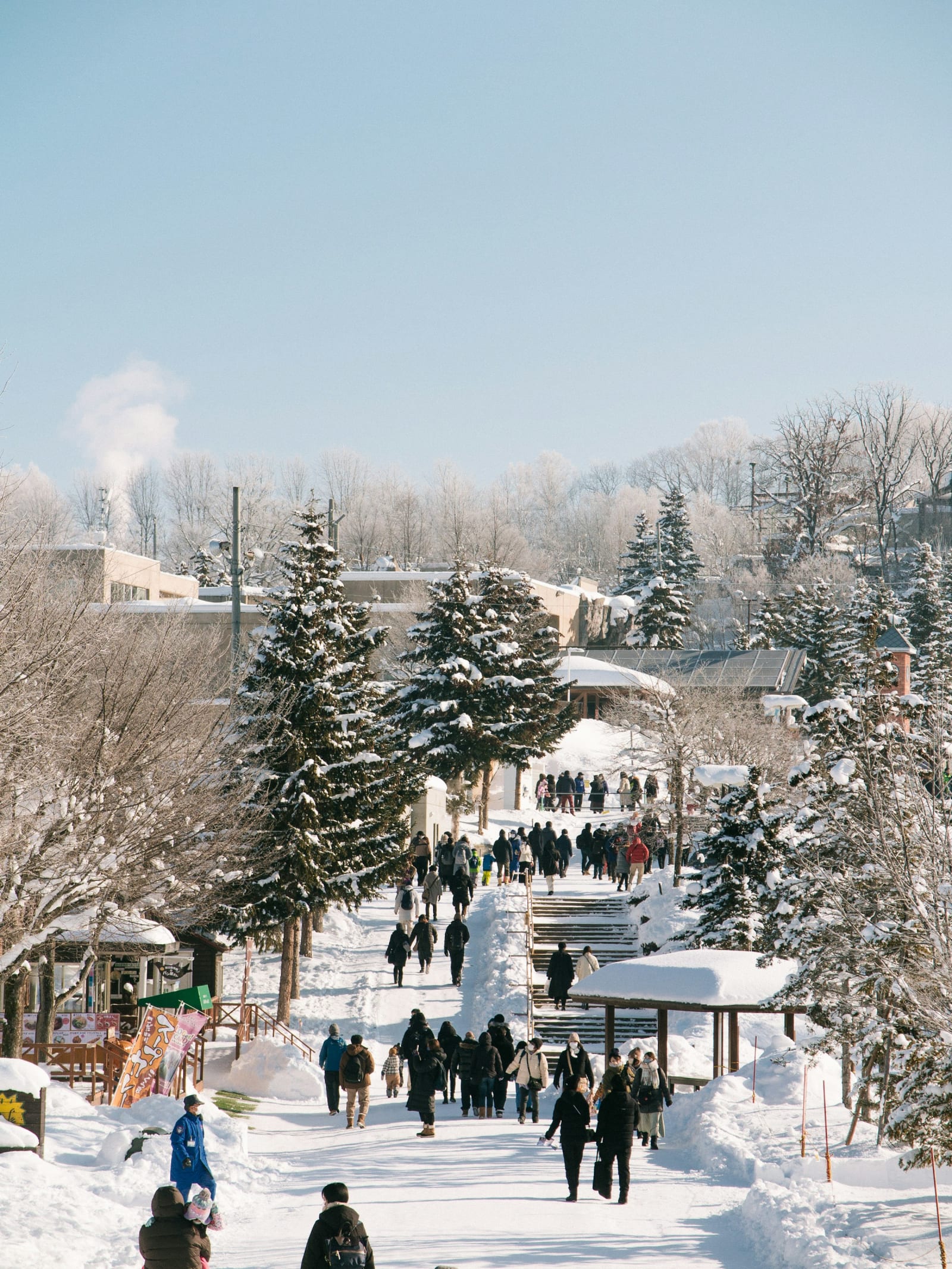
Go to Asahiyama Zoo on your first morning. Arrive at 9:30am when the gates open (10:30am in winter) and head directly to the penguin tunnel enclosure before the tour buses arrive. You'll stand below a glass tube and watch king penguins shoot past with surprising speed. The polar bear enclosure has an underwater viewing window at face level; polar bears drift centimetres from the glass. From mid-December to mid-March, the penguin walk runs twice daily (11am and 2:30pm through February, 11am only in March): a line of birds waddling along snow paths while visitors crowd the roped route. Admission is ¥1,000 (¥1,400 from April 29, 2027). The zoo bus from Asahikawa Station takes about 40 minutes and costs ¥670 each way (buses 41, 42, or 47 from Bus Stop 6).
Asahikawa Ramen Village is in the Nagayama district, a short bus or taxi ride from the zoo. Eight shops compete under one roof, all specialising in the city's signature style: a double soup combining soy sauce with fish stock, finished with a thin layer of pork fat that traps heat against the broth surface. Aoba has made the classic version since 1947. Baikoken won the city's first Ramen Grand Prix in 1993 and has a Michelin mention. Hachiya adds burnt lard for a distinctively smoky note. The shops open at 11am and close at 8pm daily. Arrive with an empty stomach and budget for two bowls.
The sake breweries take an afternoon. Otokoyama, about 20 minutes by bus north of the station, has produced sake since the Edo period and offers free self-guided tours with English materials, plus a tasting room where entry includes three complimentary samples. Takasago is a 15-minute walk from the station, runs guided tours at 10am and 3pm (reserve at least 3 days ahead), and has a preserved Meiji-era brewery building. Both use cold, mineral-light Daisetsuzan snowmelt water. Bottles at the breweries cost roughly 30-40% less than in Sapporo.
Daisetsuzan is the reason to stay a second night. The Asahidake ropeway (¥3,500 round trip from June to October) climbs to the 1,600m alpine zone in 10 minutes: crater rim walks, alpine flower meadows in July, and Japan's earliest autumn colour starting mid-September on the high slopes. Four buses a day run from the station to Asahidake Onsen (¥2,300, 1 hour 50 minutes). A rental car gives more flexibility and lets you combine Asahidake with Sounkyo Gorge, which is on the opposite side of the park.
Top Attractions
Must-see landmarks, temples, and experiences in Asahikawa

Asahiyama Zoo
The enclosures are the attraction. The penguin tunnel has king penguins swimming overhead through a glass tube at surprising speed. The polar bear pool has an underwater viewport at face level: polar bears drift and dive centimetres from the glass. The seal exhibit runs a vertical glass cylinder; seals spiral up and down beside you. None of these require tour guides or explanations. You just watch. In winter (mid-December to mid-March), the penguin walk sends around 30 birds waddling along roped-off snow paths twice a day, while visitors line the route. The walk only happens when there's snow on the ground. Arrive at opening on a weekday and go straight to the penguin tunnel before the tour buses fill the paths by 10am.

Daisetsuzan National Park (Asahidake)
Japan's largest national park covers a vast plateau of volcanic peaks and alpine meadows at Hokkaido's geographic centre. Asahidake (2,291m) is Hokkaido's highest mountain, and the ropeway to the 1,600m Sugatami Station (¥3,500 round trip June to October, ¥2,800 the rest of the year) gets you to the alpine zone in 10 minutes. From there you can walk the volcanic crater rim (easy, 1 hour) or push to the summit on a well-marked trail (3-4 hours return, no guide required in summer). In July, wildflowers carpet the meadows. In mid-September, the high slopes turn red and gold: this is Japan's earliest autumn foliage, arriving 3-4 weeks before anywhere else in the country. Four buses a day run from Asahikawa Station (¥2,300 each way, 1 hour 50 minutes). A rental car lets you combine Asahidake with Sounkyo Gorge on the opposite side of the park.

Asahikawa Ramen Village
Eight ramen shops in one building, all working with the same signature style: a double soup combining soy sauce broth with fish stock, finished with a thin layer of pork fat that traps heat against the surface and keeps the broth scalding through a Hokkaido winter. The shops do the same base differently. Aoba (since 1947) is the most traditional: chicken bones and dried fish, clean and direct. Baikoken adds body to the broth and won the city's first Ramen Grand Prix in 1993. Hachiya uses burnt lard, which makes the soup smoky and divisive. Santouka is the chain that spread Asahikawa style to Tokyo; try it here first. The point is comparison: eat one bowl, walk ten metres, and try another. Open 11am-8pm daily, in the Nagayama district near the zoo. Combine both in one afternoon rather than backtracking.

Otokoyama and Takasago Sake Breweries
Asahikawa's cold, mineral-light snowmelt water has produced excellent sake here since the Edo period. Otokoyama is the flagship: a brewery museum with free self-guided tours, English-language exhibits tracing 350 years of production history, and a tasting room where entry includes three complimentary samples of mid-range varieties (premium options ¥200 each). Their junmai daiginjo is crisp and dry, and costs significantly less here than in Sapporo. It's about 20 minutes by bus north of the station. Takasago Brewery, a 15-minute walk from the station, offers guided tours at 10am and 3pm with advance reservation (at least 3 days ahead), and has a preserved Meiji-era building that's worth seeing in its own right. Buy bottles at either brewery rather than at the airport or in the city.

Sounkyo Gorge
On Daisetsuzan's eastern edge, Sounkyo is the park's most dramatic scenery: basalt columns rise 100m from the river, and two waterfalls (Ryusei and Ginga) drop in parallel through the cliff face. The gorge village has the Kurodake ropeway (¥3,000 round trip) connecting to hiking trails at 1,300m and beyond into the park interior. In September, autumn foliage turns the gorge walls red and orange. Go early in the morning to beat the coach tours that dominate the main viewpoints by 10am. Getting there without a car takes about 2 hours by Dohoku Bus from Asahikawa Station (¥1,450-2,100); a rental car lets you combine it with Asahidake in one full day.
Where to Stay in Asahikawa
Stay near Asahikawa Station for most visits. Buses to the zoo and Daisetsuzan depart from here, the sake breweries and ramen are within walking distance or a short bus ride, and business hotels offer good value. If you're serious about hiking Daisetsuzan, one night at Asahidake Onsen or Sounkyo Gorge pays off: waking up at the trailhead is worth it in September when you want to reach the foliage viewpoints before the day-trippers.
Best Areas to Stay
Asahikawa Station Area
The right base for most visitors. Buses to the zoo (40 min, ¥670), Asahidake (4x daily, ¥2,300, 1h50m), and Sounkyo (2 hours) all depart from here. Ramen Village requires a bus or taxi to Nagayama but everything else is accessible on foot. Dormy Inn Asahikawa has a rooftop natural hot spring bath, worth paying a bit more for after a day outdoors.
Best for: Convenience, transport access, budget flexibility
Asahidake Onsen / Sounkyo Gorge
Mountain onsen villages inside or adjacent to Daisetsuzan. Sleep here if you're hiking early: the trailheads are minutes away, and the ryokan have natural hot spring baths for the evening. Multi-course kaiseki dinners are typically included. Book 2-3 months ahead for September foliage season.
Best for: Serious hiking, onsen, mountain atmosphere, September foliage
Types of Accommodation
Business Hotels
Clustered near Asahikawa Station. Dormy Inn Asahikawa is the standout for its rooftop natural onsen; Route Inn Grand Asahikawa is a reliable and cheaper alternative.
Mountain Ryokan
Traditional onsen inns at Asahidake Onsen or in Sounkyo Gorge village. Hot spring baths, kaiseki dinners, and trailhead access. Book well ahead in July and September.
Best Time to Visit
Two seasons are genuinely worth planning around: summer through mid-autumn (July to late September) for Daisetsuzan hiking and Japan's earliest foliage; and winter (December to February) for the zoo's penguin walk and the Winter Festival. Spring is quiet and pleasant but the mountain trails open slowly and the zoo has its annual closure in early-to-mid April. Avoid Golden Week (late April to early May): the zoo is at its most crowded.
Summer (June-September)
15-28°C (59-82°F)
The prime window for Daisetsuzan: alpine wildflowers peak in July, and Japan's earliest autumn colour arrives on the high slopes in mid-September. The zoo runs all its exhibits and feeding shows. Days are long and temperatures are pleasant, without the humidity of southern Japan.
Pros:
- +Daisetsuzan hiking season (alpine flowers in July)
- +Japan's earliest autumn foliage from mid-September
- +All zoo exhibits running including feeding shows
- +Long daylight hours
Cons:
- -Accommodation books out months ahead for September foliage season
- -Some weekend trails crowded in late September
Autumn (October-November)
3-18°C (37-64°F)
The Asahidake high slopes peak in mid-September; by October, the lower valleys follow. Temperatures drop quickly in November and mountain trails begin closing. October is a good window for the gorge and lower forest trails before the cold sets in hard.
Pros:
- +Lower valley foliage through October
- +Comfortable temperatures for city sightseeing
- +Fewer tourists than summer peak
Cons:
- -High mountain trails closing from October onwards
- -Weather deteriorates quickly in November
- -Some days turn cold without warning
Winter (December-February)
-12 to -2°C (10-28°F)
Asahikawa holds Japan's all-time low temperature record (-41°C), so come prepared for genuine cold. The zoo's penguin walk runs daily mid-December to mid-March. The Asahikawa Winter Festival (Feb 6-11) fills the city centre with enormous snow sculptures, timed to overlap with the Sapporo Snow Festival so you can attend both in one trip.
Pros:
- +Zoo penguin walk (Dec-Mar, 11am daily)
- +Asahikawa Winter Festival (Feb 6-11)
- +Ramen and sake gain new meaning in the cold
- +Nearby ski resort at Kamui Ski Links
Cons:
- -Dangerously cold on some days (prepare seriously)
- -Most Daisetsuzan hiking trails closed
- -Shorter daylight hours
Spring (April-May)
3-15°C (37-59°F)
Quiet and gradually warming. The zoo has its annual maintenance closure in early-to-mid April before reopening for Golden Week. Cherry blossoms hit the city in late April. Golden Week (late April to early May) brings heavy crowds and fully-booked accommodation.
Pros:
- +City cherry blossoms in late April
- +Quietest period for non-zoo sightseeing
- +Lower accommodation prices before peak season
Cons:
- -Zoo closed for annual maintenance (approx. early-to-mid April)
- -Daisetsuzan trails mostly closed until late May
- -Golden Week crowds in late April to early May
Asahikawa Food Scene
Asahikawa's food identity rests on ramen and sake. The double-soup ramen style (soy sauce combined with fish stock, sealed with pork fat to hold the heat) is distinct from Sapporo's miso and Hakodate's salt, and Ramen Village makes the comparison easy. Beyond ramen, Genghis Khan (jingisukan) mutton BBQ is a Hokkaido staple worth a meal, and the city's sake from Daisetsuzan snowmelt water is genuinely good bought at the source.
Asahikawa Ramen
Soy-sauce and fish-stock double-soup, lighter than Sapporo's miso but more layered than Hakodate's salt. The thin pork fat layer on top keeps the broth scorching hot. Aoba's version (since 1947) is the benchmark: chicken bones and dried fish, wavy noodles, char siu. Baikoken adds richness and won the city's first Ramen Grand Prix. Hachiya uses burnt lard for a smokier result that divides opinion. Try at least two shops in one visit at Ramen Village.
Where to try:
Genghis Khan (Jingisukan)
Mutton grilled on a dome-shaped cast-iron pan, the fat draining to the edges as you cook. Hokkaido lamb is milder than imported meat. Jingisukan Daikokuya (11 minutes walk from the station) uses thick-cut fresh lamb at ¥700-900 per plate with free vegetable refills. Matsuo Jingisukan has tatami seating and specialises in bone-in lamb. Budget ¥2,000-4,000 per person with drinks.
Where to try:
Otokoyama Sake
Cold Daisetsuzan snowmelt water produces clean, dry sake here. The junmai daiginjo is the bottle to buy: faintly mineral, no sweetness, finishes dry. Three complimentary tastes are included with entry to the brewery museum. Buy bottles at the brewery for roughly 30-40% less than Sapporo retail. In the evening, ask for Otokoyama at any izakaya in the city.
Where to try:
Suggested Itinerary
Day 1: Zoo, Ramen, and Sake Breweries
Day 2: Daisetsuzan Day Trip via Asahidake
Nearby Day Trips
Sounkyo Gorge
About 2 hours by Dohoku Bus from Asahikawa Station (¥2,140 each way)
Daisetsuzan's most dramatic gorge: 100m basalt columns rise from the river, and two waterfalls drop in parallel through the cliff face. The Kurodake ropeway (¥3,000 round trip) connects the gorge village to 1,300m and hiking trails into the park interior. September brings foliage that turns the gorge walls red and orange. The gorge is at its most spectacular in September. Go early in the morning to beat the coach tours. Best as a standalone full day or combined with Asahidake by rental car.
Furano
1 hr 10–20 min by JR Furano Line local train from Asahikawa Station (¥1,380, JR Pass covered)
Famous for lavender fields in early to mid-July, when the hills around Farm Tomita turn purple and the scent reaches the road. Outside lavender season, Furano is a quiet agricultural town with local dairy products, wine, and easy access to Biei's rolling patchwork fields by bicycle. The train ride through the Hokkaido interior is worth doing in summer and autumn regardless of the destination.
Practical Information
Getting to Asahikawa
From Tokyo
2 hours by flight from Haneda to Asahikawa Airport, then 45 min by bus to the city; or ~10 hours by Shinkansen + Limited Express via Sapporo (¥33,000, JR Pass covered)
Asahikawa Airport (AKJ)
15 km from city centre
Daily Budget Guide
Guesthouse or capsule hotel, ramen at Ramen Village, convenience store meals, zoo only for attractions
Business hotel near station, restaurant meals and ramen, zoo and sake breweries, one Daisetsuzan day trip
Mountain ryokan at Asahidake Onsen or Sounkyo with kaiseki meals, private onsen, and trailhead access
Essential Asahikawa Tips
Asahiyama Zoo is busiest from mid-morning on weekends. Arrive exactly at opening (9:30am in summer, 10:30am in winter) on a weekday and head straight to the penguin tunnel then the polar bear pool. Both are quiet at opening and packed by 10:30am when tour buses arrive.
The winter penguin walk (mid-December to mid-March) runs at 11am daily and 2:30pm through February. It only happens when there's snow on the ground. Check the zoo's official website before planning your trip around it.
At Ramen Village, go at 11am when it opens. Aoba is the purist's choice for classic Asahikawa style; Baikoken won the city's first Ramen Grand Prix in 1993. Don't eat beforehand. You'll want at least two bowls.
Takasago Brewery tours run at 10am and 3pm but require advance reservation at least 3 days ahead. Call +81-166-22-7480 or arrange through your hotel. If Takasago is unavailable, Otokoyama requires no reservation and includes 3 free tastings.
Daisetsuzan's high slope autumn foliage at Asahidake peaks around mid-September, 3-4 weeks before anywhere else in Japan. The ropeway (¥3,500 return) puts you in front of the colour without a strenuous climb.
There are only 4 buses a day from Asahikawa Station to Asahidake Onsen, and the last one back leaves Asahidake at 16:55. Check the current timetable the day before; missing that bus leaves a long taxi ride as the only way back to the city.
Rent a car if you want to combine Asahidake and Sounkyo in one day. They're on opposite sides of Daisetsuzan and can't be linked by public transport. Fill up in the city before leaving. Petrol is scarce in the mountains.
Book accommodation for the Asahikawa Winter Festival (Feb 6-11) at least 3 months ahead. Many visitors attend both this and the Sapporo Snow Festival in the same week, and hotels in both cities fill fast.
Bottles of Otokoyama sake cost roughly 30-40% less at the brewery than in Sapporo stores. The junmai daiginjo is the one to buy. Factor in your luggage weight before stocking up.
Ramen Village is not in the city centre. It's in the Nagayama district near the zoo. Don't walk there from the station. Take a city bus (check which number serves Nagayama) or budget ¥1,500-2,000 for a taxi.
Book tours & activities in Asahikawa
Skip the line with pre-booked tickets and guided tours
via Klook · Affiliate link
Related Articles
Japan in February 2027: Snow Festival, Plums, Weather and Prices
Sapporo's Snow Festival (Feb 4–11) doubles its hotel prices, the rest of Japan stays at January rates, and the plums open. February 2027 dates and weather.
Hokkaido: Japan's Wild North (2026 Guide)
Japan's northern island does lavender summers, the world's best powder snow, and its finest seafood. When to go, where to base, and how to get around.
Other Destinations
Tokyo
The world's greatest city: 14 million people, 200+ Michelin stars, and more to discover than any single trip can hold
Hiroshima
Peace Park, Miyajima's floating torii, and the best okonomiyaki in Japan: a city that turned tragedy into hope
Kyoto
A thousand years as Japan's capital: geisha in Gion, vermillion torii tunnels, and kaiseki cuisine elevated to art
Osaka
Kuidaore city: Dotonbori's neon, Shinsekai's kushikatsu, and Japan's friendliest strangers
Kamakura
Tokyo's favorite day trip: the Great Buddha since 1252, zen temples, hydrangeas at Hasedera, surf beaches, and shirasu-don an hour from the city
Yokohama
Japan's largest Chinatown, Cup Noodles Museum, and a waterfront that actually breathes (25 minutes from Tokyo)
Hakone
Two hours from Shinjuku: volcanic onsen, the Hakone Loop, and Mt. Fuji (when she shows up)
Nikko
Gold-leaf Toshogu, 97m Kegon Falls, and yuba soba: Japan's most opulent shrine town, 2 hours from Asakusa
Nara
1,200 bowing deer, the world's largest bronze Buddha, and temples that predate Kyoto, 45 minutes from Osaka
Kanazawa
Kyoto's calmer cousin: Kenroku-en at dawn, Omicho seafood, and 99% of Japan's gold leaf
Takayama
Preserved Edo streets, world-class Hida beef, and six sake breweries you can walk between in the Japanese Alps
Fukuoka
Yatai stalls at sunset, the best tonkotsu ramen in Japan by the Naka River, and all of Kyushu on your doorstep
Sapporo
Miso ramen at midnight, powder snow at Niseko, and a beer garden in Odori Park: Hokkaido's capital delivers
Nagoya
Miso katsu, golden shachihoko, and Toyota's textile-to-car story: the city everyone skips on the Shinkansen, and shouldn't
Kobe
Kobe beef that ruins all other steak, historic Kitano mansions, and Arima Onsen in the mountains
Himeji
The largest of Japan's 12 original castles, nine walled gardens next door, and oden eaten with ginger soy
Nagasaki
Japan's only window to the outside world for 200 years: now champon, Dejima, and the Peace Park
Hakodate
One of the world's three best night views, a star-shaped fort, and the freshest kaisen-don in Japan at sunrise
Otaru
Gas-lit canals, port-fresh sushi, and Hokkaido's most romantic winter festival
Sendai
Tohoku's capital: grilled beef tongue since 1948, Date Masamune's ornate mausoleum, and streamers across the sky every August
Aomori
Honshu's northern edge: Japan's most electrifying summer festival, world-class Jomon archaeology, and one of the last virgin beech forests on Earth
Morioka
Three completely distinct noodles, 1,000 cherry trees on a ruined castle, and Hiraizumi's Golden Hall under an hour south
Akita
Gravity-defying lantern poles at the Kanto Festival, Tohoku's finest samurai streets in Kakunodate, and sake from over thirty breweries
Yamagata
Yamadera's 1,015 steps, Ginzan Onsen's gaslit snow, sacred mountains, and Japan's best cherries
Fukushima
A blossom-covered mountain, a volcanic sky road, 200-yen Edo bathhouses, and Japan's best peaches, 90 minutes from Tokyo
Matsushima
One of Japan's three great views: 260 pine-clad islands, Date Masamune's Zen temple, and oysters grilled on the bay
Hirosaki
Japan's greatest cherry blossom castle, fan-shaped warrior floats at Neputa, and a city that produces one in five of Japan's apples
Aizuwakamatsu
A red-tiled castle, nineteen graves of teenage samurai, thatched Edo villages, and some of Japan's most decorated sake
Chiba
Narita-san Shinsho-ji, Tokyo DisneySea, and 100 km of Pacific coastline: most visitors see only the airport terminal
Saitama
Kawagoe's Edo warehouse street, Japan's first Shinkansen prototype, and the Chichibu Night Festival: Saitama earns a day
Mito
Japan's first flower season: Kairakuen's 3,000 plum trees six weeks before sakura, one of Japan's Three Great Gardens
Utsunomiya
Japan's gyoza capital: 200 shops, underground volcanic caverns at Oya, and Nikko 41 minutes by train
Maebashi
A free rose garden with 7,000 blooms, a volcanic caldera you can walk around, and the budget base for Kusatsu Onsen
Niigata
Japan's sake heartland: 90-plus breweries, Sea of Japan sushi at half the Tokyo price, and a ferry to Sado Island
Toyama
Base camp for the Tateyama snow walls, with white shrimp, firefly squid, and Sea of Japan sushi at half Tokyo prices
Fukui
Japan's dinosaur prefecture: a world-class museum, volcanic sea cliffs, the strictest Zen monastery, and Echizen crab in winter
Nagano
Zenko-ji pilgrims, snow monkeys in hot springs, and Hakuba powder: Japan's alpine heart
Shizuoka
Japan's tea capital: pine-framed Fuji views, the Tokugawa shrine that predates Nikko, and tiny pink shrimp found only in Suruga Bay
Gifu
Cormorant fishing by firelight, a mountain castle at sunset, and paper lanterns made by hand
Kofu
Japan's wine capital: cellar tours a short walk from the station, hoto noodles, and the granite cliffs of Shosenkyo Gorge
Hakuba
Olympic powder, alpine hiking, and the most international mountain town in Japan
Matsumoto
Japan's oldest five-tiered castle keep, alpine gateways, and a city that punches well above its size
Wakayama
Pilgrimage country: sleep in Koyasan's temples, walk the Kumano Kodo, and stand under Japan's tallest waterfall
Otsu
Kyoto's lakeside escape: Enryaku-ji's World Heritage halls, Japan's largest lake, and hotel rates Kyoto forgot, 10 minutes away
Tsu
Ise Jingu 50 minutes, Matsusaka wagyu 20 minutes: Tsu is the affordable base for the best of Mie Prefecture
Miyajima
A floating shrine gate, a 535-metre sacred mountain, and Hiroshima oysters grilled on the waterfront
Okayama
Korakuen garden, Crow Castle, Kurashiki canals, plus Naoshima art island 50 minutes away
Tottori
Japan's only coastal sand dunes, 50 meters high and 16km wide, where the desert meets the Sea of Japan
Matsue
One of Japan's five National Treasure castles, moat boats through samurai streets, and Lake Shinji sunsets, with mythical Izumo next door
Yamaguchi
Ruriko-ji's 1442 national treasure pagoda, Japan's largest limestone cave, and the gateway to Hagi and fugu country
Matsuyama
Japan's oldest hot spring, one of 12 original castles, and the gateway to the Shimanami Kaido cycling route
Takamatsu
Japan's udon capital, a Michelin three-star garden, and the ferry gateway to Naoshima's art islands
Tokushima
Japan's wildest dance festival, vine bridges over mountain gorges, and tidal whirlpools at the edge of Shikoku
Kochi
One of Japan's 12 original castles, a 300-year-old Sunday market, and katsuo no tataki seared over straw flames
Kumamoto
Japan's fiercest castle, garlic-laced ramen, and the world's largest active caldera: Kyushu's samurai heart
Beppu
Eight volcanic 'hells,' Takegawara sand baths, and Japan's densest onsen: steam rises from every corner
Kagoshima
Sakurajima erupting on the horizon, kurobuta pork on your plate, and Yakushima's ancient cedars a jetfoil ride away
Miyazaki
Takachiho Gorge by rowboat, a shrine built into a sea cave, and chicken nanban from the city that invented it
Saga
The birthplace of Japanese porcelain, a hundred balloons over a river at dawn, and A5 wagyu at a fraction of Kobe prices
Oita
12th-century stone Buddhas in a cedar valley, toriten from its originator, and Beppu's steaming hells 12 minutes down the line
Naha
Shuri Castle, Kokusai-dori, and goya champuru: Japan's subtropical capital where Ryukyu royalty once ruled
Ishigaki
Kabira Bay emerald waters, world-class diving, and Japan's southernmost island gateway
Miyako Island
7km of turquoise sand, Ikema Bridge views, and Japan's clearest snorkeling
Ready to Explore Asahikawa?
Add Asahikawa as a stay in your trip and we'll help you find hotels and suggest activities