Ishigaki
Kabira Bay emerald waters, world-class diving, and Japan's southernmost island gateway
About Ishigaki
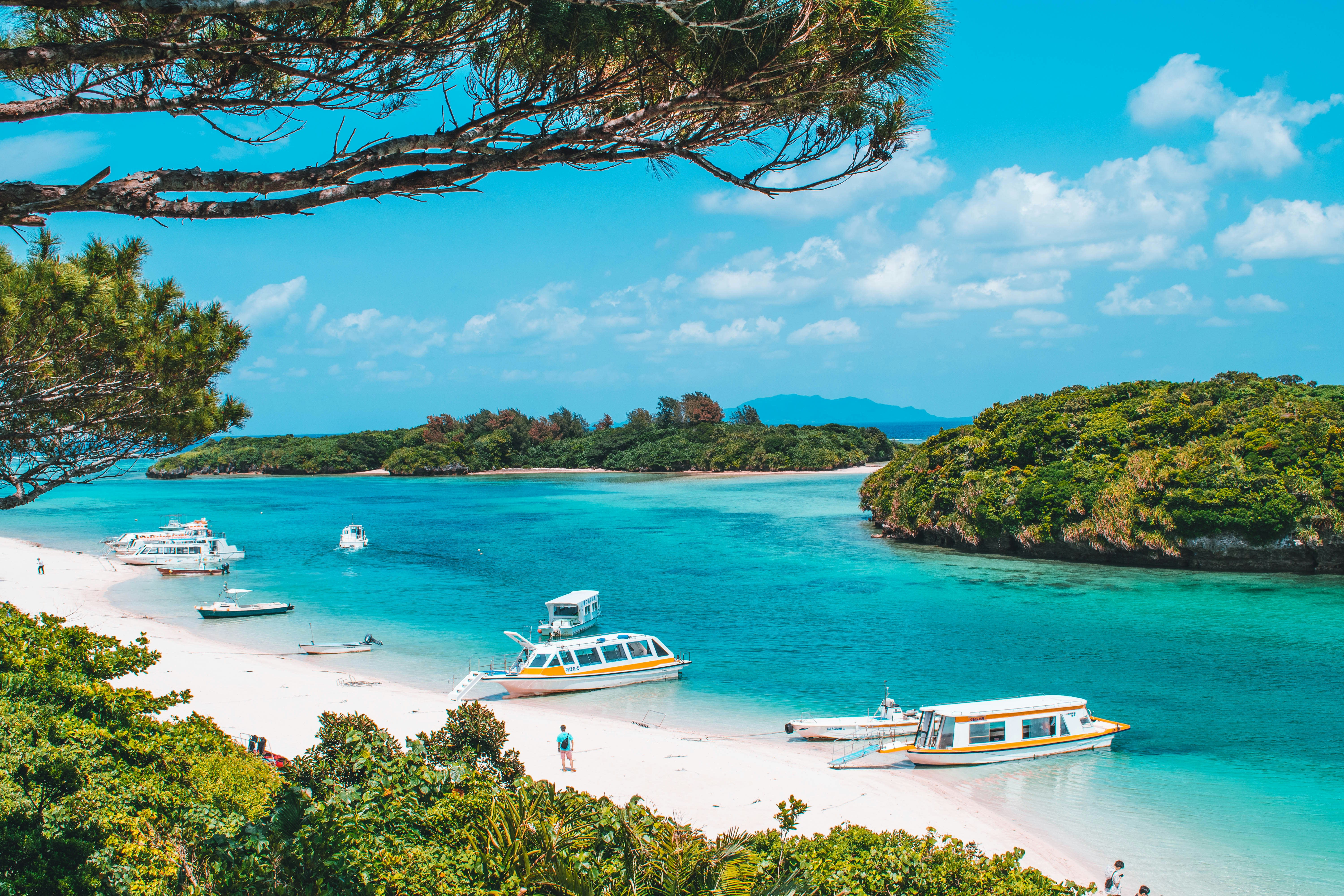
Kabira Bay at 9 AM is worth the early wake-up. The emerald water is so clear you can see the coral from the observatory (free, 24 hours) before boarding a glass-bottom boat (¥1,700, book online at Kabira Marine Service for 44% off). Azuma Bus Routes 2, 7, 8, 9 depart the Bus Terminal (1-min walk from Ishigaki Port Ferry Terminal) roughly hourly; ¥770 one-way or buy the 1-day pass (¥1,000) if you're hitting Yonehara Beach or the Miyara River mangroves too. Swimming is banned in Kabira to protect the bay; for that, head to Yonehara (free, excellent shore snorkeling) or book a dive with one of the 30+ shops.
Ishigaki Port is your gateway to the Yaeyama Islands. Yaeyama Kanko Ferry and Anei Kanko run to Taketomi (15 min, ~¥1,400 round-trip) and Iriomote (40 min to Ohara, ~¥3,500 round-trip). Book online in peak season; queues at the ticket counter can hit 30 minutes. The Azuma Bus driver can give you a 10% Anei ferry coupon when you board at the airport (¥550 to city, 35–40 min).
Ishigaki beef is the splurge. Yakiniku Gyumasa (own farm, lean wagyu) and Sumibi Yakiniku Ishigaki An (¥5,000–6,000 dinner) are the standouts; Yukishio Steak does teppanyaki at ¥10,000–15,000. Many restaurants close 2–5 PM, so plan lunch before 2 or dinner after 6. Cash at local spots; 7-Eleven ATMs take foreign cards.
Top Attractions
Must-see landmarks, temples, and experiences in Ishigaki
Kabira Bay
One of Japan's most beautiful bays with emerald green waters. The bay is protected (no swimming), but glass-bottom boat tours offer stunning views of the coral and marine life. A must-see natural wonder.
Diving & Snorkeling
Ishigaki is one of Japan's premier diving destinations with world-class coral reefs, diverse marine life, and excellent visibility. Numerous dive shops offer tours for all levels.
Yonehara Beach
A beautiful white sand beach with excellent snorkeling right from shore. Crystal-clear waters and coral reefs make it perfect for beginners.
Miyara River Mangrove Forest
A beautiful mangrove forest along the Miyara River. Take a kayak tour through the mangroves to see this unique ecosystem up close.
Ishigaki Yaima Village
A cultural village showcasing traditional Okinawan architecture and crafts. Learn about local culture and history.
Where to Stay in Ishigaki
Two choices: stay in Ishigaki city centre (walkable to restaurants, port, and nightlife) or at a beach resort on the coast (you will need a rental car). City centre works best for 1-2 night stays focused on island hopping and dining. Resorts suit longer beach holidays. Book well ahead for July-August; prices jump 30-50% and popular spots sell out.
Best Areas to Stay
Ishigaki City Centre (Port / 730 Area)
Walking distance to the ferry terminal, restaurants, izakaya, and the bus terminal. Rooms are compact but you will not need a car if you stick to city dining, port ferries, and bus excursions to Kabira Bay.
Best for: Island hopping, nightlife, dining, short stays
Kabira Bay Area
Quieter side of the island near Ishigaki's most famous view. A handful of small hotels and pensions sit within walking distance of the bay. You will need a car or scooter to reach restaurants in town.
Best for: Nature lovers, snorkelling, quiet retreats
Fusaki / West Coast Resorts
The main resort strip, anchored by Fusaki Beach Resort. Pools, ocean views, beach access, and on-site restaurants. Fusaki offers the best sunset on the island. Rental car essential for anything off-property.
Best for: Families, couples, beach holidays, longer stays
Types of Accommodation
Business Hotels
Reliable and affordable. Most are within 10 minutes' walk of the port and 730 area. Rooms are small (12-16m²) but clean and functional, often with coin laundry.
Guesthouses / Hostels
Ishigaki has a friendly hostel scene. Dorm beds from ¥2,500, private rooms from ¥5,000. Good for solo travellers and divers looking to save money for experiences.
Beach Resorts
Full-service resorts with pools, beaches, water sports, and multiple restaurants. The splurge option, and worth it if you want a proper tropical holiday without leaving Japan.
Best Time to Visit
Ishigaki is diveable year-round, but conditions vary significantly. Late March through June and October through November are the sweet spot: warm water, low crowds, and minimal typhoon risk. Summer is peak season with the best manta ray sightings (especially June through October at Manta Point), but typhoons can cancel everything. Winter stays mild at 18-22°C and is fine for sightseeing, though some ferry routes run reduced schedules.
Spring (March-May)
22-28°C (72-82°F)
Water temperatures climb past 24°C by April, making this the start of serious dive and snorkel season. Visibility is excellent and the reefs are vibrant. Golden Week brings domestic crowds and a spike in ferry and hotel prices, but the weeks before and after are some of the best on the island.
Pros:
- +Excellent diving visibility
- +Water warm enough for comfortable snorkelling
- +Coral spawning events (late May)
- +Green sea turtles active around Yonehara
Cons:
- -Golden Week (late April-early May) books out fast
- -Rainy season starts late May
- -Ferry queues grow during holidays
Summer (June-September)
28-33°C (82-91°F)
Peak season. Water hits 29-30°C, manta ray sightings at Manta Point peak from June through October, and the island buzzes with visitors. The downside: typhoons can ground flights and cancel ferries for 1-3 days at a time, especially in August and September. Hotel prices jump 30-50% in school holidays.
Pros:
- +Best manta ray season (June-October)
- +Warmest water temperatures (29-30°C)
- +Long sunny days after rainy season clears (late June)
- +Peak snorkelling and beach conditions
Cons:
- -Typhoon risk, highest in August-September
- -School holidays pack hotels and beaches
- -30-50% price increases in peak weeks
- -Ferries to outer islands cancel during storms
Autumn (October-November)
24-29°C (75-84°F)
October still feels like summer in the water (27-28°C), and manta sightings continue through the month. Typhoon risk drops sharply by November. Crowds thin, prices fall, and you can often get ferries to Taketomi and Iriomote without advance booking. One of the best times to visit.
Pros:
- +Manta rays still active in October
- +Typhoon risk drops by November
- +Lower prices and thinner crowds
- +Comfortable sightseeing weather
Cons:
- -Early October still carries some typhoon risk
- -Water begins cooling toward late November
- -Some dive shops reduce schedules
Winter (December-February)
18-22°C (64-72°F)
Too cool for casual beach swimming (water 22-23°C), but experienced divers still go out in wetsuits. Ishigaki at 18-22°C is pleasant for cycling, exploring Kabira Bay, and eating beef without sweating. The Uehara ferry route to Iriomote cancels roughly 50% of the time in winter due to rough seas; use the Ohara route instead. Lowest prices of the year.
Pros:
- +Lowest hotel and flight prices
- +No crowds at Kabira Bay or beaches
- +Comfortable for cycling and sightseeing
- +Humpback whale sightings possible (January-March)
Cons:
- -Too cool for casual swimming
- -Iriomote Uehara ferry cancels often
- -Some dive shops reduce operations
- -Grey, windy days more frequent
Ishigaki Food Scene
Ishigaki punches way above its weight for a town of 50,000. The beef is genuine wagyu raised on the island, the seafood comes off boats the same morning, and the tropical fruit (mango, pineapple, passion fruit) is the best in Japan. Most restaurants are within walking distance of Ishigaki Port. Plan meals carefully: almost everything closes 2-5 PM, and the best yakiniku spots fill up by 7 PM in peak season.
Ishigaki Beef
Wagyu from local farms: lean yet tender, subtle sweetness. Yakiniku (grill yourself) or teppanyaki style.
Where to try:
Fresh Seafood
Sashimi, grilled fish, sea grapes, and Okinawan izakaya fare from Yaeyama waters.
Where to try:
Yaeyama Soba & Tropical Fruits
Okinawan soba (wheat noodles, not buckwheat) and mango, pineapple, passion fruit smoothies.
Where to try:
Suggested Itinerary
Day 1: Kabira Bay, Mangroves & City
Day 2: Taketomi Island Day Trip
Day 3: Diving & Departure
Ready-Made Trip Plans Including Ishigaki
Jump-start your planning with a curated template
Nearby Day Trips
Taketomi Island
15 min by ferry from Ishigaki Port, ¥1,400 round-trip (Yaeyama Kanko or Anei Kanko)
Tiny island with traditional Ryukyu village: red-tiled roofs, white sand paths, water buffalo carts. Rent a bike (¥1,000–1,500) and cycle in 2–3 hours. Kondoi Beach and Kaiji Beach for swimming; Hoshizuna-no-hama has rare star-shaped sand. Book ferry online in peak season; queues at Ishigaki Port can hit 30 min.
Iriomote Island
40 min by ferry to Ohara Port or 35 min to Uehara Port, ~¥3,500 round-trip
Jungle island with mangrove kayaking, Pinaisara Falls, and the rare Iriomote wildcat. Day trips from Ishigaki are feasible: ferry to Ohara (more reliable in winter; Uehara route cancels ~50% in Dec–Feb), then join a kayak or bus tour. Maryudo Falls and Kanbiree Falls are popular. Rent a car at the port or use island buses.
Hateruma Island
1 hour by ferry from Ishigaki Port (Anei Kanko only, ~¥5,000 round-trip)
Japan's southernmost inhabited island. Cycling is the way to explore; rent at the port. Hateruma Lighthouse, Japan's southernmost point marker, and pristine beaches. Fewer tourists than Taketomi; ferry runs less frequently. Book ahead.
Practical Information
Getting to Ishigaki
Ishigaki Airport (ISG)
10 km from city center
Daily Budget Guide
Budget hotels, convenience store meals, free beaches
Business hotels, mix of restaurants, water activities, rental car
Resort hotels, fine dining, premium diving experiences
Essential Ishigaki Tips
Rent a car (¥5,000–8,000/day) or scooter (¥2,000–4,000/day): Azuma Bus runs hourly at best; Kabira Bay taxi from Bus Terminal ¥4,200
Book diving tours 1–2 days ahead: ¥8,000–15,000 for 2 dives; Manta Point and Yonaguni-style reefs are the draws
Kabira Bay: Azuma Bus Routes 2, 7, 8, 9 from Bus Terminal (¥770, 35–53 min) to Kabira Park stop. Glass-bottom boat ¥1,700; book Kabira Marine Service online for 44% off
1-day Azuma Bus pass ¥1,000 (from driver or Bus Terminal); pays for itself with 2 rides. Bus Terminal is 1-min walk from Ishigaki Port Ferry Terminal
Airport bus ¥550 to city; ask driver for Anei Kanko Ferry 10% coupon, valid for Taketomi/Iriomote round-trips
Yonehara Beach: free, snorkeling from shore. Bring reef-safe sunscreen; regular sunscreen damages coral
Ishigaki beef: Yakiniku Gyumasa (own farm, ¥4,000–6,000), Sumibi Yakiniku Ishigaki An (¥5,000–6,000), Yukishio Steak teppanyaki (¥10,000–15,000)
Many restaurants close 2–5 PM: lunch before 2 or dinner after 6. Cash at local spots; 7-Eleven ATMs accept foreign cards
Ferry to Taketomi/Iriomote: book online in peak season. Arrive 20–30 min before departure. Round-trip saves ~5%
Miyara River mangrove kayak: ¥3,000–5,000, 2–3 hrs. Tours run 9 AM–5 PM
Book tours & activities in Ishigaki
Skip the line with pre-booked tickets and guided tours
via Klook · Affiliate link
Related Articles
Japan in August: Obon, Festivals and Surviving the Heat
The hottest month of the year is also the best festival month Japan has. Nebuta, Awa Odori, fireworks nearly every weekend, and the Obon travel crush: what August costs you and what it pays back.
Summer in Japan: Festivals, Beaches, and How to Beat the Heat
Hot, humid, and worth it. A month-by-month summer guide for Japan: rainy June, festival-packed July, typhoon-risky August. Plus where to escape the heat.
Okinawa: A Different Side of Japan
Turquoise water, Ryukyu castles, and a food scene that owes as much to China and Southeast Asia as it does to Tokyo. Okinawa barely feels like mainland Japan, and that's exactly the point.
Other Destinations
Tokyo
The world's greatest city: 14 million people, 200+ Michelin stars, and more to discover than any single trip can hold
Hiroshima
Peace Park, Miyajima's floating torii, and the best okonomiyaki in Japan: a city that turned tragedy into hope
Kyoto
A thousand years as Japan's capital: geisha in Gion, vermillion torii tunnels, and kaiseki cuisine elevated to art
Osaka
Kuidaore city: Dotonbori's neon, Shinsekai's kushikatsu, and Japan's friendliest strangers
Kamakura
Tokyo's favorite day trip: the Great Buddha since 1252, zen temples, hydrangeas at Hasedera, surf beaches, and shirasu-don an hour from the city
Yokohama
Japan's largest Chinatown, Cup Noodles Museum, and a waterfront that actually breathes (25 minutes from Tokyo)
Hakone
Two hours from Shinjuku: volcanic onsen, the Hakone Loop, and Mt. Fuji (when she shows up)
Nikko
Gold-leaf Toshogu, 97m Kegon Falls, and yuba soba: Japan's most opulent shrine town, 2 hours from Asakusa
Nara
1,200 bowing deer, the world's largest bronze Buddha, and temples that predate Kyoto, 45 minutes from Osaka
Kanazawa
Kyoto's calmer cousin: Kenroku-en at dawn, Omicho seafood, and 99% of Japan's gold leaf
Takayama
Preserved Edo streets, world-class Hida beef, and six sake breweries you can walk between in the Japanese Alps
Fukuoka
Yatai stalls at sunset, the best tonkotsu ramen in Japan by the Naka River, and all of Kyushu on your doorstep
Sapporo
Miso ramen at midnight, powder snow at Niseko, and a beer garden in Odori Park: Hokkaido's capital delivers
Nagoya
Miso katsu, golden shachihoko, and Toyota's textile-to-car story: the city everyone skips on the Shinkansen, and shouldn't
Kobe
Kobe beef that ruins all other steak, historic Kitano mansions, and Arima Onsen in the mountains
Nagasaki
Japan's only window to the outside world for 200 years: now champon, Dejima, and the Peace Park
Hakodate
One of the world's three best night views, a star-shaped fort, and the freshest kaisen-don in Japan at sunrise
Otaru
Gas-lit canals, port-fresh sushi, and Hokkaido's most romantic winter festival
Asahikawa
The zoo that redesigned how Japan thinks about animals, a ramen style with a pork-fat layer to beat the cold, and the gateway to Japan's largest national park
Sendai
Tohoku's capital: grilled beef tongue since 1948, Date Masamune's ornate mausoleum, and streamers across the sky every August
Aomori
Honshu's northern edge: Japan's most electrifying summer festival, world-class Jomon archaeology, and one of the last virgin beech forests on Earth
Morioka
Three completely distinct noodles, 1,000 cherry trees on a ruined castle, and Hiraizumi's Golden Hall 45 minutes south
Akita
Gravity-defying lantern poles at the Kanto Festival, Tohoku's finest samurai streets in Kakunodate, and sake from over thirty breweries
Yamagata
Yamadera's 1,015 steps, Ginzan Onsen's gaslit snow, sacred mountains, and Japan's best cherries
Fukushima
A blossom-covered mountain, a volcanic sky road, 200-yen Edo bathhouses, and Japan's best peaches, 90 minutes from Tokyo
Matsushima
One of Japan's three great views: 260 pine-clad islands, Date Masamune's Zen temple, and oysters grilled on the bay
Hirosaki
Japan's greatest cherry blossom castle, fan-shaped warrior floats at Neputa, and a city that produces one in five of Japan's apples
Aizuwakamatsu
A red-tiled castle, nineteen graves of teenage samurai, thatched Edo villages, and some of Japan's most decorated sake
Chiba
Narita-san Shinsho-ji, Tokyo DisneySea, and 100 km of Pacific coastline: most visitors see only the airport terminal
Saitama
Kawagoe's Edo warehouse street, Japan's first Shinkansen prototype, and the Chichibu Night Festival: Saitama earns a day
Mito
Japan's first flower season: Kairakuen's 3,000 plum trees six weeks before sakura, one of Japan's Three Great Gardens
Utsunomiya
Japan's gyoza capital: 200 shops, underground volcanic caverns at Oya, and Nikko 41 minutes by train
Maebashi
A free rose garden with 7,000 blooms, a volcanic caldera you can walk around, and the budget base for Kusatsu Onsen
Niigata
Japan's sake heartland: 90-plus breweries, Sea of Japan sushi at half the Tokyo price, and a ferry to Sado Island
Toyama
Base camp for the Tateyama snow walls, with white shrimp, firefly squid, and Sea of Japan sushi at half Tokyo prices
Fukui
Japan's dinosaur prefecture: a world-class museum, volcanic sea cliffs, the strictest Zen monastery, and Echizen crab in winter
Nagano
Zenko-ji pilgrims, snow monkeys in hot springs, and Hakuba powder: Japan's alpine heart
Shizuoka
Japan's tea capital: pine-framed Fuji views, the Tokugawa shrine that predates Nikko, and tiny pink shrimp found only in Suruga Bay
Gifu
Cormorant fishing by firelight, a mountain castle at sunset, and the gateway to Shirakawa-go's thatched villages
Kofu
Japan's wine capital: cellar tours a short walk from the station, hoto noodles, and the granite cliffs of Shosenkyo Gorge
Hakuba
Olympic powder, alpine hiking, and the most international mountain town in Japan
Matsumoto
Japan's oldest castle, alpine gateways, and a city that punches well above its size
Wakayama
Pilgrimage country: sleep in Koyasan's temples, walk the Kumano Kodo, and stand under Japan's tallest waterfall
Otsu
Kyoto's lakeside escape: Enryaku-ji's World Heritage halls, Japan's largest lake, and hotel rates Kyoto forgot, 10 minutes away
Tsu
Ise Jingu 50 minutes, Matsusaka wagyu 20 minutes: Tsu is the affordable base for the best of Mie Prefecture
Miyajima
A floating shrine gate, a 535-metre sacred mountain, and Hiroshima oysters grilled on the waterfront
Okayama
Korakuen garden, Crow Castle, Kurashiki canals, plus Naoshima art island 50 minutes away
Tottori
Japan's only coastal sand dunes, 50 meters high and 16km wide, where the desert meets the Sea of Japan
Matsue
One of Japan's five original castles, moat boats through samurai streets, and Lake Shinji sunsets, with mythical Izumo next door
Yamaguchi
Ruriko-ji's 1442 national treasure pagoda, Japan's largest limestone cave, and the gateway to Hagi and fugu country
Matsuyama
Japan's oldest hot spring, one of 12 original castles, and the gateway to the Shimanami Kaido cycling route
Takamatsu
Japan's udon capital, a Michelin three-star garden, and the ferry gateway to Naoshima's art islands
Tokushima
Japan's wildest dance festival, vine bridges over mountain gorges, and tidal whirlpools at the edge of Shikoku
Kochi
One of Japan's five original castles, a 300-year-old Sunday market, and katsuo no tataki seared over straw flames
Kumamoto
Japan's fiercest castle, garlic-laced ramen, and the world's largest active caldera: Kyushu's samurai heart
Beppu
Eight volcanic 'hells,' Takegawara sand baths, and Japan's densest onsen: steam rises from every corner
Kagoshima
Sakurajima erupting on the horizon, kurobuta pork on your plate, and Yakushima's 7,000-year-old cedars a ferry away
Miyazaki
Takachiho Gorge by rowboat, a shrine built into a sea cave, and chicken nanban from the city that invented it
Saga
The birthplace of Japanese porcelain, a hundred balloons over a river at dawn, and A5 wagyu at a fraction of Kobe prices
Oita
12th-century stone Buddhas in a cedar valley, toriten from its originator, and Beppu's steaming hells 28 minutes down the line
Naha
Shuri Castle, Kokusai-dori, and goya champuru: Japan's subtropical capital where Ryukyu royalty once ruled
Miyako Island
7km of turquoise sand, Ikema Bridge views, and Japan's clearest snorkeling
Ready to Explore Ishigaki?
Add Ishigaki as a stay in your trip and we'll help you find hotels and suggest activities