Oita
12th-century stone Buddhas in a cedar valley, toriten from its originator, and Beppu's steaming hells 28 minutes down the line
About Oita
Oita city is where you base yourself when you want to reach both Beppu and Yufuin without committing to either. From Oita Station, Beppu is 28 minutes by local JR train (¥340, JR Pass covered); Yufuin is 1 hour 15 minutes by Limited Express Yufu on the Kyudai line (¥2,170, JR Pass covered). But the city has a draw that neither onsen town can match: the Usuki Stone Buddhas, 60-plus Buddhist carvings cut directly into rock faces in a wooded valley 50 minutes south by JR. The Buddhas are designated a National Treasure and unlike almost everything else on a Kyushu itinerary, the site is rarely crowded. Take the 8:30am train from Oita Station to Usuki (50 min, ¥530) and a taxi from the station to the Buddhas (15 min, about ¥1,200), and you will have the site largely to yourself for the first hour. The morning light through the cedar trees onto those serene 12th-century carved faces is the main reason to choose Oita over Beppu as a base.
The city centre is compact and walkable from the station. The Oita Prefectural Art Museum (OPAM), designed by Pritzker Prize laureate Shigeru Ban and opened in 2015, is worth visiting for the building as much as the rotating collection inside (permanent collection ¥310, closed Mondays). The Funai Castle Ruins are free and 10 minutes on foot from the station. For food, the dish to start with is toriten: chicken pieces in light tempura batter with a vinegar and mustard dipping sauce. Toyoken, the Oita restaurant that created the dish in the 1950s, is still operating near the station. For sashimi, Seki Saba mackerel and Seki Aji horse mackerel caught in the strong tidal currents at Saganoseki Cape are among Japan's finest, available at good izakaya throughout the city and at port-side restaurants at Saganoseki itself (30 min by car).
Top Attractions
Must-see landmarks, temples, and experiences in Oita
Usuki Stone Buddhas
Over 60 Buddhist figures carved directly into rock faces in a cedar-forested valley in Usuki city, 50 minutes south of Oita by JR. The carvings date from the late Heian and early Kamakura periods (12th century) and constitute Japan's largest concentration of stone Buddhist sculpture designated a National Treasure. They are distributed across four clusters: Hoki-ji North Cliff, Hoki-ji South Cliff, Maze Cliff, and Furuzono Cliff. The largest group contains standing and seated Buddhas up to 3 metres tall; their expressions are patient, worn smooth in places by centuries of weather. The site is rarely crowded on weekday mornings. From Usuki Station, take a taxi (15 min, about ¥1,200) or check the infrequent local bus schedule before arriving. An annual illumination event in early November lights the carvings by torchlight after dark; the atmosphere is unlike the daytime visit.
Oita Prefectural Art Museum (OPAM)
Designed by Shigeru Ban, who won the Pritzker Prize in 2014, OPAM opened in 2015 and is worth visiting for the building as much as the collection inside. The exterior is a glass-and-wood-louver facade that filters light into the central atrium in a way that changes through the day. The permanent collection covers Japanese art from the Meiji period through contemporary work, with a focus on local Oita artists. Special exhibitions rotate every few months and often include significant international loans. The museum cafe on the ground floor has views into the atrium and is a reasonable stop even without a full museum visit. The permanent collection is ¥310; special exhibitions are priced separately, typically ¥800–1,300.
Takasakiyama Monkey Park
A forested mountain 20 minutes from central Oita where over 1,500 wild Japanese macaques come down from the hills to a feeding area at scheduled times. On any given day, around 800 are observable. The macaques move freely through the observation area at close range; young ones play within a metre of the pathway barriers. Trained monkey keepers conduct feeding sessions in the morning and afternoon, and the morning session is the more active of the two. A pathway from the site leads to a viewpoint across Beppu Bay on clear days. Umitamago, a well-regarded aquarium, sits directly adjacent and makes the site suitable for families wanting to extend the visit (combined ticket ¥2,600). Do not bring visible food into the site: the macaques will take it.
Funai Castle Ruins
The ruins of the Otomo clan castle that dominated Oita from the 16th century, now a free public park with reconstructed stone walls and the Ninomaru gate. The original castle was burned in the 1586 Shimazu invasion and never rebuilt; what remains is earthworks, a preserved moat section, and the reconstructed gate complex. The park connects via a walking path toward Oita Shrine and is genuinely peaceful on weekday mornings. It is not a dramatic castle site, and no tower was ever built here, but it is free, five minutes from the station, and pairs naturally with the OPAM a short walk west.
Where to Stay in Oita
The key question is whether to base in Oita city or in one of the onsen towns. Oita Station area business hotels are cheaper, better connected (JR to both Beppu and Yufuin), and close to restaurants. A stay in a Yufuin ryokan or Beppu resort is a different experience but you lose the flexibility of a central base. The most efficient structure is one or two nights in Oita city with day trips, then a final night at a Yufuin ryokan before moving on.
Best Areas to Stay
Oita Station Area
Business hotels within a 5-minute walk of Oita Station. Convenient for the early morning JR to Usuki and for evening dining in Nishiki-machi. Close enough to the OPAM and castle ruins to do both on foot.
Best for: Visitors using Oita as a day-trip base for Usuki, Beppu, and Yufuin
Yufuin
Ryokan in the Yufuin valley at the foot of Mount Yufu, 1 hour 15 minutes from Oita Station by Limited Express. Private outdoor baths with volcanic mountain views are the draw. Book months ahead for autumn foliage season.
Best for: One-night splurge for the quintessential Oita prefecture onsen experience
Types of Accommodation
Business Hotels
Dormy Inn Oita is a reliable option near Oita Station, within a 5-minute walk. Dormy Inn properties include a small communal onsen bath, uncommon for a business hotel and good value if a Yufuin ryokan is not in the budget.
Onsen Ryokan (Yufuin)
The Yufuin valley has ryokan ranging from small family-run guesthouses to resort-scale properties with multiple outdoor baths. Private rotenburo with Mount Yufu rising behind produces the most photogenic outdoor bath setting in the prefecture. Book via Jalan or Rakuten Travel for ryokan that accept international bookings.
Best Time to Visit
Autumn (October–November) is the best time: clear weather, comfortable temperatures, foliage in the hills, and the Usuki Stone Buddha illumination event in early November. Spring (late March–April) is the second choice for cherry blossoms and pleasant walking conditions. Summer brings heat, humidity, and the June rainy season; outdoor activities are less appealing in the heat. Winter is cool and quiet, with onsen at their most atmospheric.
Spring (March–May)
10–22°C (50–72°F)
Cherry blossoms in late March and early April make the Funai Castle Ruins park and the Usuki temple grounds particularly photogenic. Comfortable temperatures for walking city sites and the Usuki half-day trip. Golden Week (late April–early May) fills Beppu and Yufuin accommodation; if day-tripping to either, book in advance and arrive early.
Pros:
- +Cherry blossoms at Funai Castle Ruins and Usuki area (late March–early April)
- +Ideal walking temperatures for city centre and Usuki day trip
- +Clear spring skies for Takasakiyama views across Beppu Bay
Cons:
- -Golden Week crowds at Beppu and Yufuin destinations
- -Late April accommodation prices rise across Kyushu
- -Some rainy days in late spring
Summer (June–August)
24–33°C (75–91°F)
Hot and humid, with the June rainy season bringing persistent grey weather. Outdoor onsen are less enjoyable when the air temperature matches the water. The Usuki Stone Buddhas are still worth the trip (the tree cover provides shade) but the 50-minute JR journey each way feels longer in the heat. Beppu's indoor baths and sand bath are the most heat-appropriate activities in the region.
Pros:
- +Long daylight hours
- +Fewer foreign tourists than spring and autumn
Cons:
- -Hot and humid throughout
- -June rainy season disrupts outdoor plans
- -Obon (mid-August) fills Beppu and Yufuin accommodation months in advance
Autumn (September–November)
15–25°C (59–77°F)
The best overall season. October and November bring clear skies, comfortable temperatures, and autumn foliage in the mountains behind Yufuin. The Usuki Stone Buddha illumination, held for several nights in early November, is one of the most atmospheric events in Kyushu: the carvings lit by torchlight after dark, with near silence around them. Book Yufuin ryokan months ahead for November foliage weekends.
Pros:
- +Usuki Stone Buddha illumination event (early November nights)
- +Autumn foliage around Yufuin and in the surrounding hills
- +Ideal temperatures for the Usuki half-day trip and city walking
- +Clear skies for Takasakiyama views across Beppu Bay
Cons:
- -November foliage weekends book Yufuin ryokan months ahead
- -Early September can carry typhoon risk
Winter (December–February)
4–12°C (39–54°F)
Cool and quiet. Onsen are at their most atmospheric in cold weather: the contrast between cold air and hot water is sharpest from December through February. A Yufuin ryokan outdoor bath under clear winter skies with Mount Yufu behind is the most iconic onsen image in the prefecture. The Usuki Stone Buddhas are accessible year-round and less visited in winter. Light snowfall is possible in January.
Pros:
- +Onsen most atmospheric in cold weather: outdoor baths under winter skies
- +Fewest tourists at the Usuki Stone Buddhas
- +Lower business hotel prices in Oita city
Cons:
- -Cold rain reduces appeal of outdoor activities
- -Short daylight hours make the Usuki day trip feel rushed
- -Some outdoor attractions reduce hours in deep winter
Oita Food Scene
Oita's food identity is built on two things: chicken and sea. Toriten, tempura-fried chicken with vinegar and mustard, was created in the city in the 1950s and appears on every izakaya menu in Oita. Bungo chicken, a free-range breed from the prefecture's inland farms, is served as yakitori and in teishoku sets. From the sea, Seki Saba mackerel and Seki Aji horse mackerel from Saganoseki Cape are considered among Japan's finest sashimi cuts: the strong tidal currents produce fish with higher fat content and firmer flesh. For visitors day-tripping to Beppu, jigoku-mushi cooking uses natural onsen steam to cook eggs, corn, and seafood in public vents in Kannawa district.
Toriten
Oita's signature dish: chicken thigh or breast in a light tempura batter, fried until the coating is pale and crisp rather than golden, and served with rice vinegar and karashi mustard for dipping. The batter is thinner than standard tempura and the vinegar dip cuts the oil cleanly rather than masking it. Toyoken (東洋軒), the Oita restaurant that created the dish in the 1950s, is the reference version. The dish also appears at virtually every izakaya in the Nishiki-machi entertainment district.
Where to try:
Seki Saba and Seki Aji
Mackerel (Seki Saba) and horse mackerel (Seki Aji) caught in the swift tidal currents off Saganoseki Cape at the eastern tip of Oita city. The strong currents stress the fish and produce higher fat content and firmer flesh than mackerel from calmer waters. Seki Saba as sashimi has a clean, rounded flavour without the sharpness that puts some people off mackerel; Seki Aji is lighter and more delicate. Both fetch noticeably higher prices in Tokyo wholesale markets, which reflects their reputation. Order them at good izakaya in the city, or drive 30 minutes east to Saganoseki Cape for port-side restaurants serving same-day fish.
Where to try:
Bungo Chicken
Free-range chicken raised in Oita Prefecture's Bungo region, where slower growth produces firmer, more flavourful meat than standard broiler chicken. Served as yakitori over binchotan charcoal, in nabemono hot pots, or as a teishoku set with rice and pickles. The yakitori version over charcoal is the clearest way to taste the difference: the skin crisps well and the meat holds more flavour than standard chicken at the same heat. Nishiki-machi has several yakitori specialists that source Bungo chicken.
Where to try:
Suggested Itinerary
Day 1: Usuki Stone Buddhas and Takasakiyama Monkey Park
Day 2: Beppu day trip: hells circuit and sand bath
Nearby Day Trips
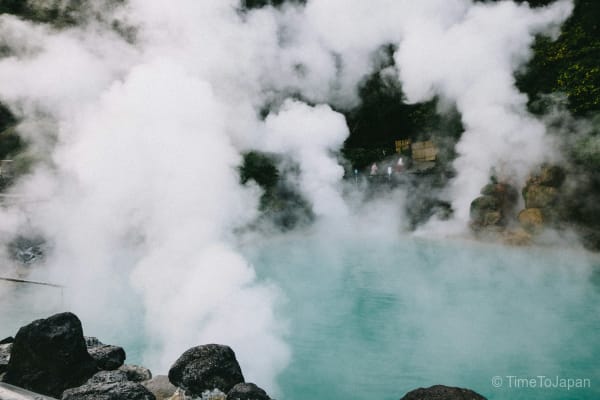
Beppu
28 minutes by JR local train from Oita Station (¥340)
Japan's most thermally active onsen city, producing more hot spring water than anywhere else in the country. Eight volcanic hells (jigoku) in Kannawa district range from blood-red Chinoike to steaming ponds with resident crocodiles; the combined ticket covers seven (¥2,200). Takegawara's sand bath (¥1,500) buries you neck-deep in naturally heated volcanic sand. Jigoku-mushi cooking in Kannawa lets you steam raw ingredients in natural onsen vents. A full day is the minimum to cover the hells circuit, the sand bath, and a proper neighbourhood bathhouse soak.
Yufuin
1 hour 15 minutes by Limited Express Yufu from Oita Station (¥2,170, JR Pass covered)
A small onsen town in a volcanic valley at the foot of Mount Yufu, known for its ryokan, private outdoor baths, and a boutique main street. Yufuin is quieter and more upmarket than Beppu: the atmosphere is calm countryside rather than industrial steam. Kinrin Lake, a 10-minute walk from the station, mists on cold mornings as warm spring water meets cool air. The town works as a day trip but is far better as an overnight: the private outdoor bath at dusk with Mount Yufu rising behind is the quintessential Oita ryokan experience. Reserve accommodation months ahead for November foliage season.
Practical Information
Getting to Oita
From Tokyo
2 hours 30 min by flight from Haneda to Oita Airport (¥12,000–22,000 depending on advance booking); or 7 hours by Hikari Shinkansen to Hakata then Limited Express Sonic (¥27,000, JR Pass covered)
Oita Airport
45 minutes by airport limousine bus to Oita Station
Daily Budget Guide
Budget business hotel or guesthouse near Oita Station, convenience store meals with one izakaya dinner, Usuki day trip by JR and local bus (no taxi)
Business hotel near Oita Station, restaurant meals including toriten and a sashimi dinner, Usuki by JR and taxi, OPAM entry, Takasakiyama
One or two nights at a Yufuin ryokan with kaiseki dinner, day trips to Usuki and Beppu, private outdoor bath with Mount Yufu views
Essential Oita Tips
Take the 8:00–8:30am JR from Oita Station to Usuki (50 min, ¥530) and taxi directly to the Buddhas (15 min, about ¥1,200). You arrive before 10am when the morning light filters through the cedar trees onto the carved faces and the site is nearly empty. The bus from Usuki Station to the Buddhas runs but is infrequent: check the schedule before relying on it, or budget for a taxi both ways
The Usuki Stone Buddha illumination is held for several nights in early November each year. The carvings are lit by torchlight after dark and the atmosphere is completely different from the daytime visit. Check the official Usuki city tourism site for exact dates each autumn
Beppu's Takegawara Sand Bath costs ¥1,500 and closes at 17:00 (last entry 16:00). Arrive before 14:00 to avoid the afternoon rush. Attendants bury you to the neck in naturally heated volcanic sand while you wear a provided yukata. Strange, effective, and unlike any conventional onsen experience
Toriten at Toyoken uses a vinegar-and-karashi-mustard dipping sauce that is the essential part of the dish: enough vinegar to cut the batter, enough mustard for gentle heat. Skip any version served with soy sauce only. The restaurant operates near Oita Station and tends to fill at lunchtime on weekdays
For the freshest Seki Saba and Seki Aji, drive 30 minutes east to Saganoseki Cape (佐賀関) where port-side restaurants serve the fish on the day it was caught. Call ahead to confirm the restaurant is open before making the trip; smaller port restaurants sometimes close on short notice
Reserve a seat on the Limited Express Yufu to Yufuin when you buy the ticket: the train uses small diesel rolling stock and fills quickly in autumn foliage season (late October through November). The journey through the Yufu valley with views of the volcanic mountain is one of the better scenic rail sections in Kyushu
Takasakiyama macaques come down to the feeding area most reliably at the morning session (from 9:00). Arrive at opening for the most active period with the fewest visitors. Do not carry food in visible packaging: the macaques recognise wrappers and will investigate
Dormy Inn Oita near the station includes a small communal onsen bath, which is uncommon for a business hotel. If a Yufuin ryokan is not in the budget, this is the next best option for a hot spring experience within Oita city
Book tours & activities in Oita
Skip the line with pre-booked tickets and guided tours
via Klook · Affiliate link
Related Articles
Other Destinations
Tokyo
The world's greatest city: 14 million people, 200+ Michelin stars, and more to discover than any single trip can hold
Hiroshima
Peace Park, Miyajima's floating torii, and the best okonomiyaki in Japan: a city that turned tragedy into hope
Kyoto
A thousand years as Japan's capital: geisha in Gion, vermillion torii tunnels, and kaiseki cuisine elevated to art
Osaka
Kuidaore city: Dotonbori's neon, Shinsekai's kushikatsu, and Japan's friendliest strangers
Kamakura
Tokyo's favorite day trip: the Great Buddha since 1252, zen temples, hydrangeas at Hasedera, surf beaches, and shirasu-don an hour from the city
Yokohama
Japan's largest Chinatown, Cup Noodles Museum, and a waterfront that actually breathes (25 minutes from Tokyo)
Hakone
Two hours from Shinjuku: volcanic onsen, the Hakone Loop, and Mt. Fuji (when she shows up)
Nikko
Gold-leaf Toshogu, 97m Kegon Falls, and yuba soba: Japan's most opulent shrine town, 2 hours from Asakusa
Nara
1,200 bowing deer, the world's largest bronze Buddha, and temples that predate Kyoto, 45 minutes from Osaka
Kanazawa
Kyoto's calmer cousin: Kenroku-en at dawn, Omicho seafood, and 99% of Japan's gold leaf
Takayama
Preserved Edo streets, world-class Hida beef, and six sake breweries you can walk between in the Japanese Alps
Fukuoka
Yatai stalls at sunset, the best tonkotsu ramen in Japan by the Naka River, and all of Kyushu on your doorstep
Sapporo
Miso ramen at midnight, powder snow at Niseko, and a beer garden in Odori Park: Hokkaido's capital delivers
Nagoya
Miso katsu, golden shachihoko, and Toyota's textile-to-car story: the city everyone skips on the Shinkansen, and shouldn't
Kobe
Kobe beef that ruins all other steak, historic Kitano mansions, and Arima Onsen in the mountains
Nagasaki
Japan's only window to the outside world for 200 years: now champon, Dejima, and the Peace Park
Hakodate
One of the world's three best night views, a star-shaped fort, and the freshest kaisen-don in Japan at sunrise
Otaru
Gas-lit canals, port-fresh sushi, and Hokkaido's most romantic winter festival
Asahikawa
The zoo that redesigned how Japan thinks about animals, a ramen style with a pork-fat layer to beat the cold, and the gateway to Japan's largest national park
Sendai
Tohoku's capital: grilled beef tongue since 1948, Date Masamune's ornate mausoleum, and streamers across the sky every August
Aomori
Honshu's northern edge: Japan's most electrifying summer festival, world-class Jomon archaeology, and one of the last virgin beech forests on Earth
Morioka
Three completely distinct noodles, 1,000 cherry trees on a ruined castle, and Hiraizumi's Golden Hall 45 minutes south
Akita
Gravity-defying lantern poles at the Kanto Festival, Tohoku's finest samurai streets in Kakunodate, and sake from over thirty breweries
Yamagata
Yamadera's 1,015 steps, Ginzan Onsen's gaslit snow, sacred mountains, and Japan's best cherries
Fukushima
A blossom-covered mountain, a volcanic sky road, 200-yen Edo bathhouses, and Japan's best peaches, 90 minutes from Tokyo
Matsushima
One of Japan's three great views: 260 pine-clad islands, Date Masamune's Zen temple, and oysters grilled on the bay
Hirosaki
Japan's greatest cherry blossom castle, fan-shaped warrior floats at Neputa, and a city that produces one in five of Japan's apples
Aizuwakamatsu
A red-tiled castle, nineteen graves of teenage samurai, thatched Edo villages, and some of Japan's most decorated sake
Chiba
Narita-san Shinsho-ji, Tokyo DisneySea, and 100 km of Pacific coastline: most visitors see only the airport terminal
Saitama
Kawagoe's Edo warehouse street, Japan's first Shinkansen prototype, and the Chichibu Night Festival: Saitama earns a day
Mito
Japan's first flower season: Kairakuen's 3,000 plum trees six weeks before sakura, one of Japan's Three Great Gardens
Utsunomiya
Japan's gyoza capital: 200 shops, underground volcanic caverns at Oya, and Nikko 41 minutes by train
Maebashi
A free rose garden with 7,000 blooms, a volcanic caldera you can walk around, and the budget base for Kusatsu Onsen
Niigata
Japan's sake heartland: 90-plus breweries, Sea of Japan sushi at half the Tokyo price, and a ferry to Sado Island
Toyama
Base camp for the Tateyama snow walls, with white shrimp, firefly squid, and Sea of Japan sushi at half Tokyo prices
Fukui
Japan's dinosaur prefecture: a world-class museum, volcanic sea cliffs, the strictest Zen monastery, and Echizen crab in winter
Nagano
Zenko-ji pilgrims, snow monkeys in hot springs, and Hakuba powder: Japan's alpine heart
Shizuoka
Japan's tea capital: pine-framed Fuji views, the Tokugawa shrine that predates Nikko, and tiny pink shrimp found only in Suruga Bay
Gifu
Cormorant fishing by firelight, a mountain castle at sunset, and the gateway to Shirakawa-go's thatched villages
Kofu
Japan's wine capital: cellar tours a short walk from the station, hoto noodles, and the granite cliffs of Shosenkyo Gorge
Hakuba
Olympic powder, alpine hiking, and the most international mountain town in Japan
Matsumoto
Japan's oldest castle, alpine gateways, and a city that punches well above its size
Wakayama
Pilgrimage country: sleep in Koyasan's temples, walk the Kumano Kodo, and stand under Japan's tallest waterfall
Otsu
Kyoto's lakeside escape: Enryaku-ji's World Heritage halls, Japan's largest lake, and hotel rates Kyoto forgot, 10 minutes away
Tsu
Ise Jingu 50 minutes, Matsusaka wagyu 20 minutes: Tsu is the affordable base for the best of Mie Prefecture
Miyajima
A floating shrine gate, a 535-metre sacred mountain, and Hiroshima oysters grilled on the waterfront
Okayama
Korakuen garden, Crow Castle, Kurashiki canals, plus Naoshima art island 50 minutes away
Tottori
Japan's only coastal sand dunes, 50 meters high and 16km wide, where the desert meets the Sea of Japan
Matsue
One of Japan's five original castles, moat boats through samurai streets, and Lake Shinji sunsets, with mythical Izumo next door
Yamaguchi
Ruriko-ji's 1442 national treasure pagoda, Japan's largest limestone cave, and the gateway to Hagi and fugu country
Matsuyama
Japan's oldest hot spring, one of 12 original castles, and the gateway to the Shimanami Kaido cycling route
Takamatsu
Japan's udon capital, a Michelin three-star garden, and the ferry gateway to Naoshima's art islands
Tokushima
Japan's wildest dance festival, vine bridges over mountain gorges, and tidal whirlpools at the edge of Shikoku
Kochi
One of Japan's five original castles, a 300-year-old Sunday market, and katsuo no tataki seared over straw flames
Kumamoto
Japan's fiercest castle, garlic-laced ramen, and the world's largest active caldera: Kyushu's samurai heart
Beppu
Eight volcanic 'hells,' Takegawara sand baths, and Japan's densest onsen: steam rises from every corner
Kagoshima
Sakurajima erupting on the horizon, kurobuta pork on your plate, and Yakushima's 7,000-year-old cedars a ferry away
Miyazaki
Takachiho Gorge by rowboat, a shrine built into a sea cave, and chicken nanban from the city that invented it
Saga
The birthplace of Japanese porcelain, a hundred balloons over a river at dawn, and A5 wagyu at a fraction of Kobe prices
Naha
Shuri Castle, Kokusai-dori, and goya champuru: Japan's subtropical capital where Ryukyu royalty once ruled
Ishigaki
Kabira Bay emerald waters, world-class diving, and Japan's southernmost island gateway
Miyako Island
7km of turquoise sand, Ikema Bridge views, and Japan's clearest snorkeling
Ready to Explore Oita?
Add Oita as a stay in your trip and we'll help you find hotels and suggest activities