
About Harajuku
Harajuku covers a surprisingly small area — essentially the strip between Harajuku Station and Omotesando Station — but it packs in more variety per block than almost anywhere else in Tokyo. Takeshita Street, the famous pedestrian lane, is a 350-metre corridor of rainbow crepes, capsule-toy machines, and shops selling everything from ¥500 accessories to full cosplay outfits. It's loud, crowded, and unapologetically fun, especially on weekends when teenagers from all over the Kanto region descend on it.
Step one block off Takeshita and the mood changes completely. Cat Street, a quiet, tree-lined backstreet running parallel, is where Tokyo's independent fashion labels, vintage shops, and design-forward cafés set up. Omotesando, the wide boulevard at the district's south end, is the polar opposite of Takeshita: polished, architectural, and lined with flagship stores from Dior to Comme des Garçons. The contrast between the three streets, all within a five-minute walk of each other, is part of what makes Harajuku so interesting.
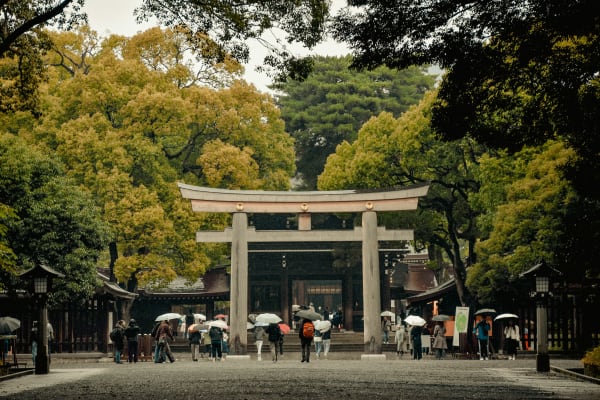
Then there is the other Harajuku: the quiet one. Meiji Shrine sits in a 175-acre forest that feels like it shouldn't exist in central Tokyo. The forested walk from the massive torii gate to the shrine takes about 10 minutes and is genuinely peaceful, even on busy days. Yoyogi Park, right next door, is where Tokyoites go to picnic, practice dance routines, and walk their dogs. Combining the shrine, the park, and a walk down Takeshita and Cat Street makes for an easy and varied half-day.
Don't Miss
Takeshita-dori: The Full Walk
The 350-meter pedestrian street is the reason most visitors come to Harajuku, and it earns its reputation. Walk the full length from Harajuku Station to the far end and back: crepe stands sell oversized rolled crepes for ¥700–1,000 (Totti Candy Factory is the famous rainbow cotton candy spot). Boutiques change constantly, but the general character stays the same: affordable, loud, maximalist, and fun. Weekday mornings are dramatically quieter than weekends.
Meiji Shrine and the Forest Walk
The 10-minute forested walk from the main torii gate to the shrine hall is the experience, not just the destination. The forest was entirely planted after the shrine's completion in 1920, yet feels genuinely old. Arrive by 9 AM on any day to see it before the crowds. On weekends, traditional Shinto weddings often take place mid-morning in the grounds. Write a wish on a wooden ema plaque (¥600) or draw an omikuji fortune slip. The Inner Garden (¥500 extra) has irises in June.
Omotesando: Architecture Walk
Omotesando's 1km of zelkova-lined boulevard is the densest concentration of architect-designed commercial buildings in Tokyo. Walk from Harajuku end to Aoyama end and identify the key buildings: Tadao Ando's Omotesando Hills (2006, spiral ramp interior replacing the old Dojunkai Aoyama Apartments), Toyo Ito's Tod's building (2004, concrete tree pattern), and Herzog & de Meuron's Prada Aoyama (2003, faceted glass bubbles). All are visible from the street. The walk takes 20–25 minutes at a browsing pace.
Gallery

Takeshita-dori's 350 meters hold more kawaii fashion per block than anywhere else in Tokyo

Meiji Shrine was completed in 1920 in 70 hectares of planted forest that now feels ancient

Yoyogi Park draws performers, picnickers, and Sunday dancers year-round

Omotesando's zelkova tree canopy frames Tadao Ando's Omotesando Hills and other architect-designed flagships

Cat Street runs for 500 meters between Omotesando and Shibuya, quieter and more curated than Takeshita

Takeshita-dori has been the ground zero of Japanese youth fashion since the 1980s
A Full Day in Harajuku
Shrine forest at dawn, kawaii street fashion, architecture, and indie boutiques
Meiji Shrine Before the Crowds
Arrive early to walk the forested approach at its most peaceful. The 10-minute tree-lined path from the main torii to the shrine hall is the experience: the planted forest now feels genuinely old, and before 10 AM it genuinely is quiet. The main shrine hall is free to enter and observe. On weekends, traditional Shinto wedding processions often pass through mid-morning.
💡 Tip
- • Free admission; Inner Garden costs ¥500 (worth it in June for irises)
- • Opens at sunrise; by 10 AM on weekends tour groups begin arriving
- • Ema wooden wish plaques ¥600; omikuji fortune slips ¥100
Yoyogi Park
Walk through the park adjacent to the shrine. On Sundays, the area near the Harajuku Gate entrance has street performers, rockabilly dancers, and musicians who have been gathering here since the 1980s. The park is pleasant year-round; cherry blossoms make it exceptional in late March.
💡 Tip
- • Free, always open
- • Performers concentrate near the Harajuku Gate (not the Meiji Shrine entrance side)
- • Cherry blossoms typically peak late March to early April
Takeshita-dori
The 350-meter pedestrian street is at its most manageable before noon on weekdays. Browse the boutiques from the Harajuku Station end all the way to the Meiji-dori crossing and back. The crepe stands are mid-street; rainbow cotton candy and takoyaki rounds out the snack options. Laforet Harajuku is at the Harajuku Station end of the street for fashion-focused visitors.
💡 Tip
- • Weekday mornings are far calmer than weekends (which are genuinely difficult to navigate)
- • Bring cash: many boutiques and stalls do not take cards
- • Crepes ¥700–1,000; cotton candy from Totti Candy Factory ¥600
Lunch at Harajuku Gyozaro
A no-frills gyoza specialist near Meiji-jingumae that has been drawing queues for years. Pan-fried gyoza served with unlimited shredded cabbage; the menu is simple and the queue moves quickly. One of the best-value lunches near Takeshita-dori.
💡 Tip
- • Cash only
- • Queue usually moves within 15–20 minutes
- • Budget ¥1,000–1,500
Cat Street Boutiques
The 500-meter backstreet running from Omotesando south toward Shibuya has a completely different character from Takeshita: tree-lined, quieter, and featuring independent Japanese fashion labels, well-curated vintage shops, and design cafes. Browse at your own pace; there is no specific destination at the far end, but the walk itself is the experience.
💡 Tip
- • Less crowded than Takeshita even on weekends
- • Vintage shops on Cat Street are generally better quality and priced accordingly
- • Most shops open noon–8 PM
Omotesando Architecture Walk
Walk Omotesando from the Harajuku end (near Meiji-jingumae Station) to the Aoyama end. The architect-designed buildings are visible from the street: Omotesando Hills (Tadao Ando, 2006), with its famous internal spiral ramp; Tod's (Toyo Ito, 2004); and Prada Aoyama (Herzog & de Meuron, 2003) with its faceted glass bubble facade.
💡 Tip
- • All buildings viewable from the street for free
- • Omotesando Hills has a basement food area and is free to enter
- • Most shops open 11 AM–8 PM
Laforet Harajuku
End with Laforet, the 6-floor fashion complex at the foot of Takeshita-dori that has been anchoring independent Japanese fashion since 1978. Unlike most Tokyo department stores, the brands here are predominantly small Japanese labels, with rotating tenant collections that make it worth visiting even if you've been before.
💡 Tip
- • Basement (B0.5F) often has the most experimental brands
- • Sales in January and July bring serious markdowns
- • Tax-free shopping with passport
Top Attractions

Takeshita Street (Takeshita-dori)
The 350-meter pedestrian street that defines Harajuku globally. Every block holds boutiques selling cosplay, gothic Lolita, streetwear, accessories, and kawaii goods alongside crepe stands and candy stalls. It is genuinely crowded on weekends (difficult to the point of unpleasant), dramatically calmer on weekday mornings. The street's character changes constantly as shops turn over, but the overall energy stays the same: Tokyo youth culture at full volume.
Meiji Shrine (Meiji Jingu)
Tokyo's most important Shinto shrine, dedicated to Emperor Meiji (died 1912) and Empress Shoken, completed in 1920. The shrine sits within 70 hectares of planted evergreen forest that now genuinely resembles old-growth woodland. The main torii gate is one of the largest wooden torii in Japan. The 10-minute forested approach path to the main hall is the experience: quiet, canopied, and a striking contrast to the surrounding city. Free admission; Inner Garden is ¥500 extra (irises in June).

Yoyogi Park
Tokyo's most freely used large park (54 hectares), adjacent to Meiji Shrine. On Sundays, the area near the Harajuku Gate draws rockabilly dancers, street musicians, and performance groups in a tradition stretching back to the 1980s. Cherry blossoms in late March make it one of the more relaxed central Tokyo hanami spots. The park is free, always open, and lacks the restrictions of some other Tokyo parks.

Omotesando Avenue
The 1km tree-lined boulevard is Tokyo's most architecturally significant shopping street. The zelkova trees create a canopy over architect-designed flagships: Omotesando Hills (Tadao Ando, 2006) with its famous spiral ramp interior; Tod's (Toyo Ito, 2004) with a concrete tree-pattern facade; and Prada Aoyama (Herzog & de Meuron, 2003) with its glass bubble structure. Even without entering any store, the walk down the boulevard is worth doing as an architecture study.

Cat Street
A 500-meter tree-lined backstreet running from just below Omotesando toward Shibuya through Jingumae. Far quieter than Takeshita-dori, Cat Street is where Tokyo's independent fashion labels, well-selected vintage shops, and design-focused cafes concentrate. The street is not signposted and has no dramatic entrance, which is part of why it retains a more local character despite being well-known.
Highlights of Harajuku
- ✓Takeshita-dori: 350-meter pedestrian street with 100+ boutiques, crepe stands from ¥700, and the highest density of kawaii fashion in Tokyo
- ✓Meiji Shrine: completed 1920 in 70 hectares of planted evergreen forest; the forested approach path takes 10 minutes to walk to the main hall
- ✓Yoyogi Park: 54 hectares with hundreds of cherry trees (late March to early April) and Sunday street performers near the Harajuku Gate since the 1980s
- ✓Omotesando Avenue: 1km of zelkova tree canopy over architect-designed flagships by Tadao Ando (Omotesando Hills), Toyo Ito (Tod's), and Herzog & de Meuron (Prada)
- ✓Cat Street: 500-meter tree-lined backstreet from Omotesando to Shibuya with independent Japanese labels, vintage shops, and design cafes
- ✓Laforet Harajuku: 6-floor fashion complex at the foot of Takeshita-dori, open since 1978, anchoring independent Japanese fashion since its debut
Related Articles
Other Tokyo Districts
Shibuya
Shibuya Crossing, where 3,000 pedestrians cross simultaneously, and the neon-lit backstreets of Tokyo's youth culture engine
Shinjuku
Free 45th-floor views, 200+ bars crammed into Golden Gai's six alleys, and 1,173 cherry trees in Shinjuku Gyoen
Asakusa
Tokyo's Edo holdout: Senso-ji temple, 89-shop Nakamise-dori, and backstreets that refused to modernize
Ginza
The Wako clock tower at 4-chome, kabuki from ¥1,000 at Kabuki-za, and the deepest department store food halls in Japan
Ueno
World-class museums, a sprawling park, and one of Tokyo's best street markets
Akihabara
Tokyo's electric playground: anime, electronics, and otaku culture at full volume
Ikebukuro
Budget base on the Yamanote Line: rooftop aquarium, a nine-floor anime store, and Tokyo's densest ramen street
Roppongi
World-class art by day, Tokyo's most international nightlife by night
Odaiba
Tokyo's waterfront playground: digital art, a 20m Gundam, and Rainbow Bridge views across the bay
Tsukiji
Tokyo's kitchen: where the world's freshest seafood meets century-old market culture
Shimokitazawa
Tokyo's indie heart: narrow streets, vintage shops, live-music bars, and ¥900 curry
Chiyoda
Edo Castle's moats and gates around the Imperial Palace, with the free East Gardens inside and a 5 km loop outside
Nihonbashi
Tokyo's original centre: Edo-era merchants, Michelin-star restaurants, and Tokyo Station's hidden food halls converge
Yanesen
Old Tokyo preserved: temple lanes, cat-spotting, and ¥200 street snacks in a neighbourhood that skipped the 20th century
Ebisu & Daikanyama
Tokyo's upscale-casual quarter: craft cocktails, curated bookshops, and the kind of dinner you'll remember for years
Nakano
The collector's Akihabara: Nakano Broadway's labyrinthine floors of rare figures, vintage manga, and otaku treasures at better prices
Ryogoku
Sumo heartland: where 300kg wrestlers train, chanko-nabe simmers, and Edo history fills Japan's best museum
Koenji
Tokyo's punk-rock thrift shop: vintage clothing capital, live music dives, and the wildest summer festival you've never heard of
Kichijoji
Tokyo's most liveable neighbourhood: Inokashira Park, the Ghibli Museum, and the kind of Sunday afternoon you'll wish you had at home
Gion
~80 invitation-only ochaya teahouses, Gion Matsuri since 869 CE, and a daily window at 5:30 PM when Kyoto's geiko and maiko take to the streets
Arashiyama
Arrive before 7 AM: Kyoto's bamboo grove, a UNESCO temple garden designed around a mountain, and 120 wild macaques on a hillside above the river
Higashiyama
Kiyomizu-dera's 13-meter wooden stage, stone lanes under a 1976 preservation order, and 50-plus temples along a 2-kilometer eastern hillside: arrive before 8 AM
Fushimi
10,000 vermillion gates on a forested mountain, and Kyoto's oldest sake district below
Kinkaku-ji Area
Three UNESCO World Heritage temples within walking distance, anchored by a gold-leaf pavilion reflected in a mirror pond
Downtown Kyoto
Kyoto's living room: Nishiki Market, Pontocho alley, and the Kamo River at sunset
Dotonbori
Osaka's neon-lit entertainment heart where food, fun, and flashy signs collide
Shinsekai
Step back in time to retro Osaka - kushikatsu, Tsutenkaku Tower, and the lucky Billiken
Umeda
Northern Osaka's bustling business and shopping hub where modern meets underground
Tennoji
Where ancient temples meet modern skyscrapers: Osaka's perfect blend of old and new
Namba
Osaka's central crossroads: Shinsaibashi shopping, Hozenji Yokocho charm, and trains to everywhere
Amerikamura
Osaka's youth-culture playground: vintage shops, street art, and Triangle Park people-watching
Hakata
Ramen birthplace, a 1,260-year-old shrine, and a festival race that starts at 4:59 AM in the dark
Tenjin
Fukuoka's commercial center: 590 meters of underground shopping, Kyushu's finest depachika, and bar alleys that fill from 6 PM
Nakasu
A 500-meter island that runs on a different clock: quiet by day, yatai stalls and neon after 6 PM
Ready to Experience Harajuku?
Add a stay in Harajuku to your trip, and we'll suggest activities and help you find hotels in the area.