Japan in November 2026: Autumn Leaves, Weather and Crowds
Peak autumn leaves, 9 to 17°C and almost no typhoons, but Kyoto hotels triple. November 2026 foliage timing, events, night viewings and crowd fixes.
November is the month I would pick if I could only give Japan one, and it is our pick for the best all-round month of the year. The autumn leaves reach Tokyo and Kyoto, Tokyo averages 9 to 17°C with 96 mm of rain (October gets 235 mm), and in 30 years of Japan Meteorological Agency records no typhoon approached the main islands in November. The catch is that none of this is a secret: on a late-November Wednesday a Kyoto Station business hotel costs about three times its January rate, and on the Saturday of the November 21 to 23 holiday weekend more than five times.
The month splits cleanly in two. The first half belongs to the hills and the edges: Nikko's shrines, Lake Kawaguchiko, Hakone, Kanazawa and Kyoto's northern valleys, with Kyoto rooms about 30% under the late-month price. From around the 20th, the color reaches the famous city temples, and the whole country converges on Kyoto to see it. This year's first forecast leans late, so our 2026 autumn foliage forecast tracker is the page to watch: it updates with every forecast round and color report.
Japan's Weather in November: Dry Air, Short Days
Tokyo averages 9 to 17°C across the month, Kyoto 8 to 17°C and Osaka 10 to 18°C. It cools fast: Tokyo's average high drops from 19°C in the first ten days to 15°C in the last ten, and the lows from 11°C to 7°C. Early November afternoons are t-shirt-in-the-sun weather. By the last week you want a proper coat after dark.
The air dries out, too. Tokyo gets rain on about 7 days in November, against 10.5 in October, and average humidity falls from 71% to 64%. Typhoon season is effectively over: none approached the main islands in any November from 1991 to 2020, and Okinawa averages 0.3. If you have ever fought August humidity here, November feels like a different country.
The adjustment nobody makes in advance is daylight. Tokyo's sun sets at 4:46 PM on November 1 and 4:28 PM by the 30th; Kyoto's runs about 17 minutes later. Gardens close to match: last entry is 4:30 PM at Rikugien and Kenroku-en and 4 PM at Tofuku-ji. So become a morning person for two weeks. Kiyomizu-dera opens at 6 AM every day, and the evenings belong to izakaya and illuminations anyway.
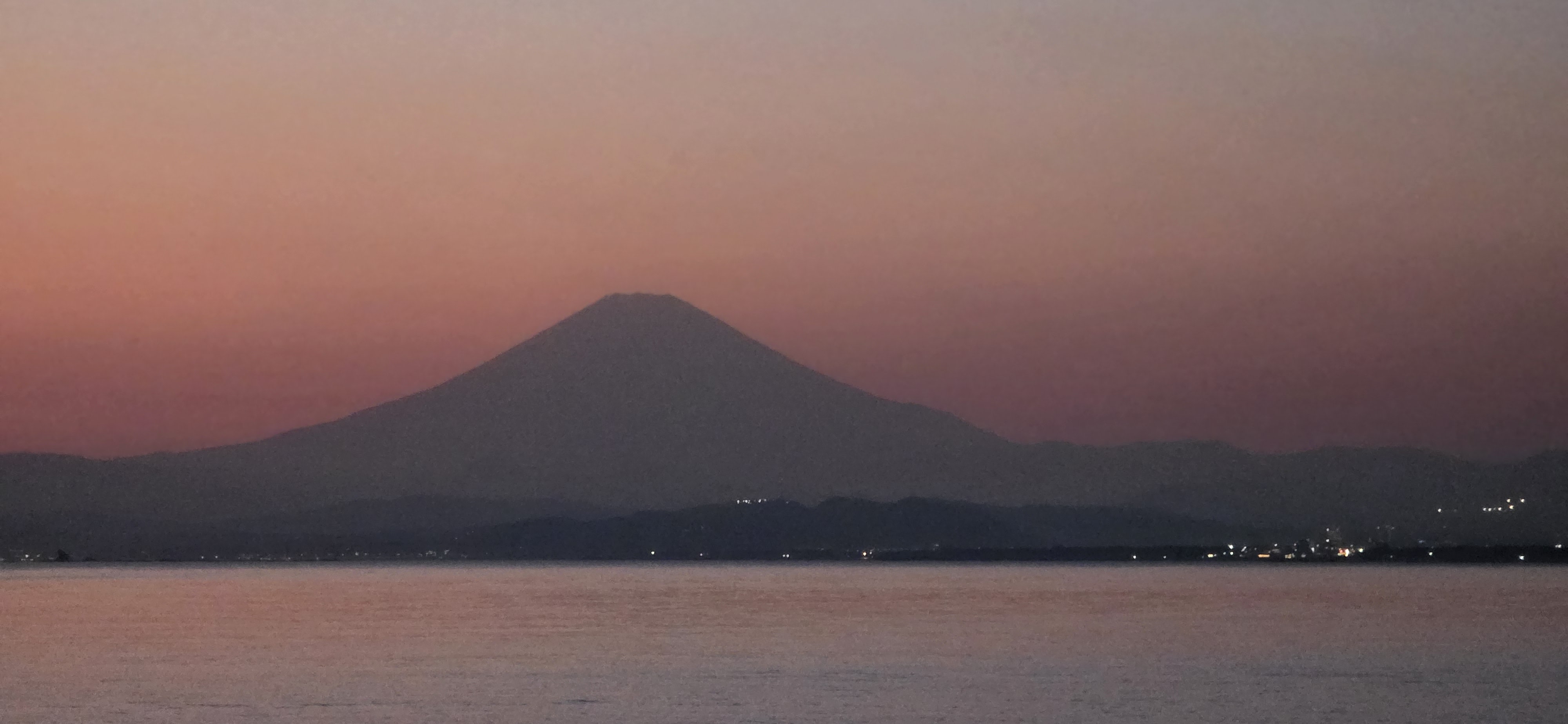
Clearer air also improves your odds of seeing Mount Fuji, which normally has its first snow cap by early October. On the Shinkansen between Tokyo and Kyoto, book seat E in either direction (D in the Green Car): JR Central names the stretches between Shin-Yokohama and Odawara and between Mishima and Shin-Fuji as the viewing spots.
Two regions run on different calendars. Sapporo sits at 2 to 9°C. Its city color is running late this year, around November 6 to 7 per the first forecast, and the first lying snow normally arrives around November 12, so the first week of the month is a real window for the Hokkaido University ginkgo avenue before winter closes in. Naha in Okinawa holds 20 to 25°C, the option if you want November without the coat.
Autumn Leaves in November, Spot by Spot
Koyo moves the opposite way to cherry blossoms: north to south, and mountain to valley. That means the timing question is not "is November good for foliage" but "which week, and at what altitude." The Japan Weather Association's usual peak windows for the November spots:
| Usual peak | Where |
|---|---|
| Late Oct to mid Nov | Lake Ashi, Hakone |
| Late Oct to early Dec | Nara Park, one of the longest windows in Kansai |
| Early to late Nov | Nikko's shrines, Lake Kawaguchiko's Momiji Corridor, Kenroku-en in Kanazawa, Takao and Kibune north of Kyoto |
| Mid to late Nov | Eikando in Kyoto, Miyajima's Momijidani Park, Korankei near Nagoya |
| Mid Nov to early Dec | Tofuku-ji, Arashiyama and Ohara's Sanzen-in in Kyoto, Minoo near Osaka, Tokyo's Jingu Gaien ginkgo avenue |
| Late Nov to early Dec | Kiyomizu-dera, Koishikawa Korakuen in Tokyo, Kamakura's Genjiyama hill, Gora Park in Hakone |
| Late Nov to mid Dec | Rikugien in Tokyo, Tsurugaoka Hachimangu in Kamakura |
The 2026 read: the Japan Meteorological Corporation's second forecast (October 1) expects maples on schedule in every region, with ginkgo normal to late in the north and east. It puts Tokyo's ginkgo around November 26 and its maples around November 28, and has Kyoto on schedule but at the later end of its window, its benchmark maples around December 11; Weathernews reads Arashiyama's tourist peak around November 24. The third round is due in early November. Rather than trust a date printed here, follow our autumn foliage forecast tracker, which flips each spot as the color reports come in, or the forecasters' own spot pages at tenki.jp and Weathernews (both in Japanese).
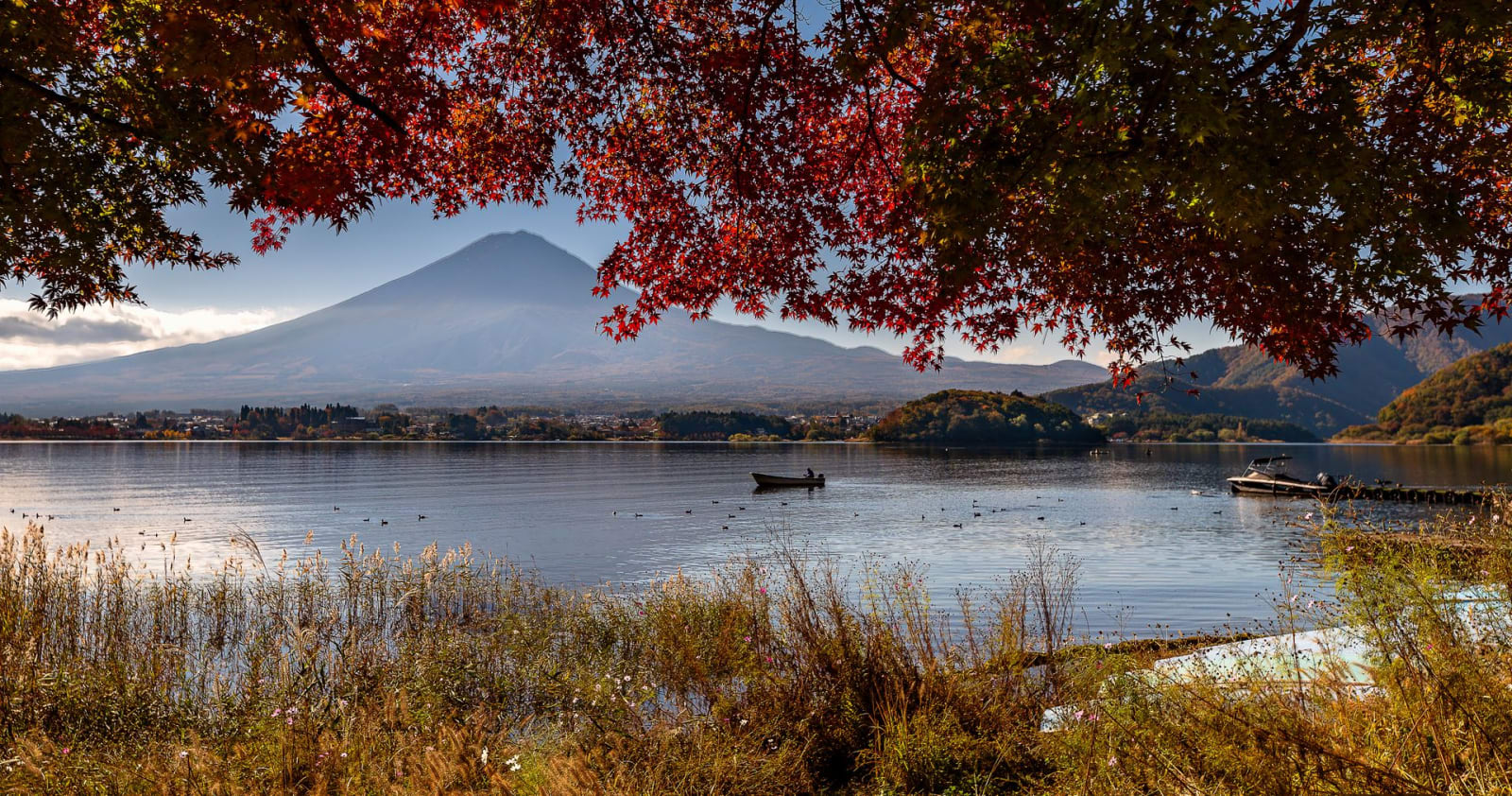
Early month: Nikko is the headline. The high ground around Lake Chuzenji peaks from mid October and is finishing by early November, but the precinct around Toshogu down in town turns through November, weeks after the lake. At Lake Kawaguchiko, the Fujikawaguchiko Autumn Leaves Festival runs November 7 to 29, with the Momiji Corridor lit from sunset to 9 PM and Fuji behind the maples on clear days. Hakone stretches across all thirty days depending on altitude, from Lake Ashi at the start of the month to the Gora gardens into early December.
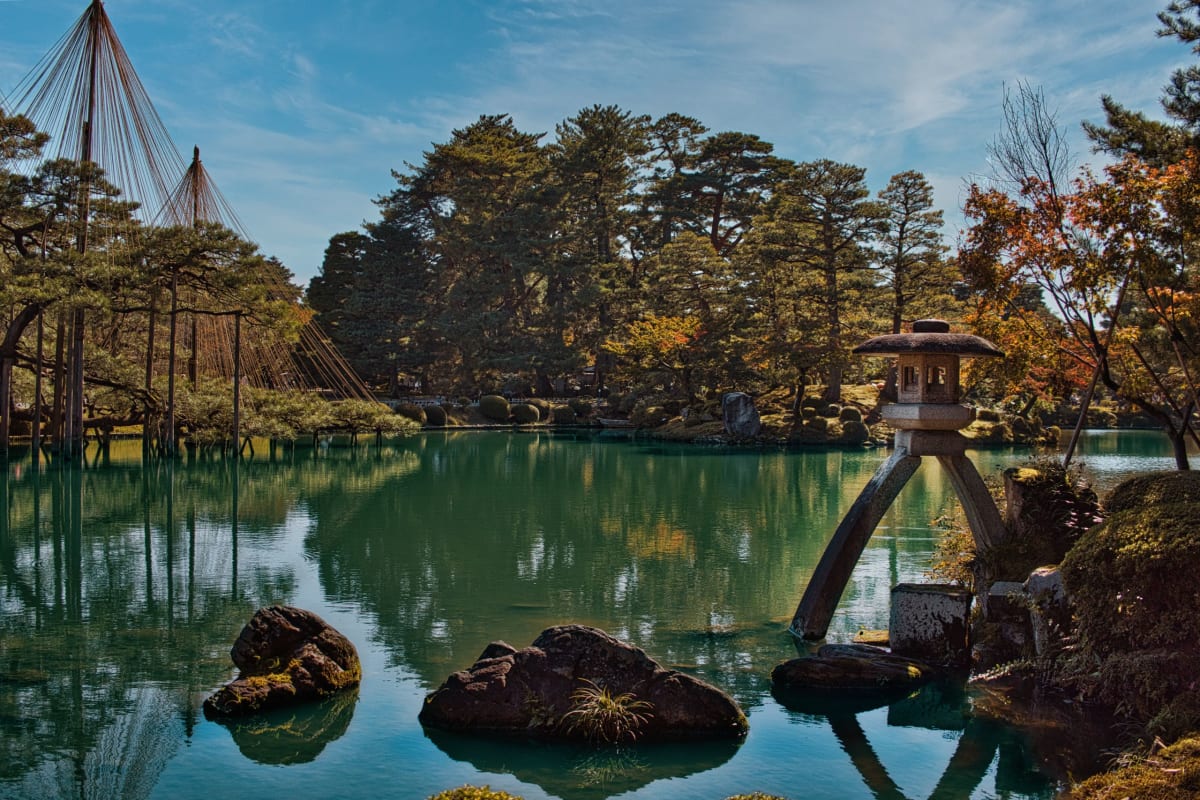
Kanazawa is at its best in the first three weeks. Kenroku-en's gardeners start the yukitsuri snow ropes on November 1 with the Karasaki pine, about 800 ropes hung from five poles, so you get autumn color and the garden's winter silhouette in the same frame. Entry is ¥320, free on Culture Day (November 3), and free every morning from 6 AM until the paid gates open (last early entry 7:30). On Miyajima, Momijidani Park (literally "maple valley") turns mid-to-late month, wild deer included.
Late month: the main event. Kyoto's city temples, Nara Park, Minoo's waterfall gorge north of Osaka, and Tokyo's gardens. Tokyo is really two overlapping shows: the Jingu Gaien ginkgo avenue goes gold first, four rows of trees running from Aoyama-dori to the white Seitoku Memorial Picture Gallery, then the maples in Rikugien and Koishikawa Korakuen carry the color into December. It is the rare capital-city foliage you can see between meetings, a subway ride from most hotels.
Kyoto in Late November: Crowds, Prices and How to Beat Them
Honesty first: Kyoto in the last ten days of November is packed. Tofuku-ji's own visitor page warns of heavy crowding in the autumn period, and dinner without a booking means queueing. The rooms show it. We checked APA's own booking engine on September 29 for two adults, cheapest room, tax included:
| Night | Kyoto Station | Gion | Namba, Osaka |
|---|---|---|---|
| Wed Jan 20, 2027 | ¥6,500– | ¥10,400 | ¥8,000 |
| Wed Nov 4 | ¥15,500– | ¥23,800 | ¥7,800 |
| Sat Nov 21 | ¥37,000 | ¥47,500 | ¥28,000 |
| Wed Nov 25 | ¥23,000– | ¥32,800 | ¥9,000 |
| Wed Dec 2 | ¥14,000– | ¥23,300 | ¥10,000 |
| Wed Dec 9 | ¥8,500 | ¥10,900 | ¥8,000 |
The hotels are APA Kyoto Ekimae Chuoguchi and Kyoto Eki Horikawadori, APA Kyoto Gion EXCELLENT and APA Nambakita Shinsaibashi Ekimae; prices move as dates fill. Three things jump out. Labor Thanksgiving Day falls on Monday, November 23, and the Saturday of that three-day weekend costs about 60% more than the Wednesday after it. Early December is the bargain: by December 2 the same Kyoto Station rooms are about 40% cheaper than a week earlier, while the late temples still have color. And Osaka barely moves midweek, which makes it the value base 28 minutes away by JR Special Rapid (¥580), or 13 minutes from Shin-Osaka by Shinkansen, though not on the holiday Saturday, when Namba triples too.
The crush is about Kyoto, not Japan as a whole: JNTO counted 3.52 million foreign visitors in November 2025, fewer than in October (3.90 million) or April. Book the bed before anything else. Our Kyoto stay guide covers which areas to fight for, and Where to Stay in Osaka has the Namba and Umeda picks.
The fix on the ground is the same one that works in cherry blossom season: go at opening. From November 14 to December 6, Tofuku-ji opens its Tsutenkyo bridge at 8:30 AM (9 AM the rest of the year) and charges ¥1,000 for it. It is a 3-minute ride from Kyoto Station on the JR Nara Line, then a 10-minute walk.
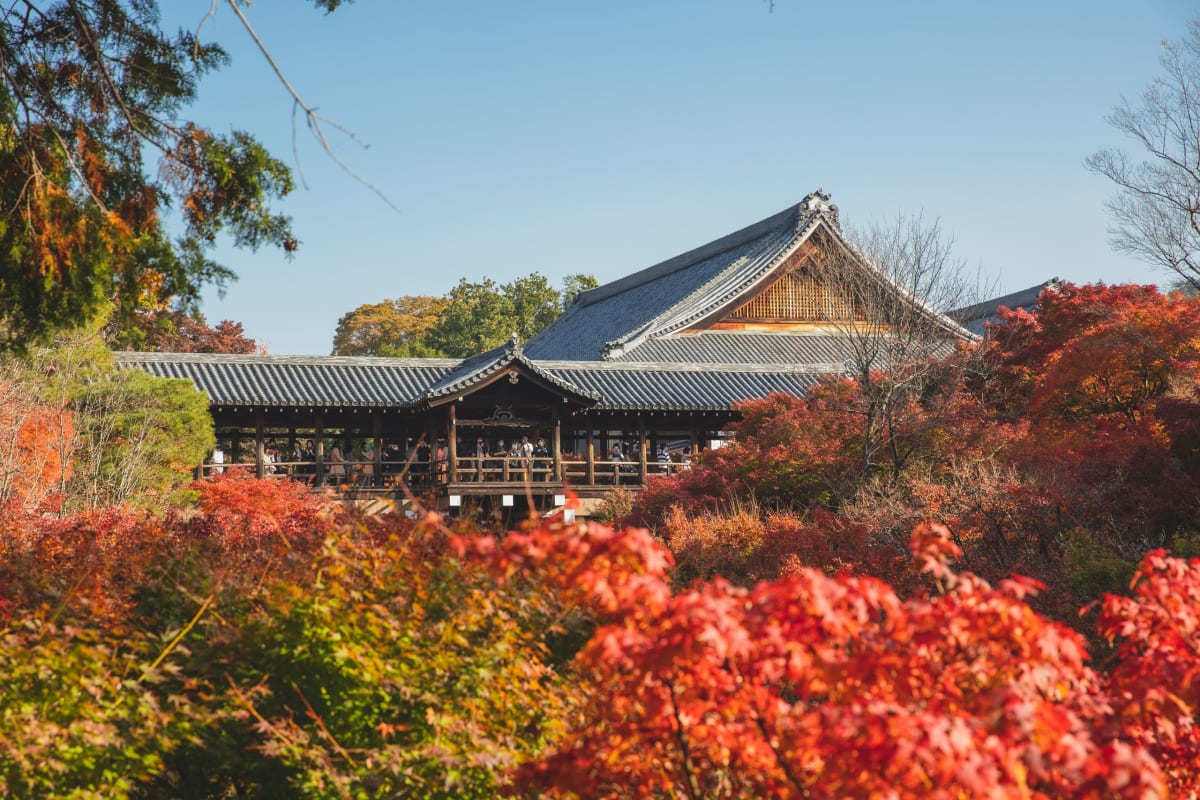
At 8:30 you share the bridge with the early risers; later in the morning it becomes the crowd the temple warns about, and it may ask you not to photograph from Tsutenkyo or the Gaunkyo bridge to keep people moving (tripods are banned outright). Kiyomizu-dera's 6 AM opening works the same way, and Fushimi Inari and the Arashiyama bamboo grove are open-air and free, which makes all three dawn options before the day-trippers arrive.
The other fix is swapping famous for nearly-as-good:

- Enko-ji in the Ichijoji foothills runs its 2026 foliage viewing on timed reservations from November 10 to December 10, with booking opening October 20 on the temple's site. That sounds annoying and is actually great: book a slot and skip the scrum.
- Genko-an in Takagamine, northwest of the city. Two windows side by side frame the same maples: one round (enlightenment), one square (delusion). Getting there takes a bus (the Kita 1 from Kitaoji subway station), which is the point. Open 9 AM to 5 PM.
- Takao and Kibune, in the hills northwest and north of the city, usually peak from early November, ahead of the city temples, so they work for first-half trips too.
Evenings solve themselves. Kiyomizu-dera stays open until 9:30 PM from November 21 to 30 (last entry 9 PM, no reservation). Eikando lights its maples from November 20 to December 6 (entry 5:30 to 8:30 PM, ¥1,000, separate from the daytime ticket), and Kodai-ji runs its night viewing from October 23 to December 13. With the sun down before 5, you can do a lit-up temple and still make dinner.
Peak Color Without the Kyoto Crowds
If the last section put you off, the honest alternative is not to skip the foliage. It is to see it somewhere the tour buses do not concentrate.
Kamakura runs one of the latest foliage clocks near Tokyo: late November into mid December at Tsurugaoka Hachimangu, and to early December on the Genjiyama hill. Engaku-ji sits one minute from Kita-Kamakura station (¥500, open until 4:30 PM, 4 PM from December), and the direct JR Yokosuka Line gets you there from Tokyo Station in an hour for ¥910. A Day in Kamakura has the full route; late November is the time to run it.
Korankei, in the hills east of Nagoya, is our pick for the best foliage trip from that city: about 4,000 maples along the Tomoe River, usually at peak mid to late November, and lit every evening until 9 PM during the Korankei Momiji Festival (November 1 to 30, free). Getting there takes commitment: about an hour from Nagoya to Toyotashi by subway and Meitetsu (¥830), then around 40 minutes on the Meitetsu bus. The roads jam in foliage season, so leave the car.
And if you are on the classic route anyway, Nara in late November does everything the postcards promise, with deer under the maples and ginkgo. Nara Park is open ground rather than a ticketed garden, so there is no gate to queue at, and it is 47 minutes from Kyoto on the JR Nara Line (¥720) or 37 from Osaka-Namba by Kintetsu (¥680).
November 2026 Events, Date by Date
Tori-no-ichi, the Arashiyama boats and the Culture Day processions each have a section with their times, and next year's dates where those are fixed, on our autumn festivals calendar.
| Date | Event | Where |
|---|---|---|
| Nov 1–30 | Korankei Momiji Festival, lit to 9 PM | Toyota, Aichi |
| Tue Nov 3 | Culture Day (national holiday) | Nationwide |
| Fri Nov 6 | Snow crab season opens | Ishikawa |
| Sat Nov 7, Thu Nov 19 | Tori-no-ichi rooster fairs, 24 hours | Otori Shrine, Asakusa |
| Sat–Sun Nov 7–8 | Arashiyama Momiji Festival boats | Kyoto |
| Nov 7–29 | Autumn Leaves Festival, lit to 9 PM | Lake Kawaguchiko |
| From Nov 12 | Marunouchi Illumination | Tokyo |
| Sun Nov 15 | Shichi-Go-San shrine visits | Nationwide |
| Nov 20–Dec 6 | Eikando night light-up | Kyoto |
| Sat–Mon Nov 21–23 | Holiday weekend (Labor Thanksgiving Day) | Nationwide |
| Nov 21–30 | Kiyomizu-dera night viewing | Kyoto |
| Nov 25–Dec 6 | Rikugien night viewing | Tokyo |
Shichi-Go-San fills shrine grounds on the holidays around November 15, which is a Sunday this year. Families bring their children in formal kimono to give thanks and pray for their health, a custom rooted in old ceremonies for three-year-olds, five-year-old boys and seven-year-old girls. Meiji Jingu in Tokyo holds the prayers every day. It is not a tourist event, which is exactly why it is worth seeing. Watch from a polite distance and let parents initiate any photos.
Tori-no-ichi, the rooster-day fairs, follow the traditional twelve-day cycle, so the dates move every year; 2026 has only two. At Otori Shrine near Asakusa, each one starts with a drumbeat at midnight and runs a full 24 hours, with stalls selling kumade, ornate bamboo rakes for "raking in" next year's fortune. The old etiquette is to haggle and then leave the discount behind as a tip, and every sale ends with rhythmic hand-clapping by the stall. It is one of the best free nights out of the Tokyo year.
Night viewings: beyond Kyoto's temples, Rikugien in Tokyo reopens after dark from November 25 to December 6 (6 to 8:30 PM, last entry 7:30), with tickets at ¥1,000 online in advance or ¥1,200 on the day and a daily cap; sale dates are posted on the garden's page. In Arashiyama, the Momiji Festival fills the Oi River above Togetsukyo bridge with costumed boats on November 7 and 8 (11:30 AM to 5 PM, cancelled in rain).
Christmas illuminations start absurdly early: Marunouchi's lights along Naka-dori beside Tokyo Station switch on November 12, and our winter festivals and illuminations tracker adds the rest as organizers confirm dates. If you want city lights with your maples, November delivers both at once.
And the food calendar earns its own line: in Ishikawa, snow crab season opens on November 6, which is reason enough to route through Kanazawa. Nobody comes to Japan in November for the food, and then it quietly becomes half their photo roll.
What to Pack for Japan in November
- Layers over bulk: t-shirt, midlayer, and a light down or wool coat. Tokyo's highs average 19°C in the first ten days; its late-month nights average 7°C, and Kyoto's dip lower.
- Uniqlo Heattech, bought on arrival, if you run cold.
- Slip-on shoes. Temple season means shoes off constantly, and an unheated wooden corridor at 8:30 AM is felt entirely through your socks. Bring warm ones, without holes. People will see them.
- A folding umbrella, low priority: Tokyo averages about 7 wet days in November.
- No serious winter gear unless you are heading to Hokkaido or staying past mid December.
November vs October vs December
Pick October if the mountains matter more than the cities. The high-country color peaks then (Kamikochi, Oku-Nikko, Tohoku), and Kamikochi closes for the season on November 15; Japan in October has the details. The trade: Tokyo and Kyoto are green all month, October is Tokyo's wettest month, and Kyoto hotels already cost about three times January by mid October.
Pick early December if value beats certainty. Kyoto's late temples usually hold color into the first week (the usual windows for Tofuku-ji, Arashiyama and Kiyomizu-dera run to early December), Eikando and Rikugien stay lit until December 6, and a Kyoto Station room on December 2 cost 40% less than on November 25. The trade: it is still a gamble on the season, the sun sets at 4:28 PM, and you need the coat.
Pick November if foliage is the point, and book like you mean it. It is the one month where the famous version of Japan, maples over temple roofs under a blue sky, reliably exists. First half for mountains and lower prices, second half for the city temples and the crowds that come with them. For the full year-round comparison, the Best Time to Visit Japan guide breaks down all twelve months.
A Two-Week November Route
The classic golden route needs no reinventing for November, just re-sequencing around the foliage front. Our Classic 2-Week Japan itinerary (Tokyo, Hakone, Kyoto, Nara, Osaka, Hiroshima) is the base. If the foliage is the whole point of the trip, our 10-Day Autumn Foliage itinerary is the purpose-built version: a Nikko day from Tokyo, Hakone, Kyoto at peak, and the Minoo maple gorge in one arc. The November adjustments to the classic route:
- Traveling November 1 to 14: add a Nikko day trip from Tokyo (under 2 hours from Asakusa by Tobu limited express) while its shrine area turns, and give Hakone a full day rather than a pass-through. Kyoto's city temples will still be mostly green, so spend your temple time in Takao or Kibune, where the color arrives first, and see Kenroku-en if you can route through Kanazawa.
- Traveling November 15 to 30: Kyoto is the main event, so protect your mornings there, book Enko-ji's slot and plan evenings around the night viewings. From Osaka, Minoo's maple gorge is 26 minutes from Osaka-umeda by Hankyu (¥280) and makes a half-day; the stalls along the waterfall path sell momiji tempura, maple leaves fried in a sweet sesame batter, which is better than it has any right to be. On the Hiroshima leg, Miyajima's Momijidani is peaking, and your final Tokyo nights line up with the Gaien ginkgo and Rikugien.
- Either way, book Kyoto accommodation first, on a refundable rate if you can, and skip the November 21 to 23 weekend if your dates flex. Everything else can be arranged around it, or replaced with an Osaka base and a 13-minute Shinkansen hop.
Open the template in the trip planner, shift the dates to your week of the month, and move Kyoto to wherever the forecast says the maples will be. Our 2026 foliage forecast tracker follows every update through the season so you can time that call.
Frequently Asked Questions
Is November a good time to visit Japan?
Yes, it is our pick for the best all-round month. The autumn leaves reach Tokyo and Kyoto, Tokyo averages 9 to 17°C with rain on about 7 days, and no typhoon approached the main islands in November in the 1991 to 2020 records. The catch is late-November Kyoto: a Kyoto Station business hotel cost about three times its January rate on Wednesday, November 25, 2026, and more than five times on Saturday, November 21. Go midweek, book early, or aim for the first half of the month or the first week of December.
When do the autumn leaves peak in Japan in November 2026?
The color moves north to south and down from the mountains. The Japan Weather Association's usual peaks: Nikko's shrines, Lake Kawaguchiko and Kenroku-en in early to late November; Eikando and Miyajima in mid to late November; Tofuku-ji, Arashiyama and Tokyo's Jingu Gaien ginkgo from mid November into early December; Kiyomizu-dera, Rikugien and Kamakura from late November. For 2026 the first forecast puts Tokyo's ginkgo around November 26 and Kyoto at the later end of its window. Our autumn foliage forecast tracker follows every update.
How crowded and expensive is Kyoto in November?
The last ten days are packed, and the prices show it. On APA's own booking engine (checked September 29, 2026), a Kyoto Station room for two cost ¥15,500 to ¥17,000 on Wednesday, November 4, ¥23,000 to ¥24,000 on Wednesday, November 25 and about ¥37,000 on Saturday, November 21, against ¥6,500 to ¥7,000 in January. Go at opening (Tofuku-ji's bridge at 8:30, Kiyomizu-dera at 6), pick midweek dates, book Enko-ji's timed slots, and consider sleeping in Osaka, where a Namba room was ¥9,000 on November 25 and Kyoto is 28 minutes away.
What is the weather like in Japan in November?
Tokyo averages 9 to 17°C, Kyoto 8 to 17 and Osaka 10 to 18, cooling from about 19°C highs in the first ten days to 15°C by the end. Tokyo gets 96 mm of rain on about 7 days, well under half of October's total, and typhoons are rare. Plan around daylight: the sun sets at 4:46 PM in Tokyo on November 1 and 4:28 PM by the 30th, and many gardens stop admitting people at 4 or 4:30.
What events are on in Japan in November 2026?
Tori-no-ichi fairs at Asakusa's Otori Shrine on Saturday, November 7 and Thursday, November 19; Arashiyama's Momiji Festival boats on November 7 and 8; the Lake Kawaguchiko Autumn Leaves Festival from November 7 to 29; the Marunouchi Illumination from November 12; Shichi-Go-San shrine visits around Sunday, November 15; and temple night viewings at Eikando (November 20 to December 6) and Kiyomizu-dera (November 21 to 30). Culture Day (Tuesday, November 3) and Labor Thanksgiving Day (Monday, November 23) are national holidays.
Is November a good month for Tokyo?
Yes, and it is underrated next to Kyoto. The Jingu Gaien ginkgo avenue usually peaks from mid November into early December (forecast around November 26 in 2026), Rikugien and Koishikawa Korakuen carry the maples into December, Rikugien opens at night from November 25 to December 6, the Tori-no-ichi fairs run for 24 hours on November 7 and 19, and the Marunouchi lights switch on November 12. Kamakura's late maples are an hour away by direct train.
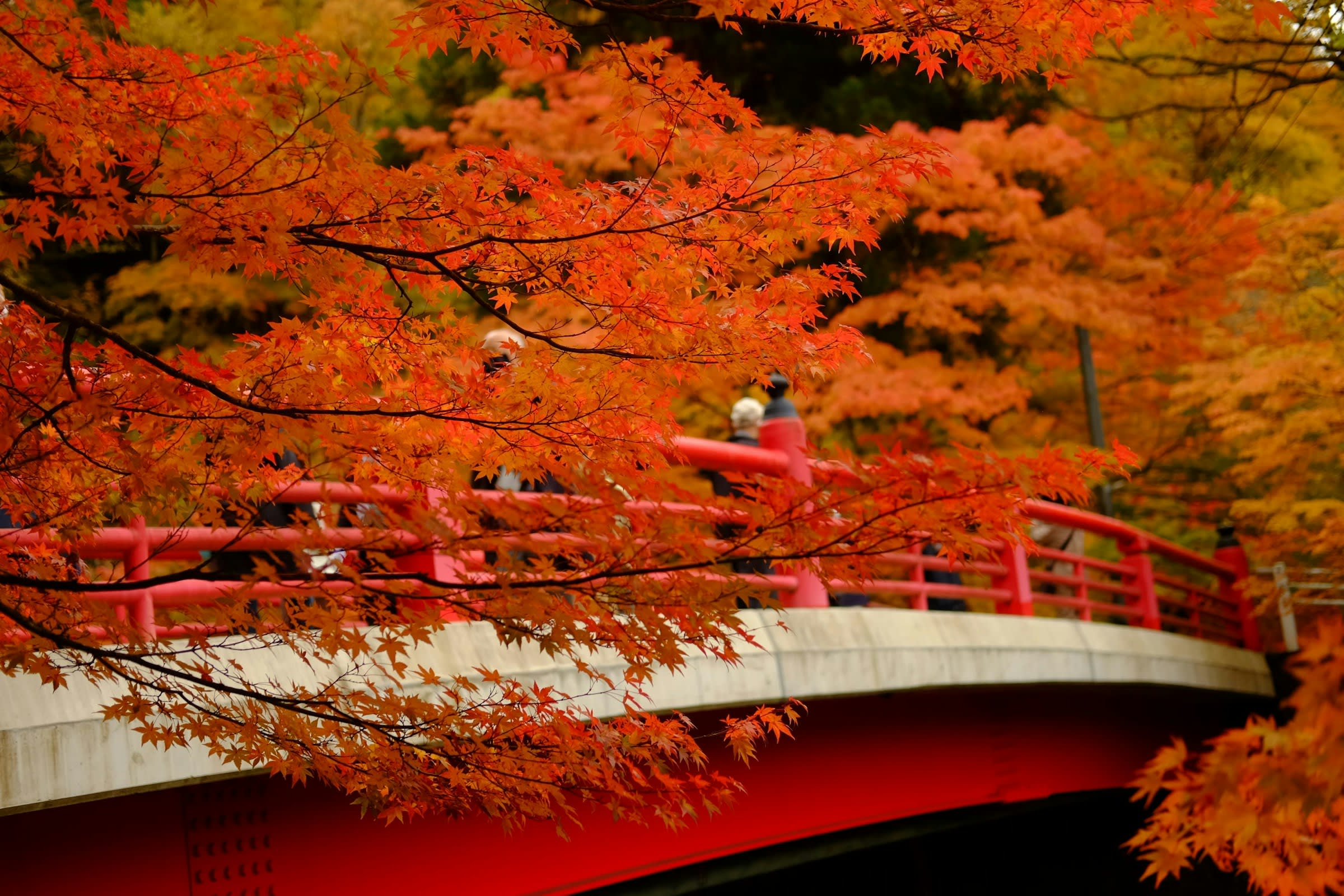
10-Day Autumn Foliage
Chase koyo from the mountains down to the city temples: Nikko's shrines in red and gold, Fuji framed by Hakone's maples, Kyoto's temple gardens at their late-November peak, and the Minoo waterfall valley near Osaka. Best started between about November 12 and 18.