The Best Day Trips from Kyoto, Ranked (2026)
Nara wins: 45 minutes, ¥710, bowing deer and the giant Buddha in half a day. The honest ranking, including the ¥2,500 Himeji question.
The best day trip from Kyoto is Nara: 45 minutes and ¥710 on the JR Nara Line, and the entire headline act (1,200 bowing deer, the world's largest bronze Buddha, temples older than Kyoto itself) fits in half a day. Osaka is the best evening trip, Kobe is the best lunch, and Himeji Castle, one of the 12 castles that kept their original keeps, is still magnificent but now carries a ¥2,500 foreign-visitor price tag that changes the calculation. Here's the honest ranking, with the times, fares, and the one mistake to avoid: day-tripping so hard you never see Kyoto at dusk.
The Shortlist at a Glance
| Trip | One-way time / cost | Best for |
|---|---|---|
| 1. Nara | 45 min / ¥710 (JR) or 35 min / ¥1,110 (Kintetsu) | Everyone; the essential half-day |
| 2. Osaka | 15 min / Shinkansen or ~30 min rapid | Evenings: street food and neon |
| 3. Uji | ~20 min / ¥240 (JR Nara Line) | Matcha and the Phoenix Hall, half a day |
| 4. Kobe + Arima Onsen | ~50 min (JR Special Rapid) | The beef lunch, mountains, onsen |
| 5. Himeji | 45–55 min / Shinkansen (Hikari) | Castle lovers, eyes open on price |
| 6. Otsu / Lake Biwa | 10 min / ¥240 | Crowd escape, Enryaku-ji |
| 7. Ise | ~2 h (Kintetsu limited express) | Japan's most sacred shrine, long day |
1. Nara: The Non-Negotiable One
Nara was Japan's capital before Kyoto existed, and its greatest hits stand within one walkable park: Todaiji's Great Buddha hall (the largest bronze Buddha on earth under one of the largest wooden roofs), Nara Park's 1,200 sacred deer bowing for ¥200 crackers, and the lantern-lined path to Kasuga Taisha. Take the JR Nara Line (45 minutes, ¥710, JR Pass covered) or the Kintetsu express (35 minutes, ¥1,110, closer to the park).

The timing trick: Nara is a morning place. Arrive by 9 AM, do the Buddha before the school groups, feed the deer while they're still polite (by afternoon they've eaten 4,000 crackers and lost interest in bowing), and be back in Kyoto by 3 PM with a whole evening ahead. That's also why Nara ranks above everything else: it's the only trip here that gives you its best and still hands you back most of your day.
2. Osaka: The Evening Trip
Fifteen minutes by Shinkansen or about thirty on the JR rapid, Osaka is less a day trip than a mood swing. The right format is the inverted day: temples in Kyoto until late afternoon, then the train south as the light fades, arriving as Dotonbori's neon switches on. Takoyaki, kushikatsu, the Glico sign, a canal-side beer, and the last train home (they run past 11 PM). Daytime Osaka is a fine city; nighttime Osaka is the point. Our Tokyo vs Osaka comparison makes the fuller case.
3. Uji: The Matcha Pilgrimage
Twenty minutes down the same JR Nara Line (¥240), Uji is where Japan's finest matcha has grown for 800 years, and where the Byodo-in temple's Phoenix Hall (¥700, plus ¥300 for the interior) floats on its reflecting pond exactly as it does on the back of the ¥10 coin. The format: Byodo-in first, then work up the tea-shop street (a proper matcha, a matcha soft-serve, and the green-tea soba lunch), cross the river to Ujigami Shrine, Japan's oldest standing shrine building, and be back in Kyoto by mid-afternoon. It pairs naturally with Fushimi Inari, which sits on the same line: shrine gates at dawn, tea by ten.

4. Kobe and Arima Onsen: The Indulgent One
About 50 minutes west on the JR Special Rapid, Kobe is the day trip you take with your appetite: a certified Kobe beef lunch (teppanyaki lunch sets run far cheaper than the same beef at dinner), the European merchant houses of Kitano, and the harbor at Meriken Park. The upgrade move is continuing 30 minutes into the mountains to Arima Onsen, one of Japan's oldest hot springs, for an afternoon soak in the iron-red kinsen waters before rolling home. Beef at noon, bath at three: it's the least cultural and most restorative day on this list.
5. Himeji: Magnificent, With an Asterisk
Japan's greatest surviving castle is 45–55 minutes from Kyoto on a direct Hikari Shinkansen, and the White Heron itself (original 1600s wood, never burned, never bombed) is worth seeing once in a lifetime. The asterisk: since March 2026, non-resident adults pay ¥2,500 (up from ¥1,000; under-18s now enter free, and the castle-plus-Koko-en-garden combo is ¥2,600). Add the Shinkansen fare and a Himeji day costs real money.
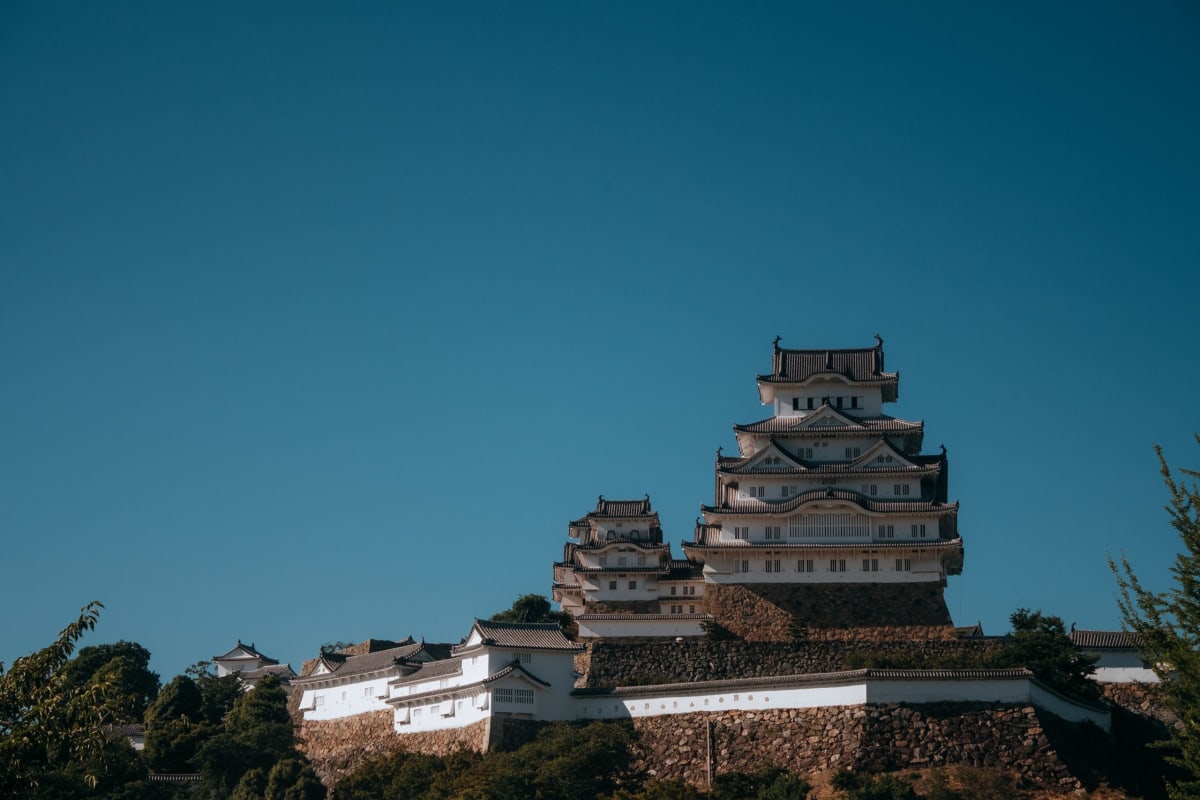
Our honest take: with a JR Pass covering the train, or with kids (free entry), or for anyone who loves castles, it remains a superb trip; go early, since blossom week and Golden Week bring the longest keep queues of the year. If you're choosing between Himeji and Nara on a budget, Nara wins without a fight.
6–7. The Quiet Ones
Otsu (10 minutes, ¥240) is Kyoto's escape hatch: Japan's largest lake, a waterfront promenade, and the World Heritage halls of Enryaku-ji up on Mt. Hiei, the monastery that once ran armies of warrior monks against Kyoto itself. On days when the Kiyomizu crowds get to you, ten minutes east buys you silence for pocket change.
Ise Grand Shrine (about 2 hours each way by Kintetsu limited express) is the outer limit of a sane Kyoto day trip, and Shinto's holiest site: rebuilt from scratch every 20 years for the past 1,300. The move, if you go, is committing to the early train, walking Naiku before the crowds, and eating through the Okage Yokocho street (¥1,500–2,500 covers the classics, ending with Akafuku mochi by the river). It's a long day; it's also the single most sacred place in Japan, and most visitors never go.
The Day-Trip Trap (a Warning from Experience)
Kyoto's location makes over-day-tripping easy, and it's the most common way good Kansai itineraries go wrong. Kyoto's own best hours are dawn and dusk: Fushimi Inari before 8 AM, Gion's lanterns at twilight, temple gardens in the last hour before closing. Spend every day commuting out and you'll have seen five cities' midday crowds and none of Kyoto's magic. The ratio that works: one day trip per three Kyoto days, with Nara as the default pick and Osaka as the default evening.
Basing in Osaka instead and day-tripping into Kyoto? That works too, and it's cheaper; our Kyoto and Osaka guides weigh the trade. Either way, the 5-Day Kansai template in the trip planner sequences the whole region, day trips included.
Frequently Asked Questions
What is the best day trip from Kyoto?
Nara: 45 minutes and 710 yen on the JR Nara Line (or 35 minutes on the Kintetsu express), with the Great Buddha, the bowing deer of Nara Park, and Kasuga Taisha all in one walkable park. Go in the morning and you are back in Kyoto by mid-afternoon with the evening free.
Is Nara better as a day trip from Kyoto or Osaka?
It works equally well from both: about 45 minutes from Kyoto on the JR Nara Line, or 35 to 40 minutes from Osaka-Namba on the Kintetsu line. Base the choice on where you are sleeping. From either city, arrive by 9 AM, since the deer and the Buddha hall are at their best before the tour groups.
Is Himeji Castle worth it now that it costs 2,500 yen?
For castle lovers, yes: it is Japan's finest original castle and the fee increase (from 1,000 yen, for non-resident adults since March 2026) still buys a genuine 1600s interior. Under-18s now enter free, which helps families. On a tight budget, Nara delivers more per yen.
How far is Osaka from Kyoto?
Fifteen minutes by Shinkansen or about 30 minutes on the JR Special Rapid, with trains running until past 11 PM. That makes Osaka the perfect evening trip from Kyoto: temples by day, Dotonbori's street food and neon after dark, and the last rapid home.
How many day trips should I take from Kyoto?
One per three Kyoto days. Kyoto's best hours are early morning and dusk, and travellers who commute out daily miss both. With three Kyoto days, take Nara. With five, add an Osaka evening or Uji half-day. Longer stays earn Kobe, Himeji, or Ise.
5-Day Kansai: Osaka, Kyoto & Nara
Fly into Kansai and skip Tokyo entirely: two nights of Osaka street food with a Nara day trip, then two nights of Kyoto temples. No Shinkansen needed, and apart from the airport trains no ride takes more than 40 minutes.