Tokyo vs Osaka: Which Should You Visit? (2026)
For a first trip the answer is Tokyo, but it's usually the wrong question. An honest comparison of Japan's two big cities, and how to do both.
If you can only visit one, pick Tokyo for a first trip. It has more of everything: more neighborhoods, more museums, more day trips, more of the Japan you've seen in films. Pick Osaka if food is the point of your trip, if you're on a tighter budget, or if you're coming back for a second visit. But for most travellers this is the wrong question, because the two cities are 2.5 hours apart by Shinkansen and almost every good first itinerary includes both. The real decision is how to split your days, and we'll get to that.
The Two Cities at a Glance
| Tokyo | Osaka | |
|---|---|---|
| Feels like | The world's biggest city doing everything at once, politely | A big city that acts like a market town: loud, warm, direct |
| Days needed | 3–4 | 1–2 (more if it's your Kansai base) |
| Signature food | Sushi, ramen, and more Michelin stars than any city on earth | Takoyaki, okonomiyaki, kushikatsu, all under ¥1,500 |
| Mid-range double | ¥18,000–30,000 per night | 20–40% cheaper for the same standard |
| Theme park | Tokyo Disney Resort (technically in Chiba) | Universal Studios Japan with Super Nintendo World |
| Best day trips | Kamakura, Nikko, Hakone, Yokohama | Kyoto, Nara, Kobe, Himeji, all under an hour |
What Tokyo Does Better

Sheer range. Tokyo isn't one city, it's thirty small ones stitched together by the Yamanote Line. Shibuya and Harajuku for youth culture, Asakusa for old Japan, Akihabara for anime and electronics, Ginza for polish, Shimokitazawa for vintage shops and small venues. You could spend four days changing cities without leaving town, which is exactly what our Tokyo template is built around.
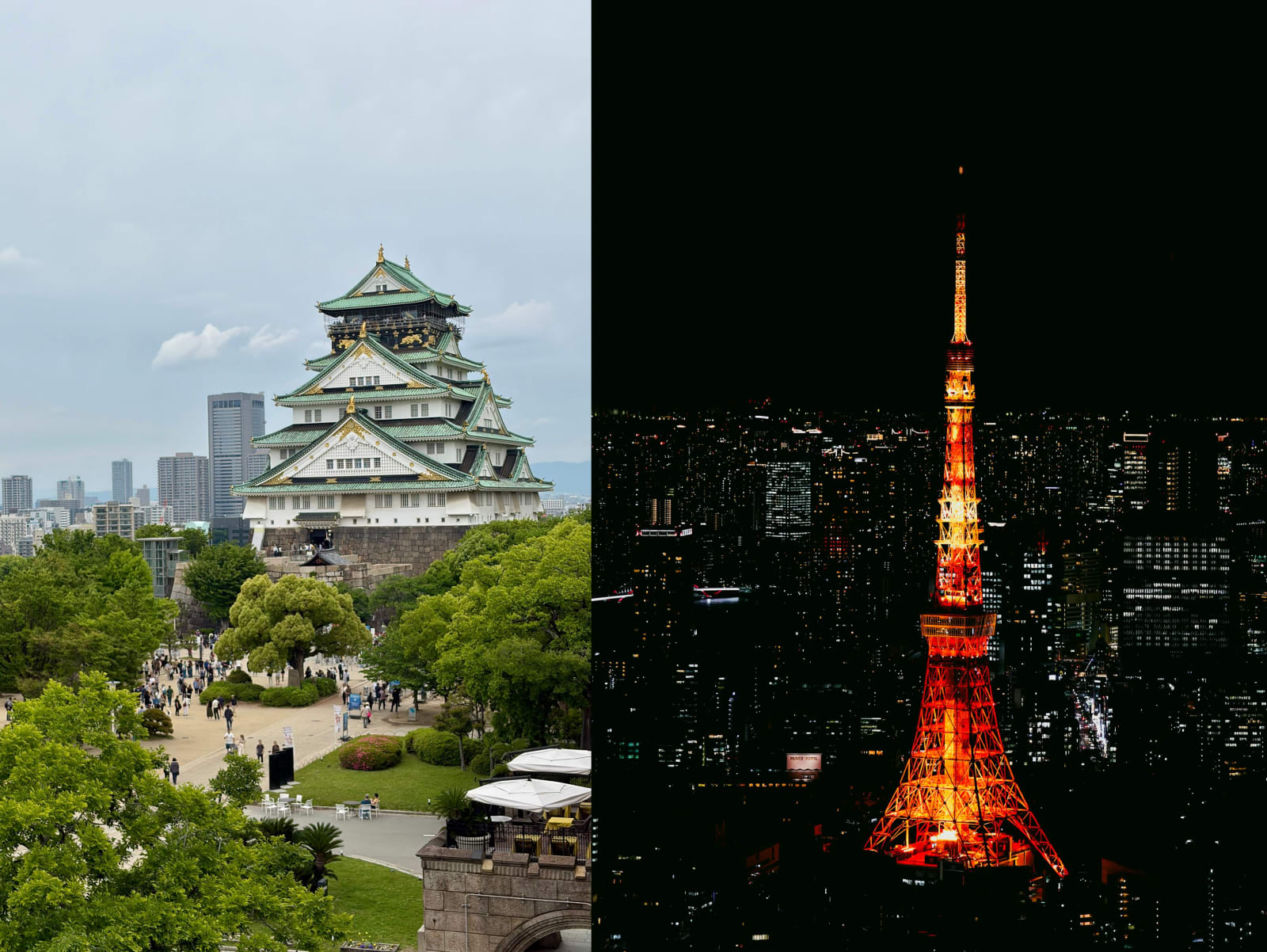
The headline sights. teamLab, the Ghibli Museum, sumo at Ryogoku, the Shibuya crossing, Senso-ji at dawn. Osaka's landmarks are good; Tokyo's are the reason people book flights.
High-end eating. Tokyo has held more Michelin stars than any other city since the guide first arrived in 2007. If your trip includes one blowout meal, the depth of choice is here, and the view seats are too (Shibuya Sky runs ¥2,700 booked online before 3 PM).
Day-trip variety. Kamakura's Great Buddha and beaches are 55 minutes and ¥950 away, Hakone covers the onsen night, and Nikko has the mountain shrines. Different trips, different moods.
What Osaka Does Better

Food per yen, and it isn't close. Osaka's nickname is Japan's kitchen and its motto is kuidaore: eat until you drop. Takoyaki runs ¥500–600 for eight pieces, a filling okonomiyaki is ¥1,000–1,500, and kushikatsu skewers in Shinsekai start at ¥100 apiece. In Tokyo, great cheap food exists but you seek it out. In Osaka it finds you: the whole of Dotonbori and the Namba back streets are one continuous argument for skipping fancy restaurants entirely.
Warmth. Osakans talk to strangers, tease tourists, and treat queueing as a contact sport. It's the city where a street vendor will correct your takoyaki technique. Travellers who find Tokyo impressive but impersonal usually name Osaka their favorite city in Japan.
Your money goes further. Hotels of the same standard run 20–40% cheaper than Tokyo, and business hotels around Namba go for ¥7,000–10,000 a night. Attractions are gentler too: Osaka Castle is ¥1,200, the Umeda Sky Building observatory ¥1,500, Abeno Harukas ¥2,000.
The theme park, currently. Universal Studios Japan with Super Nintendo World (day tickets ¥8,600–10,400 depending on date) has been the harder ticket than Tokyo Disney for several years, especially for travellers who grew up on Mario rather than Mickey.
Location. This is Osaka's quiet trump card. Kyoto is 15 minutes away by Shinkansen or 30 by rapid train, Nara and Kobe are under 45 minutes, and Himeji Castle is under an hour. Base yourself in Osaka and half of Japan's greatest hits become day trips from a cheaper hotel room. Our 5-Day Kansai template runs on exactly this trick.
The Honest Differences That Don't Fit a Table
Tokyo is a city you watch; Osaka is a city you join. Tokyo's pleasures are curated: the perfect coffee counter, the silent museum, the view from the 45th floor. Osaka's are participatory: standing bars, shared grills, a man in a chef's hat yelling a discount at you. Neither is better. Introverts often prefer Tokyo, extroverts Osaka, and plenty of people flip depending on the day.
Osaka is done in two days; Tokyo never is. That's not an insult to Osaka. It's compact, and its best material (Dotonbori, the castle, Shinsekai, Kuromon Market, an evening in Umeda) fits comfortably into 48 hours. Tokyo punishes short visits: two days there feels like reading the first chapter of five different books.
Neither city is the "real Japan" and both are. You'll hear that Osaka is more authentic because it's rougher, or that Tokyo is more Japanese because it's more refined. Ignore both claims and visit Kyoto's temples, an onsen town, and a konbini at 2 AM. That triangle is the real Japan.
If You Genuinely Must Choose One
- First trip to Japan: Tokyo. The range of neighborhoods and day trips means a whole trip fits in one hotel. Our trip-length guide covers how to structure it.
- Food-first trip: Osaka, using it as a base to eat through Kansai. Kyoto for kaiseki, Kobe for beef, Osaka for everything fried and glorious.
- Second trip to Japan: Osaka. You've done Tokyo's greatest hits; now get the cheaper room, the louder izakaya, and the day trips you skipped.
- Travelling with kids: Slight edge to Osaka: USJ, the Kaiyukan aquarium (¥2,700), shorter distances between sights, and food kids actually recognize.
- Nightlife: Honors even. Tokyo's Shinjuku (Golden Gai, Omoide Yokocho) against Osaka's Namba back streets and Ura-Namba standing bars. Osaka's is friendlier to strangers; Tokyo's is deeper.
The Right Answer: Do Both, Split Smart
The Nozomi covers Tokyo to Shin-Osaka in 2 hours 30 minutes (¥14,720 reserved); JR Pass holders take the Hikari in 3 hours 10 minutes. So on any trip of a week or more, the comparison is academic. The split that works:
- 7 days: 3–4 nights Tokyo, 3 nights Kansai. Sleep in Kyoto if temples are the priority, in Osaka if food and budget are. Either way, fly home from KIX instead of backtracking. This is our 7-Day First-Timer template.
- 10–14 days: 4 nights Tokyo, then a Kansai base with day trips to Nara and Kobe, plus Hiroshima if you have the days. The Classic 2-Week route lays it out day by day.
One practical note: many travellers base in Osaka and day-trip into Kyoto rather than the reverse, because Osaka hotels are cheaper and Kyoto's peak-season rates are brutal. It works well, with one cost: you'll miss Kyoto's early mornings and lantern-lit evenings, which are its best hours. If you can afford at least one Kyoto night, take it. Our Osaka and Kyoto area guides cover where to sleep in each.
Ready to put days on a calendar? Open a template in the free trip planner and swap the bases around until the split feels right.
Frequently Asked Questions
Is Tokyo or Osaka better for a first trip to Japan?
Tokyo, if you must choose one: it has more neighborhoods, more headline sights, and more day-trip variety, so a whole trip fits in one base. But most first trips of 7 days or more should include both cities, since they are only 2.5 hours apart by Shinkansen.
Is Osaka cheaper than Tokyo?
Yes, noticeably. Hotels of the same standard run 20 to 40 percent cheaper than Tokyo, business hotels near Namba go for 7,000 to 10,000 yen a night, and Osaka's signature street food keeps full meals under 1,500 yen. Attractions are cheaper too: Osaka Castle costs 1,200 yen against 2,700 yen for Shibuya Sky.
Which city has better food, Tokyo or Osaka?
It depends on budget. Osaka wins on cheap eating: takoyaki, okonomiyaki, and kushikatsu are everywhere and rarely cost more than 1,500 yen a meal. Tokyo wins at the top end, with more Michelin-starred restaurants than any city in the world and unmatched sushi depth.
How far apart are Tokyo and Osaka?
About 500 kilometers. The Nozomi Shinkansen covers it in 2 hours 30 minutes for 14,720 yen reserved; JR Pass holders take the Hikari in 3 hours 10 minutes since the pass excludes the Nozomi. Trains run every 10 to 15 minutes, so no advance planning is needed outside holiday peaks.
Is it better to stay in Osaka or Kyoto for visiting Kansai?
Osaka is the cheaper and livelier base, and Kyoto is only 15 minutes away by Shinkansen or 30 by rapid train. The trade-off is missing Kyoto's early mornings and evenings, which are its best hours. A good compromise is basing in Osaka but spending at least one night in Kyoto.
How many days do you need in Osaka compared to Tokyo?
Tokyo deserves 3 to 4 days on a first visit; Osaka's own sights fit comfortably into 1 to 2. Many travellers stay in Osaka for 4 or 5 nights anyway, using it as an affordable base for day trips to Kyoto, Nara, and Kobe.
7-Day First Timer: Tokyo & Kyoto
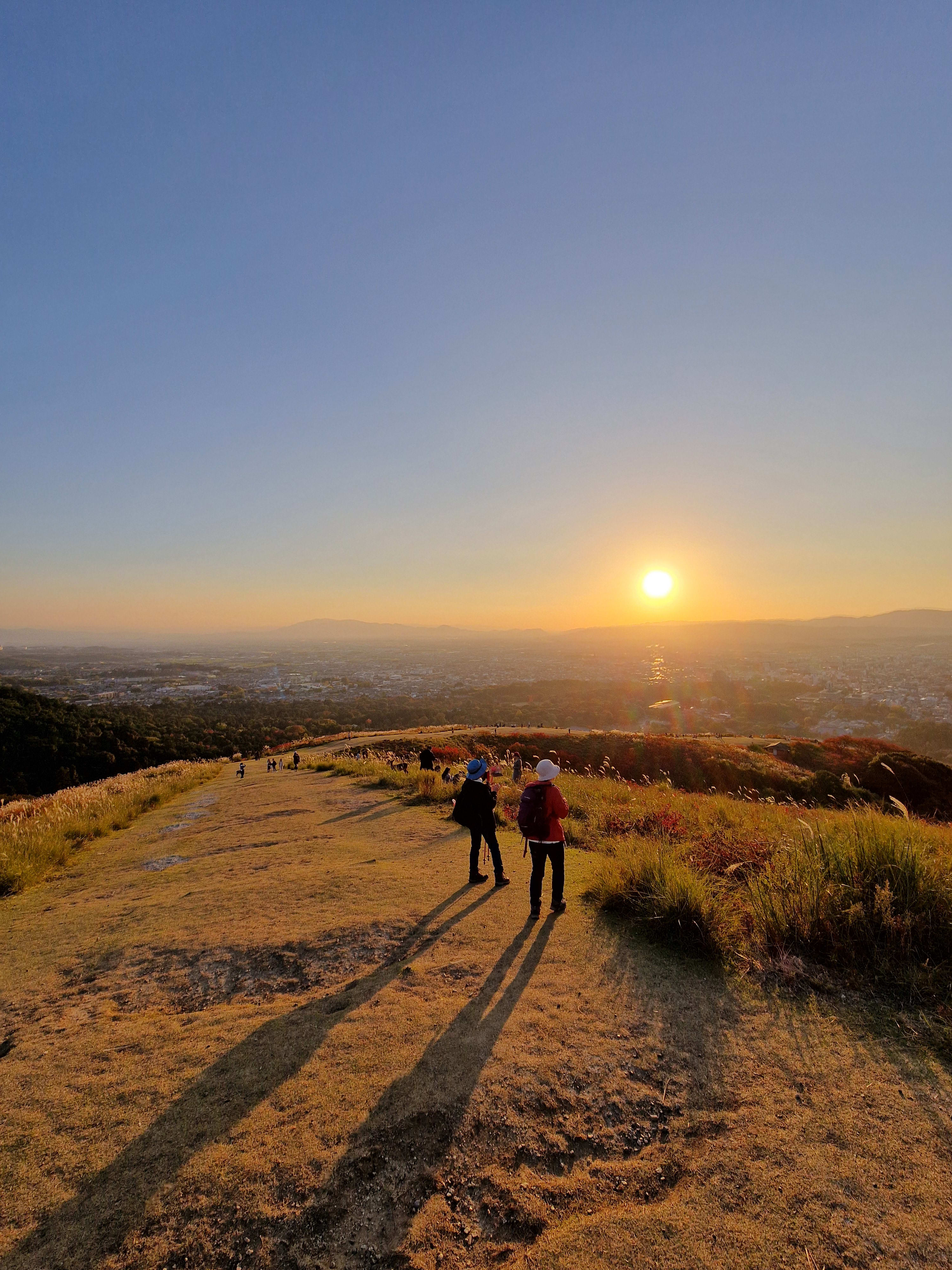
One week, two bases: three nights in Tokyo for Shibuya, Senso-ji, and teamLab, then three in Kyoto for Fushimi Inari before the crowds, the Arashiyama bamboo, and a half day with the deer of Nara.