Japan Travel Budget Per Day (2026): $65, $130 or $255
About ¥10,000 a day backpacking, ¥20,000 mid-range, ¥40,000 in comfort, from prices checked in September 2026. Kyoto rooms quadruple in cherry season.
Plan on about ¥10,000 (about $65) per person per day as a backpacker, ¥20,000 ($130) mid-range, and ¥40,000 ($255) for full-service hotels and a proper dinner every night. That covers your bed, food, local transport and sightseeing, with two people sharing a room at the mid-range and comfort levels. Flights and Shinkansen tickets come on top. Dollars are at ¥157, the Federal Reserve's rate for September 25, 2026.
What moves those numbers is the room, not the ramen. On a January weeknight a Kyoto Station business hotel charged ¥6,500 to ¥8,500 for two; on March 31, in cherry blossom week, the same hotels wanted ¥25,000 to ¥31,600. A regular gyudon costs ¥460 to ¥498 in any month. Pick your dates and base cities first, then worry about lunch.
Every price here comes from the business's own website or booking system, checked in late September 2026; hotel prices are for two adults, cheapest plan, tax included. As a cross-check, the Japan Tourism Agency found the average American visitor spent ¥339,708 over 12 nights in 2025, about ¥22,700 a night before shopping: right on our mid-range.
Japan Daily Budget at a Glance: Three Levels
"January" is our reference night, Wednesday January 20, 2027. "Peak" is Wednesday March 31, 2027 (cherry blossom week) or November 25, 2026 (autumn leaves).
| Per person, per day | Backpacker | Mid-range | Comfort |
|---|---|---|---|
| Bed, January | ¥3,420– | ¥3,250– | ¥15,800– |
| Bed, peak | ¥7,000– | ¥5,000– | ¥24,750– |
| Food | ¥2,500 | ¥5,500 | ¥12,000– |
| Local transport | ¥1,000 | ¥1,200 | ¥3,000 |
| Sights | ¥500– | ¥2,500 | ¥5,000 |
| Total, January | ¥7,420– | ¥12,450– | ¥35,800– |
| Total, peak | ¥11,000– | ¥14,200– | ¥44,750– |
The backpacker bed is a hostel dorm bed. The mid-range bed is half of the cheapest double at an APA business hotel near a station; the comfort bed is half a double at hotels like the Hilton Tokyo, the Westin Miyako Kyoto or the Swissotel Nankai Osaka. The low end of each range is Kyoto or Osaka and the high end Tokyo, except in cherry blossom and foliage weeks, when Kyoto catches up with Tokyo and Osaka stays cheap.
Weekends and holidays cost more again: in Kyoto the Saturday of the November 21 to 23 holiday weekend ran about 60% above the following Wednesday.
Travelling alone? Add most of the other half of the room. APA's cheapest single cost ¥12,090 to ¥13,100 in central Tokyo on January 20 and ¥21,200 to ¥24,200 on March 31, only 15 to 30% less than a double for two at the same hotels (about 10% less in Kyoto and Osaka). A solo mid-range day therefore runs about ¥15,000 to ¥33,500.
Hotel Prices in Japan: Where Your Budget Is Won or Lost
Where you sleep swings your budget more than anything else, and city and season matter as much as hotel class. This is what one chain charged for its cheapest room for two on the same two nights, plus its solo price in Tokyo:
| Area (APA hotels) | Wed Jan 20 | Wed Mar 31 |
|---|---|---|
| Tokyo, Shinjuku | ¥14,000– | ¥28,800– |
| Tokyo, Ikebukuro and Nihonbashi | ¥16,100– | ¥25,300– |
| Kyoto Station | ¥6,500– | ¥25,000– |
| Osaka, Namba | ¥6,500– | ¥10,000– |
| Tokyo single, 1 person | ¥12,090– | ¥21,200– |
- Kyoto roughly quadruples in cherry blossom week and about triples in late November (¥23,000 to ¥26,800 on November 25). Tokyo runs about 1.6 to 2 times January in late March and 15 to 40% above it in late November.
- Osaka barely moves. Namba's business hotels cost at most ¥5,500 more on the peak nights than in January, which makes Osaka the budget base for Kansai in spring and autumn. The exception is New Year's Eve, when the same hotels asked ¥20,000 to ¥24,000.
- Peak nights sell out early. By late September, Mitsui Garden's Shinmachi Bettei in Kyoto had nothing left for November 25, and five of APA's seven Kyoto hotels were full for October 21, the eve of the Jidai Matsuri.
By type of stay:
- Hostel dorm bed: ¥3,420 to ¥5,950 in January, ¥7,000 to ¥7,740 in peak weeks. Piece Hostel Sanjo in downtown Kyoto charged ¥3,420 (non-refundable) or ¥3,800 on January 20 and ¥7,200 on November 25. UNPLAN Shinjuku's cheapest bed, breakfast included, was ¥5,950 in January and about ¥7,000 on March 31.
- Business hotels: the workhorses of Japan travel. Small, spotless rooms near a station (APA's cheapest doubles are 10 to 11 m²), and where mid-range budgets should sleep. Some add real extras: Toyoko Inn Osaka Namba includes a free buffet breakfast, and Dormy Inn hotels have large public baths and free late-night soba.
- Full-service hotels: about ¥31,500 to ¥37,200 for two in January (Westin Miyako Kyoto ¥31,534, Osaka Marriott Miyako ¥33,650, Hilton Tokyo ¥37,195). In peak weeks Kyoto is where this level hurts: the Westin wanted ¥102,149 on November 25.
- Ryokan: priced per person, usually with dinner and breakfast. At the top of the scale, Kyoto's Hiiragiya was ¥160,600 for two with kaiseki dinner and breakfast on a January weeknight, ¥80,300 each. Since it replaces a hotel night and two restaurant meals, do one night as an experience, not seven.
Add a small accommodation tax, per person per night on the room price: ¥100 to ¥200 at Tokyo hotels and ryokan above ¥10,000 per person (a 3% rate replaces this in April 2027), ¥200 to ¥500 in Osaka above ¥5,000, and in Kyoto ¥200 even under ¥6,000, rising to ¥1,000 from ¥20,000 and up to ¥10,000 at the luxury end. Some hotels include it in the rate; others collect it at check-out.
For the value neighborhoods in each city, with checked hotels and more dates, see our Tokyo, Kyoto and Osaka area guides.
Food Prices in Japan: Where Budget Travellers Win
You can eat genuinely well in Japan for ¥2,500 a day, and the trick is that cheap food here isn't a compromise. These are the chains' own menu prices, tax included:
- Konbini breakfast: about ¥500. Two onigiri at 7-Eleven cost ¥170 to ¥214 each at Tokyo-area prices, and a regular hot coffee ¥140. Fresh, made that morning, zero shame in it.
- Gyudon and curry: ¥460 to ¥600. A regular beef bowl is ¥460 at Matsuya and ¥498 at Yoshinoya, and CoCo Ichibanya's pork curry is under ¥600.
- Teishoku set lunch: ¥890 to ¥1,210. At Yayoi-ken in Tokyo, the ginger pork set is ¥890 and grilled mackerel ¥990, with free rice refills and pickles on the table. Our pick for the best value in Japanese dining.
- Ramen: about ¥1,200 at the famous chains. Ichiran's classic tonkotsu bowl is ¥1,180 at its Shinjuku branch, and an extra serving of noodles ¥210.
- Kaiten (conveyor) sushi: ¥1,500 to ¥2,500 for 10 to 12 plates. Plates start at ¥150 at Sushiro's Shinjuku East Exit branch, with most between ¥150 and ¥210.
- Beer: ¥480 to ¥650. A glass at Sushiro is ¥480; a jug there and a medium at Ichiran are ¥650 each.
- A proper splurge dinner: ¥10,000 and up. Asakusa Imahan's sukiyaki sets start at ¥9,680, and the restaurant adds a 10% service charge once the bill passes ¥5,500 a head.
Our daily food allowances come straight from those prices. Backpacker, ¥2,500: onigiri and coffee, a gyudon lunch and a bowl of Ichiran (about ¥2,200), plus a drink. Mid-range, ¥5,500: the same breakfast, a set lunch, and a sit-down dinner with a beer, for which we allow ¥3,500 (12 plates and a jug of beer at Sushiro come to about ¥2,500 to ¥3,200). That matches the Japan Tourism Agency's figure for American visitors, ¥69,616 on food over 12 nights, or about ¥5,800 a night.
More on ordering, reservations and restaurant types is in our guide to eating in Japan.
Transport Costs in Japan: Cheap Daily, Expensive Between Cities
Within a city, budget about ¥1,000 a day. Tokyo Metro fares are ¥180 to ¥330 a ride (¥178 to ¥324 on an IC card), a Kyoto city bus is ¥230 flat, and Osaka's subway from Namba to Umeda is ¥240. If you'll make five or more subway rides in Tokyo, the Tokyo Subway Ticket covers every Tokyo Metro and Toei line for ¥1,000 (24 hours), ¥1,500 (48) or ¥2,000 (72), and is sold to overseas visitors. Kyoto's Subway & Bus 1-Day Pass is ¥1,100. Our IC card guide covers the cards themselves.
From the airport, Haneda reaches most central Tokyo stations for under ¥750, while Narita costs ¥1,060 to ¥3,330 one way. The airport guide has the right train or bus for each part of the city.
Between cities is where budgets break. A reserved seat on the Nozomi from Tokyo to Kyoto costs ¥14,170 one way (¥13,320 in a non-reserved car). Tokyo to Kyoto, on to Osaka by JR (¥580) and back to Tokyo (¥14,720) comes to ¥29,470, well under the ¥50,000 of a 7-day JR Pass bought on the official site (¥53,000 through agencies from October 1, 2026). Run your own route through our JR Pass guide and book with the Shinkansen booking guide.
The backpacker workaround is the night bus. On the weekday we checked, JR Bus's Seishun Eco Dream from Tokyo Station to Osaka cost ¥4,200 to ¥5,500, and the roomier Gran Dream ¥5,500 to ¥8,000. That's about a third of the Nozomi fare, and it saves a night's bed.
Skip taxis for anything routine. In Tokyo's 23 wards the first 1.0 km costs ¥500 and every further 232 m ¥100, so a 5 km ride is about ¥2,200 before time spent in traffic, and 20% more from 10 PM to 5 AM. Full strategies are in our getting around guide.
Sightseeing Costs: The Best Stuff Is Nearly Free
Japan's admission prices are gentle, and many of its signature sights cost nothing: Senso-ji, the torii paths of Fushimi Inari, Shibuya Crossing, and every market and neighborhood wander.
- Temples and gardens: ¥300 to ¥800. Kenroku-en is ¥320, Kinkaku-ji ¥500 and Todai-ji's Great Buddha Hall ¥800.
- Museums: about ¥1,000. The Tokyo National Museum's permanent collection is ¥1,000.
- Observation decks: ¥2,700 to ¥3,700. Shibuya Sky is ¥2,700 booked online for entry before 3 PM and ¥3,400 from 3 PM, ¥300 more at the counter.
- Big tickets: ¥3,600 and up. teamLab Borderless lists adults at ¥3,600, with prices that change by date. A Tokyo Disney 1-Day Passport starts at ¥8,900 and was ¥9,900 to ¥10,900 for dates in early October.
A realistic mid-range sightseeing budget is ¥2,500 a day with one or two paid entries, less on days you fill with neighborhoods, shrines and parks. Theme parks are a separate line: budget the ticket on top of the day.
Cash, Cards and ATMs in Japan
Japan was 58% cashless in 2025, mostly by credit card, and in cities a Visa or Mastercard plus an IC card covers most spending. Cash is still needed often enough to plan for: shrine offerings and charms, small ramen and izakaya counters, market stalls, and much of rural Japan.
- Carry ¥10,000 to ¥20,000 as a working float and top up as needed.
- Withdraw at 7-Eleven. Its Seven Bank ATMs take foreign cards, up to ¥100,000 per withdrawal. The fee depends on your card brand, so fewer, larger withdrawals cost less, and choose yen rather than your home currency on screen. Japan Post Bank ATMs are the backup and may charge ¥220.
- No tipping. Japan's national tourism organization says it's not common to tip in bars, cafes, restaurants, taxis or hotels. The price on the bill is the price, with the one exception of a service charge at some upscale restaurants.
What Two Weeks in Japan Actually Costs
A concrete example: 14 days, mid-range, two people sharing, 6 nights in Tokyo, 4 in Kyoto and 3 in Osaka, flying in and out of Narita. The hotels are the APA weeknight prices above: about ¥17,000, ¥7,500 and ¥8,500 a night for two in January, and ¥30,000, ¥28,000 and ¥12,000 in cherry blossom week.
| Per person | January | Late March |
|---|---|---|
| Hotels, 13 nights (half a double) | ¥78,750 | ¥164,000 |
| Food, ¥5,500 a day | ¥77,000 | ¥77,000 |
| Local transport, ¥1,200 a day | ¥16,800 | ¥16,800 |
| Sights, ¥2,500 a day | ¥35,000 | ¥35,000 |
| Trains Tokyo to Kyoto to Osaka to Tokyo | ¥29,470 | ¥29,470 |
| Narita Express round trip | ¥5,200 | ¥5,200 |
| Total | ¥242,220 (about $1,540) | ¥327,470 (about $2,090) |
That's about ¥17,300 a day in January and ¥23,400 in late March, Shinkansen included, plus flights, which now carry Japan's ¥3,000 departure tax. The only line that changed is the hotels. Base more nights in Osaka in spring and the gap shrinks fast.
A backpacker can do two weeks for about ¥153,000 ($980) in January or ¥187,000 ($1,190) in late March. That's 6 nights in Tokyo dorms and 7 in Kyoto dorms, with day trips to Osaka (¥580 each way) and Nara (¥720), ¥2,500 a day for food, ¥1,000 for local transport and ¥750 for sights, the Shinkansen to Kyoto and back (¥28,340), and the ¥330 train from Haneda to Shinagawa at each end. Take JR's night buses instead of the Shinkansen (Tokyo to Osaka was ¥4,200 on the weekday we checked, and some buses stop at Kyoto) and you save roughly ¥20,000 plus two nights' beds.
Ready to sketch your own version? Start from our 2-week budget backpacker route or build it from scratch in the trip planner, which estimates costs as you go. First trip? Our beginner's guide covers everything else.
Frequently Asked Questions
How much money do I need per day in Japan?
About 10,000 yen (roughly $65) per person as a backpacker in dorms, 20,000 yen ($130) mid-range with two people sharing a business-hotel room, and 40,000 yen ($255) for full-service hotels and a proper dinner every night. That covers bed, food, local transport and sightseeing, but not flights or Shinkansen tickets. The room drives the swing: in cherry blossom week a Kyoto Station business hotel costs three to four times its January price. Travelling solo, add roughly 2,500 to 9,500 yen a day, because a single costs nearly as much as a double.
Is Japan expensive to visit in 2026?
Day to day, no. At 157 yen to the dollar, a regular gyudon is 460 to 498 yen (about $3), a Yayoi-ken set lunch 890 yen, a Tokyo subway ride from 180 yen and Kinkaku-ji 500 yen. The expensive parts are Shinkansen tickets (14,170 yen from Tokyo to Kyoto on a reserved Nozomi) and hotel rooms in peak weeks. For scale, the Japan Tourism Agency found the average American visitor spent 339,708 yen on a 12-night trip in 2025, shopping included.
How much does a hotel in Japan cost per night?
For two people in a business hotel near a station, we found 6,500 to 10,000 yen in Kyoto and Osaka and 14,000 to 24,400 yen in Tokyo on a January weeknight. On March 31, in cherry blossom week, the cheapest rooms by Tokyo area ran 25,300 to 38,900 yen and Kyoto Station 25,000 to 31,600 yen, while Osaka's Namba stayed at 10,000 to 12,400 yen. Full-service hotels started around 31,500 yen for two in January. A single for one person costs roughly 70 to 90% of a double, and Tokyo, Kyoto and Osaka add a small accommodation tax per person per night.
How much does a two-week trip to Japan cost?
About 242,000 yen (roughly $1,540) per person for a mid-range couple doing Tokyo, Kyoto and Osaka in January, and about 327,000 yen ($2,090) for the same trip in cherry blossom week, plus flights. That includes 13 nights in business hotels, 5,500 yen a day for food, local transport, sights, the Shinkansen loop (29,470 yen) and a Narita Express round trip. A backpacker in dorms spends about 153,000 to 187,000 yen.
How much cash should I carry in Japan?
Keep 10,000 to 20,000 yen on you. Japan was 58% cashless in 2025 and cards cover most city spending, but shrines, small restaurants and rural areas still want cash. 7-Eleven's ATMs take foreign cards, up to 100,000 yen per withdrawal; the fee depends on your card, so withdraw less often, and choose yen rather than your home currency on screen.
Do you tip in Japan?
No. Japan's national tourism organization says it's not common to tip in bars, cafes, restaurants, taxis or hotels, so pay the amount on the bill. Some upscale restaurants add a service charge instead: Asakusa Imahan adds 10% once a bill passes 5,500 yen a head.
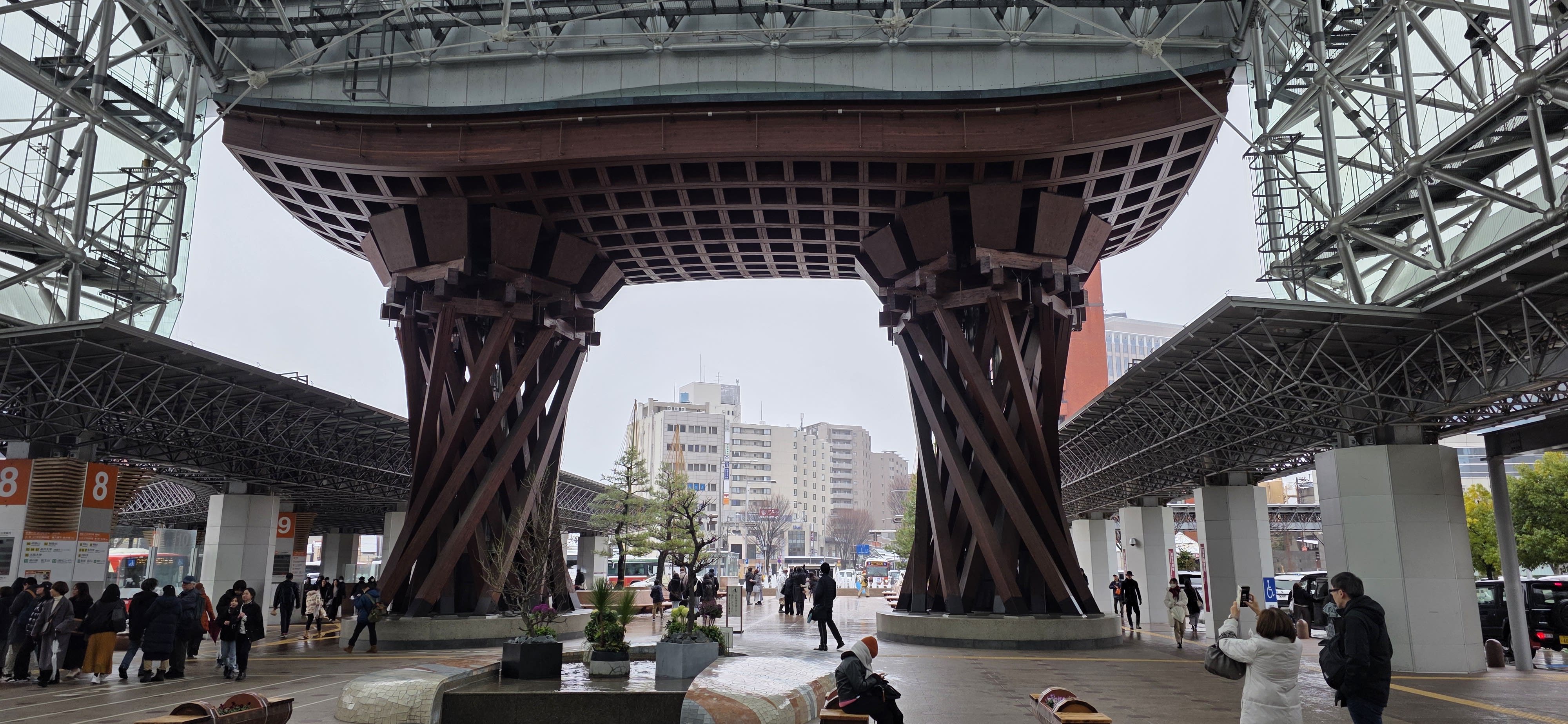
2-Week Budget Backpacker
All hostels, free/cheap activities, street food, and trains. Tokyo, Hakone, Kyoto, Osaka, Hiroshima, Kanazawa: maximum Japan on a shoestring.