Japan in March 2027: Cherry Blossom Timing, Weather and Prices
Early March is plum season at near-winter prices. From about the 20th the cherries open and Kyoto rooms more than double. 2027 bloom odds, weather, dates.
March in Japan is two trips with one name. The first half is late winter: plum blossoms, Nara's fire ritual, cold bright mornings and hotel prices barely above January's. Then, somewhere around the 20th, the cherry blossoms open in Tokyo and the sakura season begins. Prices do not creep up. They jump: on APA's own site, the cheapest room for two near Kyoto Station is ¥10,500 to ¥12,000 on mid-March weeknights in 2027, and ¥25,000 to ¥31,600 on March 31.
Which half you get depends on your dates, and the line between them moves every year. Tokyo's official tree at Yasukuni Shrine opened on March 14 in 2020, 2021 and 2023, the earliest date in the Japan Meteorological Agency's records back to 1953. In 2024 it waited until March 29. That fifteen-day swing between consecutive springs is the single most important fact about March: you cannot book three nights around a guessed peak and expect the trees to cooperate.
The odds still favor late March. Tokyo's full bloom came in March in five of the last six springs, between March 22 and 30 (only 2024 slipped to April 4). No 2027 forecast exists yet: the first rounds are due from mid December, and our 2027 cherry blossom forecast switches to them the day they land. Until then it shows when every prefecture's official tree opened in the last six springs.
Japan's Weather in March: Winter Mornings, Spring Afternoons
Tokyo averages 5 to 14°C across March, Kyoto 4 to 14°C and Osaka 6 to 14°C (JMA 1991 to 2020 normals). Early-March nights average 3 to 4°C in Tokyo and Kyoto, late-March afternoons about 15°C. The averages hide the swings. On March 28, 2020, Tokyo reached 24.6°C; the next day it topped out at 7.7°C, with sleet and snow settling on cherry trees that had been in full bloom for a week.
Rain comes back after the dry winter: Tokyo averages 116 mm in March, about double February's, with 1 mm or more on about nine days. Tokyo's sunset moves from 5:36 PM on March 1 to 6:01 PM on March 31 (5:52 to 6:17 in Kyoto), Vernal Equinox Day falls on Sunday, March 21, 2027, and after the 4:30 PM sunsets of December, March evenings feel generous.
One warning that no tourism board leads with: March is the peak of cedar pollen season. Tokyo's cedar pollen flies from early February to late April and peaks in March, and Japan's Ministry of the Environment estimates that about one in three people in the country are allergic to it (2019 survey). It is worst on warm, dry, windy days and the day after rain. If pollen gets you at home, pack your usual tablets (our medication guide covers the decongestants Japan bans). The first miserable day is easier to skip than to cure.
The two ends of the country run other seasons. Sapporo sits between -2 and 5°C, with snow still about half a metre deep in late March. Naha in Okinawa holds 17 to 22°C, and Okinawa's own cherries opened back in January, so the sakura calendar there runs two months ahead of the mainland.
When Do Cherry Blossoms Bloom in March? The Timetable, and Why It Moves
The long-term averages first, because they anchor everything. JMA's normals put first bloom in Fukuoka on March 22, Tokyo on March 24, Kyoto on March 26 and Osaka on March 27, with full bloom on March 31 in Tokyo and April 4 in Kyoto and Osaka. First bloom means five or six open flowers on a city's official benchmark tree; full bloom means about 80% of its buds are open, usually a week later. The broad-strokes calendar:
| When | What is blooming |
|---|---|
| Mar 1 to 10 | Plum blossoms in Kyoto and Mito, the last Kawazu cherries on the Izu Peninsula (the 2026 festival ran to March 8), the tail of Shinjuku Gyoen's early kanzakura |
| Mar 10 to 20 | Late plums at Kairakuen and Kitano Tenmangu. The first Somei Yoshino in early years: Hiroshima's official tree opened on March 11 in 2021, Fukuoka's on March 12, and Tokyo's on March 14 in three recent springs |
| Mar 20 to 31 | The main event: Somei Yoshino opens from Kyushu and Hiroshima to Nagoya, Tokyo, Kyoto and Osaka. Tokyo reached full bloom in this window in five of the last six springs, Kyoto in four |
Now the caveat that should shape your whole booking strategy: those averages describe a target that moves, and lately it has moved early. Between 2021 and 2026 Tokyo's full bloom ranged from March 22 to April 4 and Kyoto's from March 24 to April 5, always one to six days after Tokyo's.
So track the forecasts, and treat them as weather reports rather than promises. For the 2026 season Japan Meteorological Corporation published first, on December 18, 2025, followed by Weathernews on January 8 and the Japan Weather Association on January 29. Our tracker logs every round and turns each prefecture pink on JMA's official declarations. Once you are in the country, switch to spot reports: tenki.jp and Weathernews track the famous spots one by one as they open, peak and fall.
One more planning fact people miss: the bloom is not one date, it is a relay, even inside one city. Shinjuku Gyoen's 900 or so trees of some 70 varieties flower from January to late April. In Kyoto, Maruyama Park peaks from late March, the Philosopher's Path in early to mid April, and Ninna-ji's low Omuro cherries reached full bloom between April 2 and 16 in 2021 to 2025. Even a badly timed trip usually catches something, if you know which direction to walk.
March Hotel Prices and Crowds: What the Blossoms Cost
Early March is priced close to winter; the blossom weeks are not. We checked APA, the same chain in all three cities, on its own booking site on September 29, 2026: the cheapest room for two, one night, tax included, on March nights in 2027 against a January weeknight.
| Night in 2027 | Kyoto Station | Shinjuku | Namba, Osaka |
|---|---|---|---|
| Wed Jan 20 | ¥6,500– | ¥14,000– | ¥8,000– |
| Wed Mar 10 | ¥10,500– | ¥15,000– | ¥8,000– |
| Sat Mar 20 | ¥23,000– | ¥26,200– | ¥17,000– |
| Wed Mar 24 | ¥16,000– | ¥21,200– | ¥9,000– |
| Wed Mar 31 | ¥25,000– | ¥25,200– | ¥11,000– |
- Early March is the bargain. Kyoto Station ran ¥10,500 to ¥12,000 on the Wednesdays of March 10 and 17, less than half its March 31 price, and Namba cost the same as in January.
- The holiday weekend costs like bloom week. Saturday, March 20 opens the Vernal Equinox weekend, and every Kyoto Station hotel we checked more than doubled its March 10 price that night. Shinjuku rose about 1.8 times, and even Namba doubled.
- The last week climbs. Kyoto went from ¥16,000 to ¥20,000 on March 24 to ¥25,000 to ¥31,600 on March 31, about two and a half times its mid-March price.
- Osaka barely moves midweek. Namba stayed at or under ¥12,400 on every weeknight we checked, and JR's Special Rapid runs from Osaka to Kyoto in 28 minutes for ¥580. Our Osaka stay guide has the areas, and the Kyoto and Tokyo guides cover what the bloom-week price buys.
The trains follow the same calendar. JR prices the Tokaido and Sanyo Shinkansen as busy season from Friday, March 19 to Wednesday, March 31, 2027 (¥200 more for a reserved seat), and as off-peak from March 1 to 4. Over the holiday weekend, Saturday, March 20 to Monday, March 22, every Nozomi runs reserved-only: JR Central warns that without a reservation you stand in the vestibule, if you can board at all. Reserved seats go on sale one month ahead at 10:00, and our Shinkansen booking guide has the steps.
The domestic calendar piles on. Tokyo's public schools break for spring from March 26 to April 5, the fiscal year ends on March 31, and JNTO counted 3.62 million foreign visitors in March 2026, second only to April among the year's months so far. Expect Saturday hanami in the famous parks to be a full-contact picnic. It is also genuinely fun: hanami is a party the whole country throws at once, blue tarps and convenience-store sake included, and visitors are welcome to spread a sheet and join (Shinjuku Gyoen bans alcohol, if you want the calm version).
How to Book a Cherry Blossom Trip Without Gambling
The blunt version: do not book a short trip around a guessed peak date. Book length and flexibility instead.
- Span the turn of the month. A trip running roughly March 23 to April 5 would have caught Tokyo, Kyoto and Osaka at or near full bloom in every one of the last six springs. Ten days beats five, not for seeing more, but for insurance.
- Book refundable, and book now. Six months out, every APA hotel we checked still had rooms for March 31, but all of them were already priced for the blossoms. Lock in cancellable rates, then fine-tune when the forecasts arrive from mid December.
- Keep one or two days unplanned. Whichever city the spot reports say is peaking, that is where your spare day goes. Between Ueno Park, Chidorigafuchi and Shinjuku Gyoen, Tokyo alone can absorb a week of hanami without repeating a park.
- If you land too early, you get plum gardens and early cherries. If you land too late for Tokyo, ride the front: Kenroku-en in Kanazawa usually peaks in early to mid April, and the Fuji Five Lakes, at about 800 m, bloom from early to late April. The bloom moves north and uphill; so can you.
- Go early, or go after dark. Kiyomizu-dera opens at 6:00 every day of the year. The evenings have their own release valve: in 2026 Chidorigafuchi lit its moat from March 26 to April 6, and Kiyomizu-dera stayed open until 21:30 for its spring night viewing (March 27 to April 5). The 2027 dates move with the bloom.

Early March: The Half Nobody Books
If your dates land in the first half of the month, do not apologize for them. Early March is one of the most underrated windows of the year, and it is priced like the tail of winter because that is what it still is.
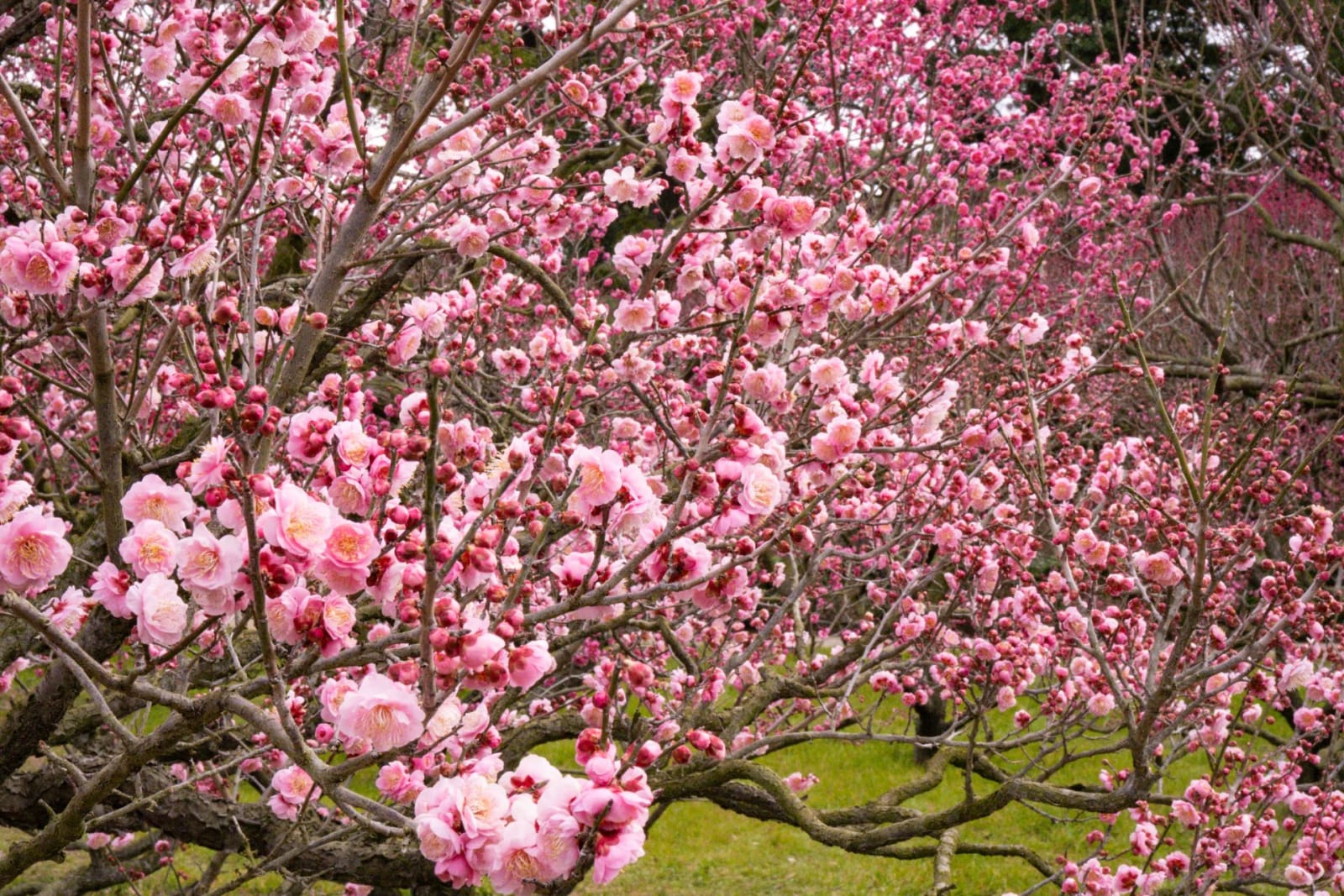
Plum blossoms are the headline. JMA's benchmark plum trees normally open on January 22 in Tokyo, February 3 in Mito and February 22 in Kyoto, and they smell better than cherry blossoms (a real fragrance, close to apricot). Mito's Kairakuen, one of Japan's three great gardens, grows about 3,000 plum trees of some 100 varieties, the late ones flowering from mid March, and its plum grove is on the Ministry of the Environment's list of 100 Fragrant Landscapes. The Mito Plum Festival runs through February and March every year, with a temporary Kairakuen Station, and Mito is 65 minutes from Ueno on the Hitachi limited express (¥4,000 with a reserved seat).
In Kyoto, Kitano Tenmangu's roughly 1,500 plum trees of 50 varieties flower from January to about the end of March, and its plum garden usually opens from early February to late March.

Omizutori in Nara is the event worth building days around. Every night from Monday, March 1 to Sunday, March 14, 2027, torch-bearers carry blazing pine torches along the balcony of Todai-ji's Nigatsu-do hall to light the monks' way, showering sparks on the crowd below. The rite has run every year since 752 without a single break, which makes 2027 its 1,276th. Most nights the torches start at 19:00 and last about twenty minutes; on March 12, the night of the water-drawing itself, eleven larger torches start at 19:30, and on March 14 all ten go up within about ten minutes from 18:30 (Todai-ji's torch schedule).
Go on a weeknight other than the 12th: in 2027, March 1 to 5 or 8 to 11. The square below the hall holds about 3,000 people, weekends are busy enough that police may send you to a second viewing area, and on March 12 (a Friday) Todai-ji restricts entry and warns that you may not see the torches at all. Tripods and flash are banned, and the temple asks visitors to treat it as the Buddhist rite it is, not an event.
Beyond that, early March is simply Japan with the volume down, and hot springs at their best in the cold air. The one thing it does not have is the main cherry show, and knowing that in advance is the entire trick to enjoying it.
March 2027 Events: Omizutori, Sumo and the Equinox Weekend
| Event | When in 2027 |
|---|---|
| Omizutori (Todai-ji, Nara) | Fixed: Monday, March 1 to Sunday, March 14, torches nightly |
| Hina Matsuri | Fixed: Wednesday, March 3 |
| Katsuura Big Hina Matsuri (Chiba) | Late February to March 3 (February 21 to March 3 in 2026) |
| Mito Plum Festival (Kairakuen) | February and March every year; 2027 dates not yet posted |
| White Day | Sunday, March 14 |
| March sumo tournament (Osaka) | Sunday, March 14 to Sunday, March 28; tickets from Saturday, February 6 |
| Kitano Odori (Kamishichiken, Kyoto) | Late March to early April (March 20 to April 2 in 2026) |
| Vernal Equinox Day | Sunday, March 21, with Monday, March 22 off in lieu |
| Tokyo public schools' spring break | March 26 to April 5 |
Hina Matsuri, March 3, is the doll festival for girls: families display tiered platforms of Heian-court dolls, and chirashi sushi and pastel hina-arare crackers fill the supermarkets. The spectacular public version is the Katsuura Big Hina Matsuri in Chiba, where about 1,800 of the town's roughly 25,000 dolls cover the 60 stone steps of Tomisaki Shrine, 10 minutes' walk from JR Katsuura Station.
The Osaka spring sumo tournament runs for fifteen days, Sunday, March 14 to Sunday, March 28, 2027, at EDION Arena Osaka, near Namba. Seats are sold well ahead: tickets go on sale on Saturday, February 6, and the Sumo Association is revising its prices from January 2027, so check the official schedule before you budget.
White Day, March 14, is Valentine's Day's answer: men return the favor for February's chocolate. It asks nothing of visitors, but the department store food halls fill with gift sweets, and that is worth an hour of anyone's time.

Graduation season fills the second half of March. Many university graduates wear hakama, formal pleated skirts worn over kimono, and their photos in shrine forecourts and castle parks are one of the best free spectacles of the month. The food calendar keeps pace: ichigo daifuku, a whole strawberry inside a mochi shell of sweet bean paste, is the single best snack of the month, and sakura mochi, pink rice cake wrapped in a salt-pickled cherry leaf, predates marketing departments by three centuries (Chomeiji in Mukojima dates its recipe to 1717).
What to Pack for Japan in March
- Layers across two seasons: T-shirt, midlayer, and a light down or wool coat you will still want after dark in week four. Early-March nights average 3 to 4°C in Tokyo and Kyoto; a late-March afternoon can pass 20°C.
- Antihistamines from home if pollen affects you, plus a few masks. Cedar pollen peaks in March and it does not care that you are on holiday.
- A folding umbrella: a warm day can turn cold and wet by the next.
- A picnic sheet for hanami, or ¥110 at any ¥100 shop on arrival. Sitting on bare ground in March means losing body heat fast once the sun drops.
- Shoes you can walk 20,000 steps in and slip off at temple entrances. Blossom chasing is a walking sport.
- No serious winter gear unless you are skiing or heading to Hokkaido, where Sapporo's afternoons average 4 to 5°C and snow lies all month.
March vs February vs April
Pick February if winter is the point: the Sapporo Snow Festival (February 4 to 11, 2027), plum blossoms starting, and Kawazu's early cherries on the Izu Peninsula, which bloom from early February to early March, a month before Tokyo's. The trade: cold cities (Tokyo 2 to 11°C), short days, and none of the main sakura show. Our Japan in February guide covers it.
Pick April if Kyoto at full bloom is the point. JMA's normal puts it on April 4, so the first days of April are the safest bet there, and Tokyo averages a milder 10 to 19°C. The trade: Saturday, April 3, 2027 was the priciest night we measured (Kyoto Station ¥29,500 to ¥36,800), and Golden Week opens on April 29. Our Japan in April guide follows the front week by week.
Pick March if you want a choice of two good trips. The first half is the last cheap window before Japan's busiest season, at close to winter prices. The second half is the start of the sakura show itself, bought at a premium and hedged with flexibility. What March demands, either way, is honesty about which trip you are booking: the travelers who get burned are the ones who book five nights around a guessed peak and expect postcards. For the full year, the Best Time to Visit Japan guide compares all twelve months.
A 10-Day Cherry Blossom Route for March 2027
For late-March dates, our 10-Day Cherry Blossom itinerary (Tokyo, Kawaguchiko, Kyoto, Osaka) is the base. The March adjustments:
- Traveling March 1 to 14: swap the sakura stops for their early-March equivalents: a day trip from Tokyo to Kairakuen, Kitano Tenmangu's plums in Kyoto, and an evening in Nara for the Omizutori torches, which start at 19:00. Kyoto's station hotels cost less than half their late-March price, so this is the week to splurge on the Kyoto nights.
- Traveling March 15 to 31: keep Tokyo at the start and Kansai at the end. Tokyo reached full bloom before Kyoto in every one of the last six springs, so a west-bound route rides the front instead of racing it. Kawaguchiko blooms one to three weeks after Tokyo, so in late March treat it as the Fuji night, not a blossom stop. Book every Shinkansen seat the day sales open, and avoid changing cities on March 20 to 22.
- Either way, hold a flex day. The single highest-value slot in a March itinerary is the one with nothing in it, spent wherever that week's spot reports say "full bloom".
Open the template in the trip planner, stretch your dates across the turn of the month if you can, and let the forecast, not the averages, make the final call. The cherry blossom forecast will have the 2027 dates from mid December.
Frequently Asked Questions
Is March a good time to visit Japan?
Yes, if you know which March you are booking. The first half is late winter: plum blossoms, Nara's Omizutori fire ritual (March 1 to 14) and hotel prices close to January's. From around the 20th the cherry blossoms open in Tokyo, and in five of the last six springs Tokyo reached full bloom before the end of March. The catch is price: on APA's own site, the cheapest room for two near Kyoto Station is 10,500 to 12,000 yen on mid-March weeknights in 2027 and 25,000 to 31,600 yen on March 31.
When will the cherry blossoms bloom in March 2027?
No 2027 forecast exists yet: the first rounds are due from mid December 2026, and our cherry blossom forecast switches to them the day they land. Until then, plan on JMA's normals: first bloom around March 22 in Fukuoka, March 24 in Tokyo and March 26 in Kyoto, with full bloom around March 31 in Tokyo and April 4 in Kyoto. Recent springs ran early: Tokyo's official tree opened between March 14 and 29 in 2021 to 2026, and its full bloom came in March in five of those six years.
What is the weather like in Japan in March?
Cool and changeable. JMA's normals give Tokyo 5 to 14°C, Kyoto 4 to 14°C and Osaka 6 to 14°C, with early-March nights around 3 to 4°C and late-March afternoons around 15°C, though a warm spell can pass 20°C, and in 2020 snow fell on Tokyo's full-bloom cherries on March 29. Tokyo gets 116 mm of rain on about nine days. Sapporo runs -2 to 5°C under snow, and Naha 17 to 22°C. March is also the peak of Tokyo's cedar pollen season, so bring allergy tablets if pollen bothers you.
How busy and expensive is Japan in March 2027?
It depends on the week. On APA's own site, rooms for two near Kyoto Station cost 10,500 to 12,000 yen on Wednesdays March 10 and 17, 2027, then 23,000 to 27,000 yen on Saturday, March 20 and 25,000 to 31,600 yen on March 31. March 20 opens the Vernal Equinox weekend (Sunday the 21st, with Monday the 22nd off), when every Nozomi Shinkansen is reserved-only. JR's Tokaido Shinkansen busy season runs from March 19 to 31, and Tokyo's public schools break from March 26 to April 5.
Is early March worth visiting, before the cherry blossoms?
Yes, and it is priced close to winter: Kyoto Station hotels cost less than half their late-March price. Plum season is still on at Mito's Kairakuen and Kyoto's Kitano Tenmangu, Nara's Omizutori fire ritual runs nightly from Monday, March 1 to Sunday, March 14, 2027, as it has every year since 752, and the Osaka sumo tournament opens on March 14. The only thing missing is the main cherry show, and knowing that in advance is the whole trick.
How do I plan a cherry blossom trip without gambling on dates?
Book length and flexibility rather than a guessed peak. A trip from roughly March 23 to April 5 would have caught Tokyo, Kyoto and Osaka at or near full bloom in every one of the last six springs. Book refundable rooms now (six months out, the hotels we checked still had rooms, already at bloom-week prices), keep a day or two unplanned for whichever city the spot reports say is peaking, and if you land late, follow the bloom north and uphill to Kanazawa or the Fuji Five Lakes in April.
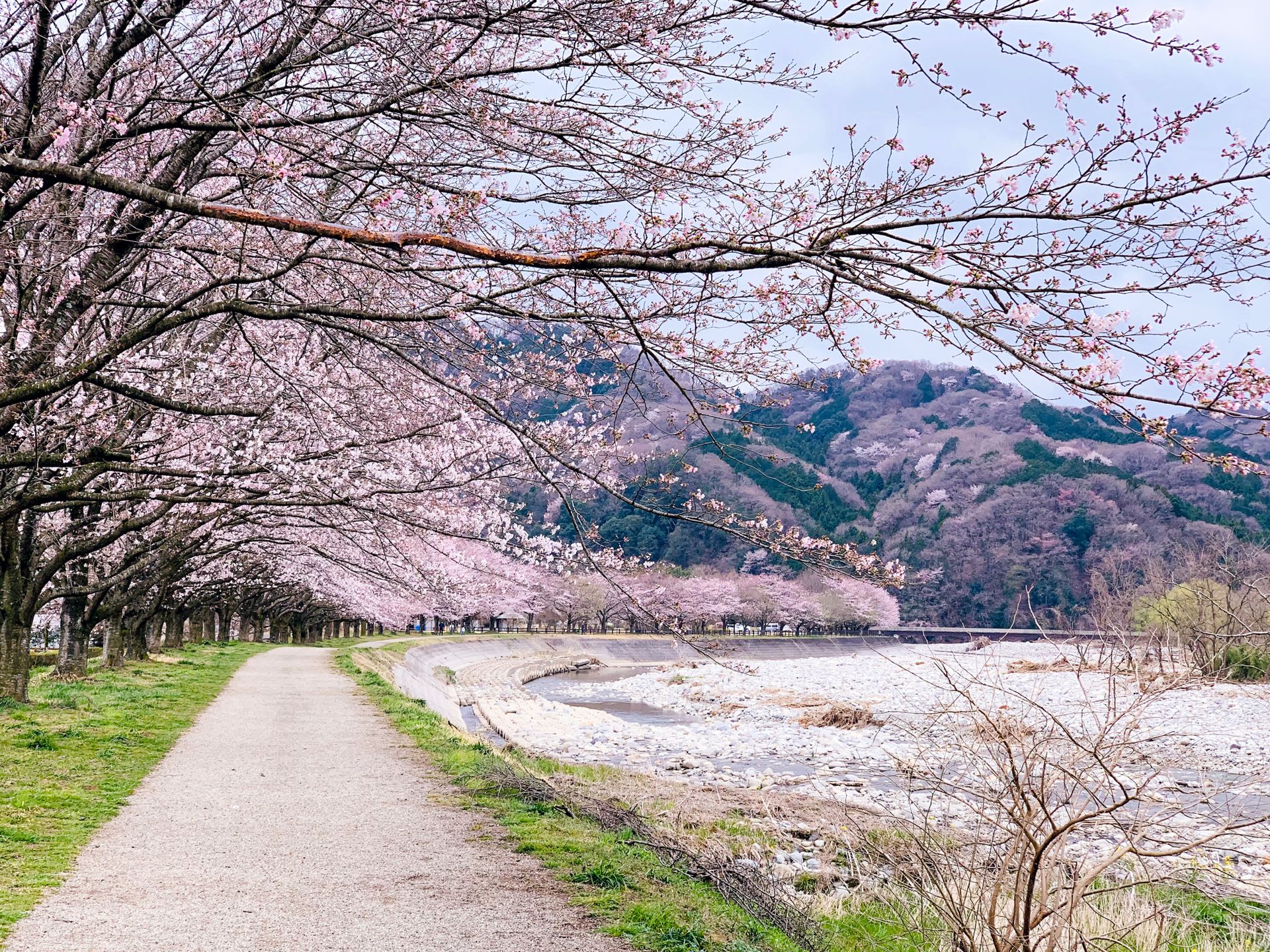
10-Day Cherry Blossom Season
Chase sakura across Tokyo, Kyoto, and Osaka, then finish at Lake Kawaguchi, where the cherries bloom one to three weeks later under Mt Fuji. Built for late March to mid April.